The Rabbit Rescuer

18 May 2019

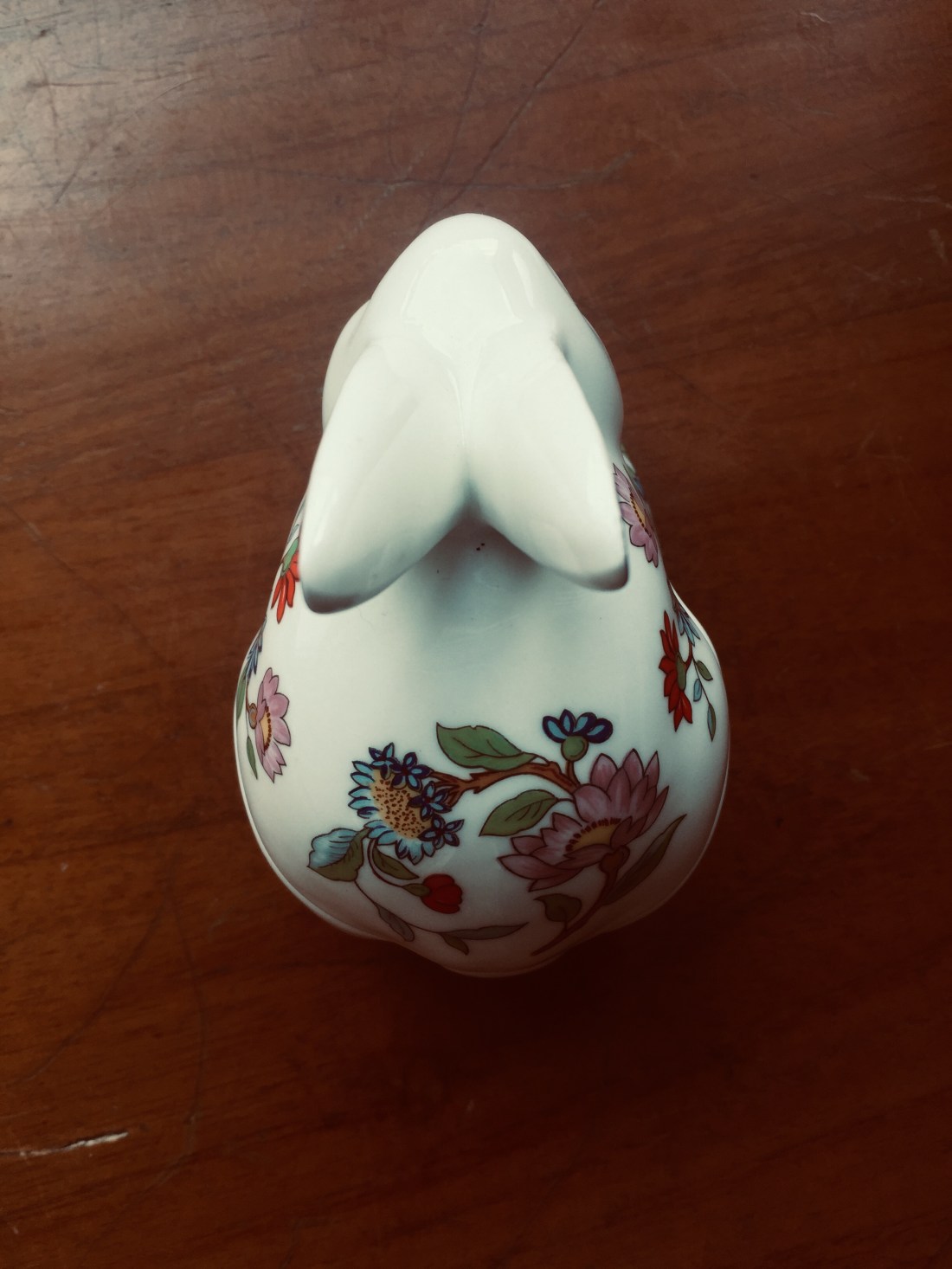
9 years ago a boy came to ask if he could borrow a cat carrier from me.

He had found an abandoned rabbit outside our school. It was weekend & he had just checked out of hostel, carrying some of his personal items.
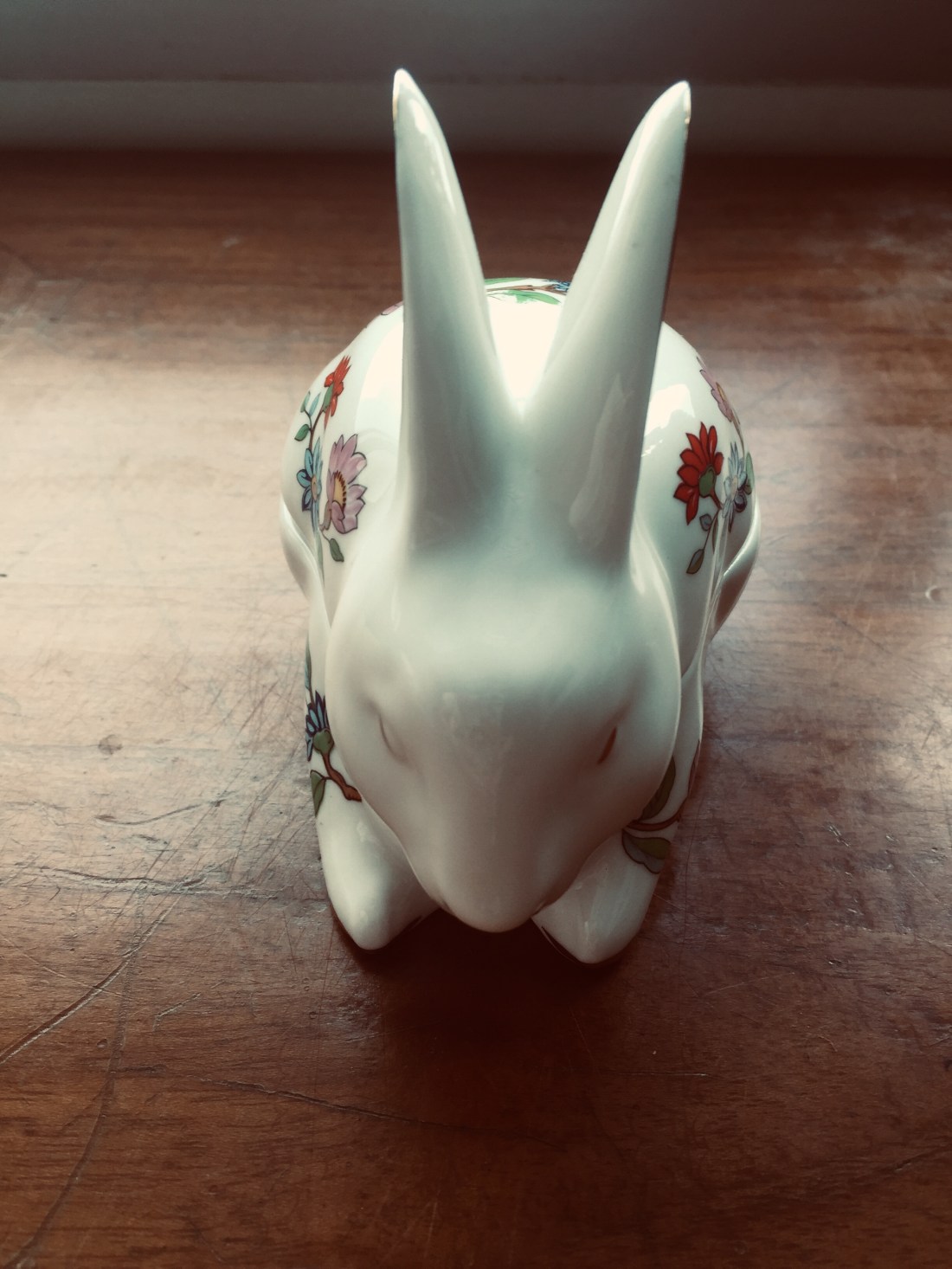
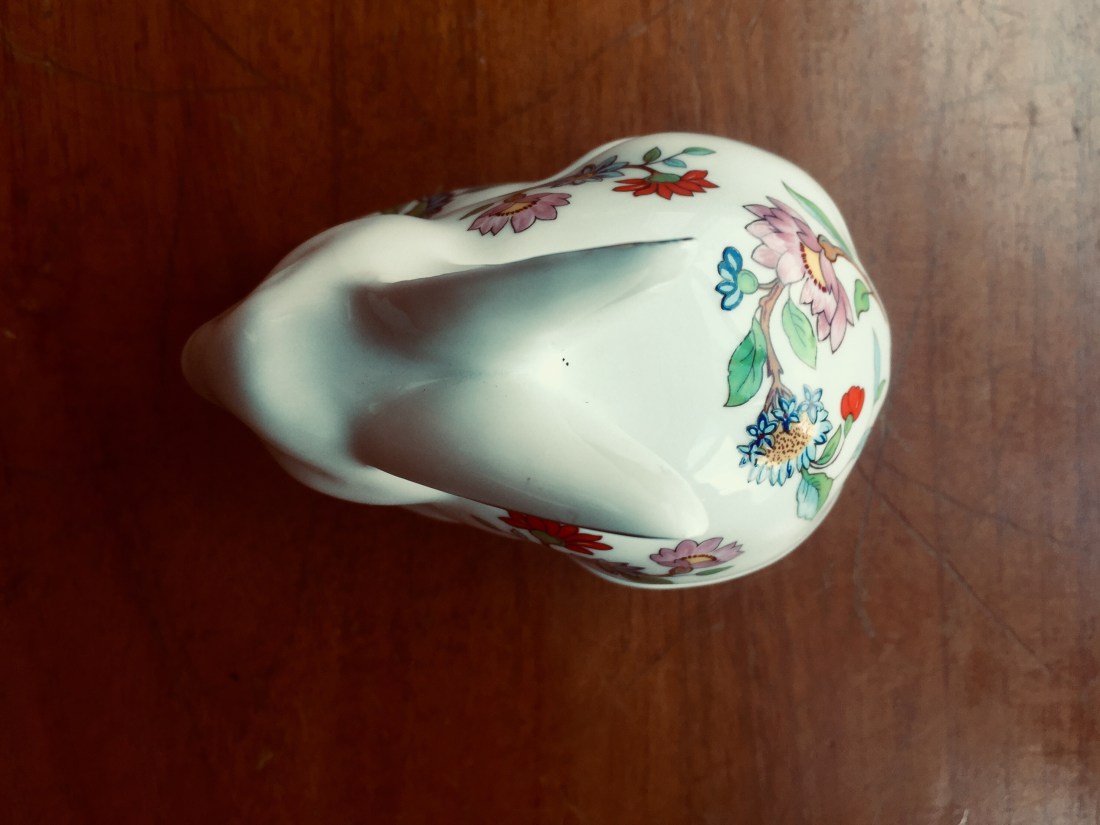
The journey from school to his home was a long one and he wanted to ensure the rabbit’s safety by putting him in a carrier.

As I was preparing the cat carrier for the rabbit, he explained to his mom on the phone why he was taking the rabbit home.

Over the weekend, news of the rabbit rescue spread among the students. It turned out that the discarded pet had been huddling among vegetation outside the school for a couple of days.

In class I spoke of the boy who had stopped for a rabbit. A student swiftly remarked, “Of course he can help. He’s rich.”

Yes, the Rabbit Rescuer did come from a well-to-do family. And maybe he hadn’t always been nice to his peers. But the reflex response that he was able to help because of his wealthy family got me thinking.

Did coming from a better financial background obligate the boy to rescue the rabbit?

And if so, was his rescue effort any less commendable because it was easy for him?

Those were some of the questions I asked.

Although Rabbit Rescuer was materially well off, choosing to be kind still required a certain amount of inconvenience & sacrifices.

I highlighted to the class that because the foundling was a living being, there were lots of follow up work to do.

First he had to walk back to school with the rabbit without any guarantee of whether a cat carrier was available.

Then when he got home, he had to confine the rabbit in his bathroom for observation before integrating the new comer to the rest of the household.

There were also the vet checks and rabbit food, beddings, cage etc to deal with.

I’ve not met many teenage boys who would go that length for a rabbit, regardless of family background.

After that episode, I became more conscious of whether I have in my thoughts or remarks also undermined the good deeds of those whom I perceived to have more advantages than the rest of us.

When someone quits her job to be a stay-at-home mom, do I say, “Of course she can. Her husband’s rich.”?

When a young person decides to pursue a lesser known path, do I say, “Of course he can. His parents can afford it.”?

When a primary school kid gets full marks in a test, do I say, “Of course she can. She has tuition.”?

And perhaps my compulsion to find reasons when something positive happens stems more from envy & cynicism, than from a genuine desire to learn or compliment.

Rabbit Rescuer taught me that when good happens, just rejoice. Don’t spoil it by asking why.

To Labour For An Open Mind and A Kind Heart

1st May 2019 Labour Day

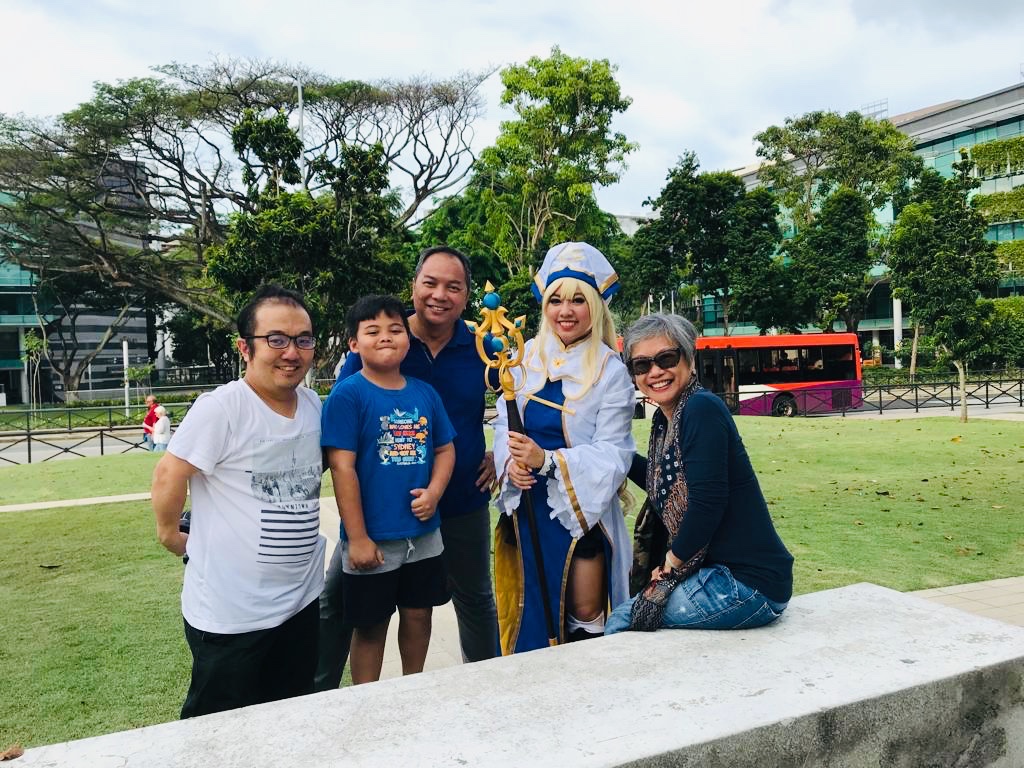
We’re 47 years apart but connected by learning for our own benefit and for the benefit of all sentient beings.

Spelling Practice in Botanics Gardens (28/4/2019)

To First Tutee these days, exposure to “Charlotte’s Web,” has moved his knowledge beyond dietary laws. His world view now includes seeing the pig as a living creature that has needs for friendship and a fear of death.

He also knows that dogs have names, ancestry and personality. Meeting one on his path these days is filled less with anxiety but more with curiosity.

The default question of “Will he bite?” has morphed into “What dog is this?” Words such as corgi, poodle, labrador and homeless dogs are taking up space in his head.

As the boy learns, trees are more than potential chairs or dangerous conductors during lightning storms. They are also homes to animals, perches where angels sit and sign posts for the wandering and the lost.

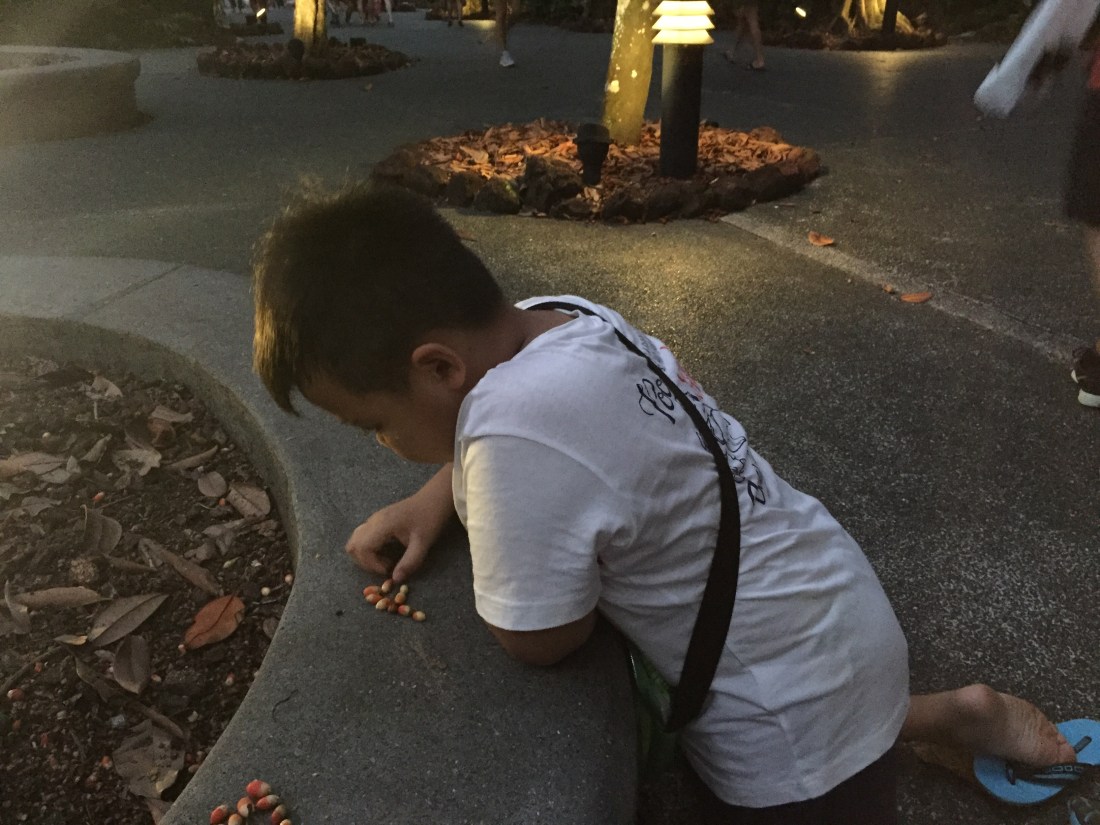
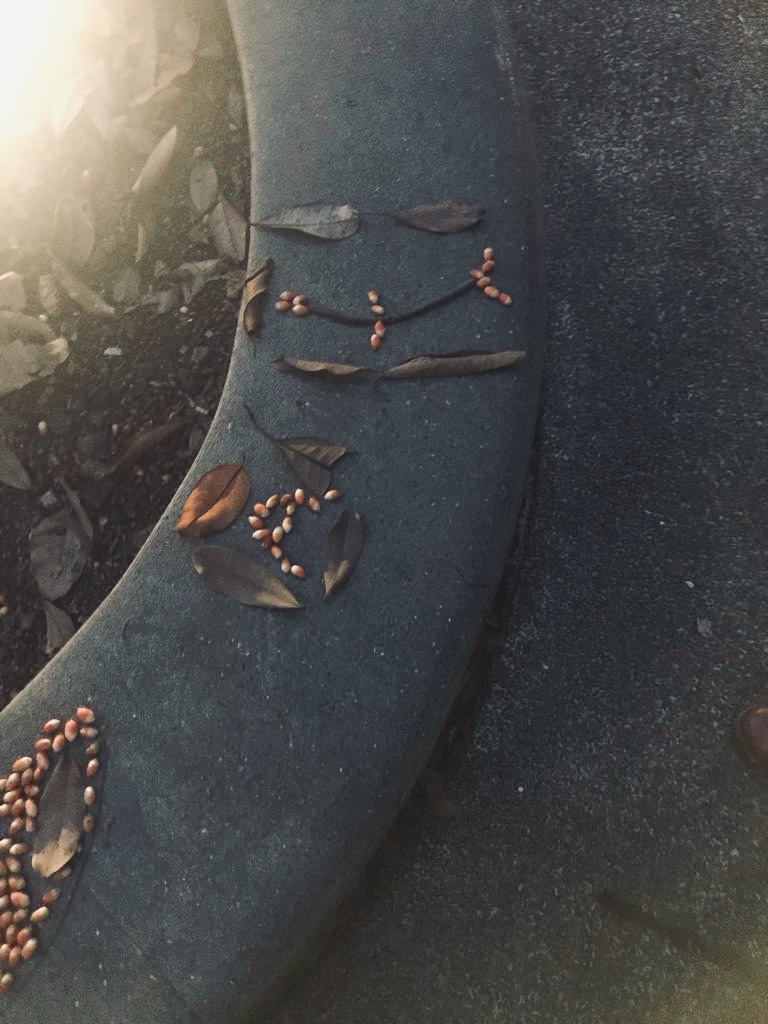
He tries to resist the impulse to turn every tree branch within his reach into monkey bars. Instead, he has learnt to pause and pat the trunk reverently. Last Sunday he made art with a tree’s fallen fruits.

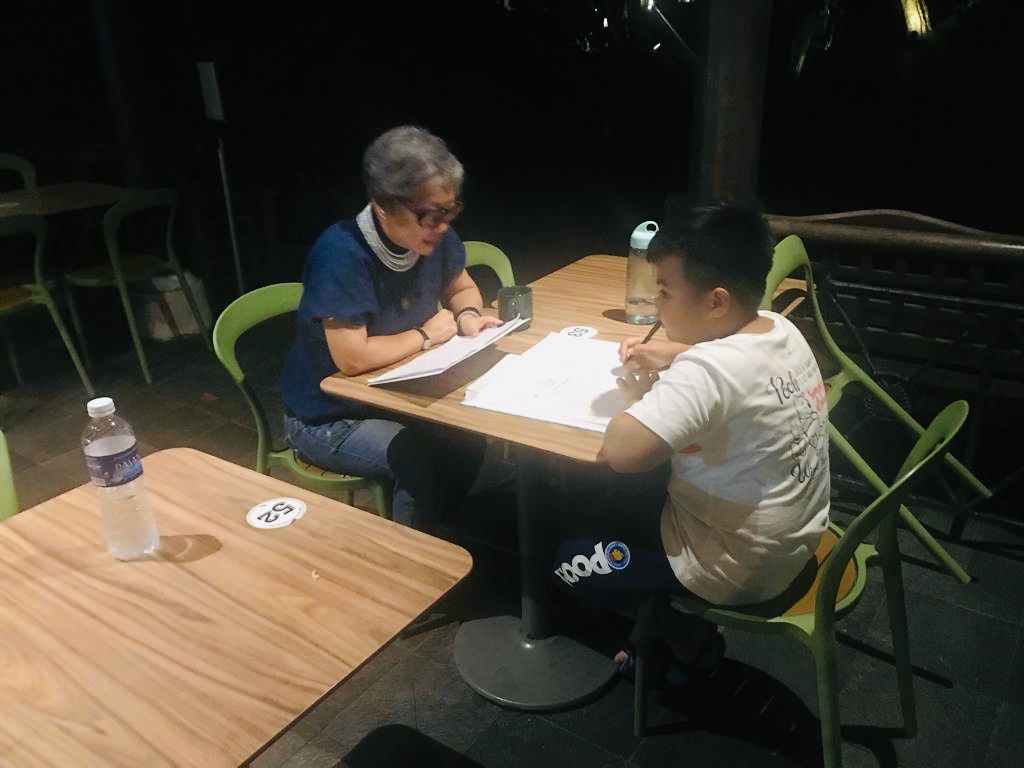
Earlier on when we arrived at the Botanic Gardens for our English Language work, he didn’t run head on to play. Instead the first thing he did was to point out the corner table where he planned to practice spelling later.

The silent trees seemed to have a calming effect on him and collaborated to help an easily excitable boy set his academic intentions.

And the hive of activities – jazz concert, kids playing, adults dancing, dogs running and his own trekking up and down the slopes did not distract him but centered him.
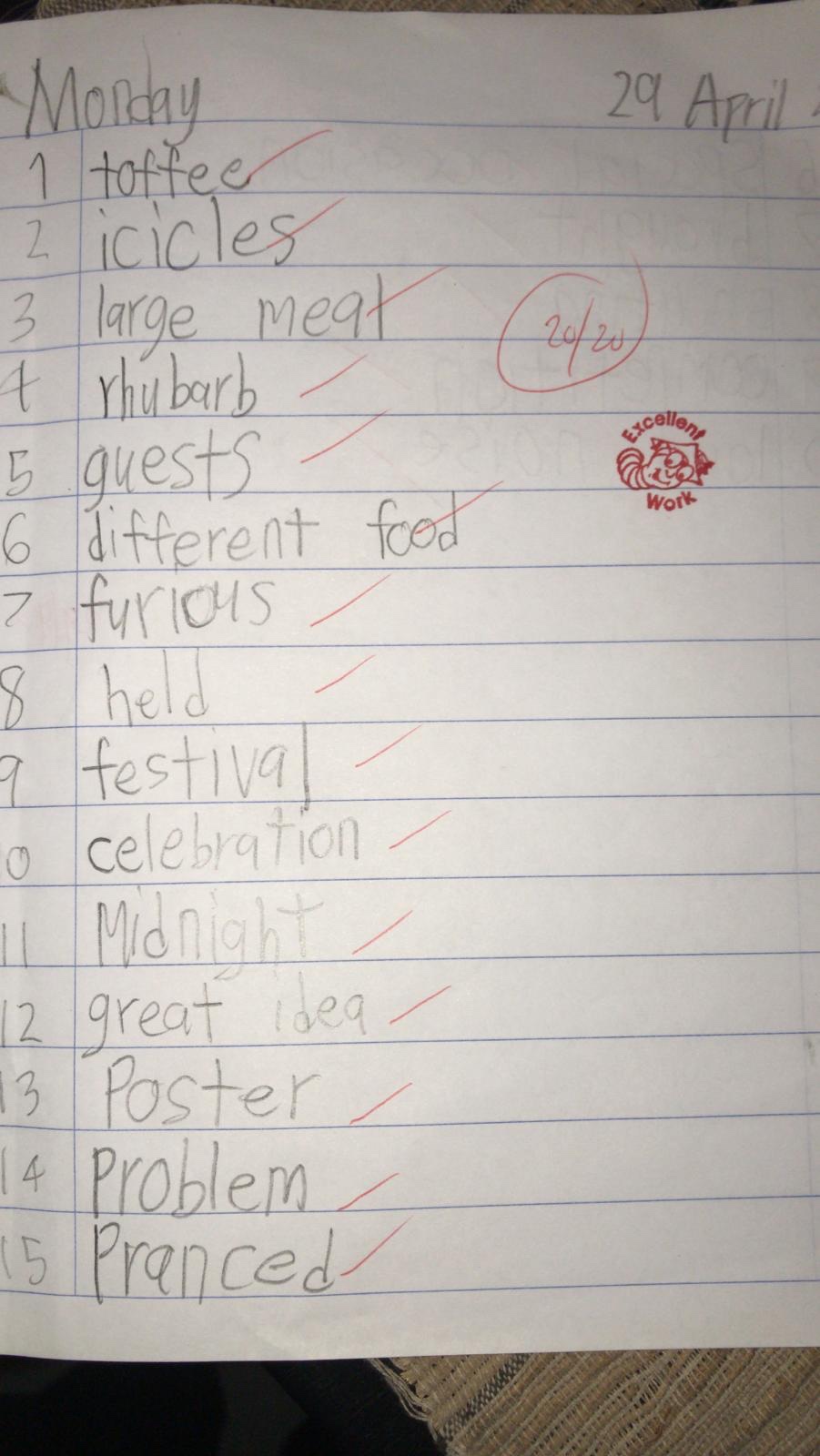
He asked for the use of the cell phone to set the timer to revise his spelling, and later on chuckled with glee that he had cleared his revision sooner than he thought.

His spelling outcome the next day.

When the day ended, even though First Tutee claimed that he was very tired as we walked to the carpark, his eyes sparkled with amazement at the sight of a athletic looking dog whose gentle eyes were the same shade of deep brown colour like his fur.

The dog’s humans acknowledged the boy’s wide-eyed wonder with steady knowing smiles.

Words are not needed in meetings like this because the mind and the heart are open.

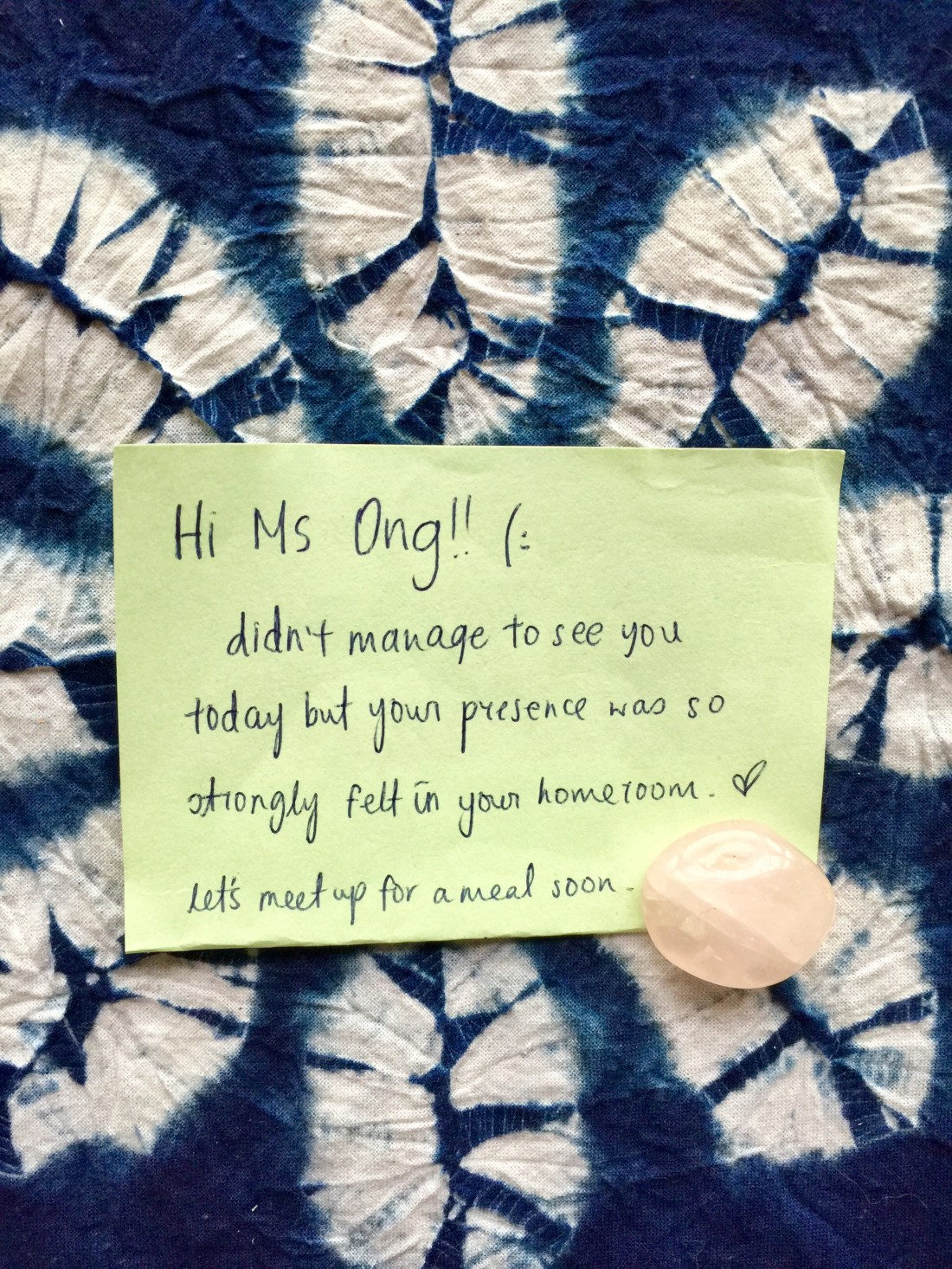
Niq’s thank you note to the Botanic Gardens. (28/4/2019)

“The Word became flesh …” John 1:14

25 April 2019

Handwriting reveals a lot about a person. In the same way they can hide pain, words can also become real and bring relief.
Back in the 90s, there was a boy in my class who repeatedly handed in work that showed very messy handwriting. My initial reaction was to get angry. I was angry with him for being untidy. I was angry with him for being inconsiderate. But mostly I was angry with him for not respecting me enough to show me some nice handwriting.

One day I received another dreaded handwritten composition full of ugly words from the same boy. But before I could fly into a rage, his image popped into my head.

He had his fringe to hide his pimply forehead while his oversized spectacles resembling laboratory goggles perched precariously on his nose. Even though he wasn’t particularly witty, he was always attentive and looked like he enjoyed my lessons.

He was keen when I introduced the use of fountain pen to his class, and even showed me the one which his grandfather lent him to bring to school.

So I couldn’t understand where this insane handwriting and incoherent babbling came from.

By this time, instead of getting upset, and hating him, I decided to put away that red pen for the time being and just run my fingers over his mangled words.

This must be one of those “the Heart knows reasons that Reason does not know” moments. Till this day I couldn’t explain fully what made me do that.

And something interesting did happen when I touched his tortured letters. I felt the boy’s frustrations, as if he was carving or maybe even stabbing the words onto paper. At the back of the page, I felt the eerie graininess of the indentations as if some creatures were trapped underneath & struggling to break free.

My annoyance abated further when I saw him in my mind, hunching over his work, all alone in class, because he was always the one to finish last.

In our following lesson, I got him to stay back after class had ended.

I placed the train wreck of his composition between us. He registered all the comments in red with his eyes but held back his emotions.

Then I asked if there was something wrong with my instructions that had confused him and caused him to write like this. Was I unclear? Did I speak too fast? Was the deadline too tight?

He answered all my questions bravely and adjusted his specs that were sliding down his nose. Then he looked down, as if about to cry.

“You said you like English. Then why do you keep on writing like this?” I prompted, fighting the irritation that was threatening to crawl right back into my heart. (Bad handwriting kills me)

“Yes, I enjoy the lessons. It’s just that I’m under A LOT of pressure,” he explained and avoided my eyes.

He then disclosed that his parents had high expectations of him and his older brother. They were not pleased that their older son did not make it to junior college. My student thus lived in constant anxiety of disappointing his parents.

“My parents are always telling me that they’ll be happy with anything I do as long as I can do better than them,” he said sadly.

“But isn’t it natural for parents to wish for their children to do better than them?” I asked, trying to sound as objective as I could.

“But Miss Ong, my dad is a neurosurgeon and my mom runs her own pharmaceutical company. How can I possibly do better than them?” he asked, barely able to conceal his sense of defeat even as he tried to force a smile.

“And even if I were given 3 life times to try, I won’t be able to do better than them,” he emphasised.

His choice of illustration stunned and saddened me deeply.

When he was done explaining, we looked at each other and started to laugh. Perhaps we laughed out of relief and at the absurdity of the challenge before him.

There was something very sad but strangely uplifting in our shared humour that day, even though we were still clueless on how to deal with his work quality.

However after we spoke, his handwriting and expressions started to improve. He became less moody and less awkward. It was as if a secret spell that had kept him frozen had been broken.

At the parent-teacher meeting I mustered enough courage to let his parents know that their well meaning intentions were chipping away at their son’s confidence and hindering his attempts to learn.

I pushed my luck a bit by saying I understand that it wouldn’t be easy for high achievers like them to accept that their son might have a different path from theirs.

The father was a cultivated man with a gentle presence although he looked at me sternly when I spoke. The well groomed mother listened on quietly. (Perhaps they were going to complain to the school that I was encouraging their son to be a loser)

Back then I knew I was only a teacher drawing a fixed salary, single and without kids of my own. How was I qualified to advise married people who were way more financially capable and more academically successful than me on educating their son?

But back then I also knew that my student was too young, too inarticulate and loved his parents way too much to tell them that their dreams were killing him. And if I didn’t at least speak up for him then, how was I qualified to be his teacher?

A few years later while in town, I passed by the dad on his way to lunch.

He called out to me and seemed really delighted to see me. He shook my hand warmly and smiled as he gave me updates of my student, his son.

His older boy had graduated from polytechnic. My student was also enjoying his poly studies and moving on to new things.

As we parted ways, I could sense that the surgeon was genuinely happy because his boys were happy. No further conditions were needed.

And that was it. Words do become flesh.

Niq’s Concerns

18 April 2019 (Good Friday Eve)

“If I’m there, I will shoot them with my gun,” Niq announced what he’d do to the crowd that mocked Jesus as he carried the cross on his way to the crucifixion.

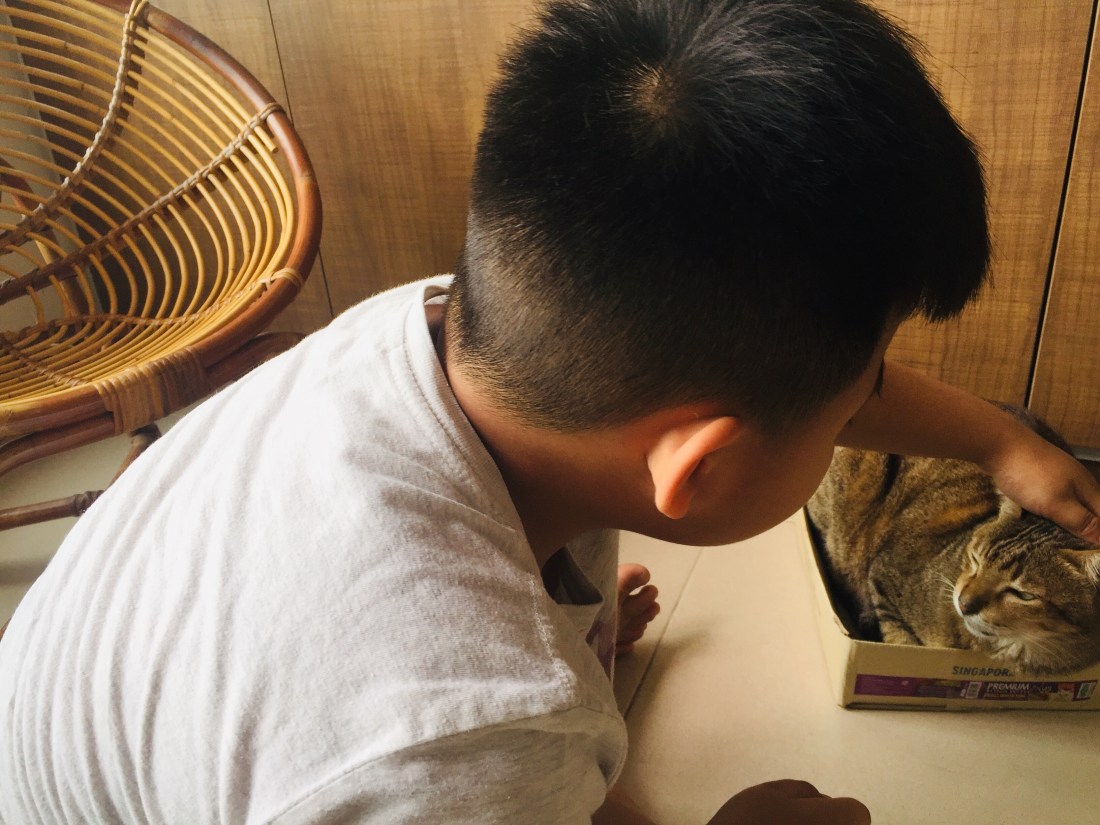
Niq strokes Ollie. (April, 2019)

We were having one of our Sunday spelling, cat and book sessions.

I explained to him that even though he meant well, Jesus might not agree with his actions.

He became thoughtful. There was a penetrating light in his eyes as he grappled with the idea of remaining peaceful even in the face of injustice.

I also told him I had never met Jesus in person but I’ve seen lots of paintings depicting him. Artists portrayed him based on what they learnt from the bible, the same source where I read about Christmas and now Crucifixion.

At the part where Jesus was crucified, Niq who was till then very focused on the nails, suddenly blurted out anxiously, “Then Mother Mary how?”

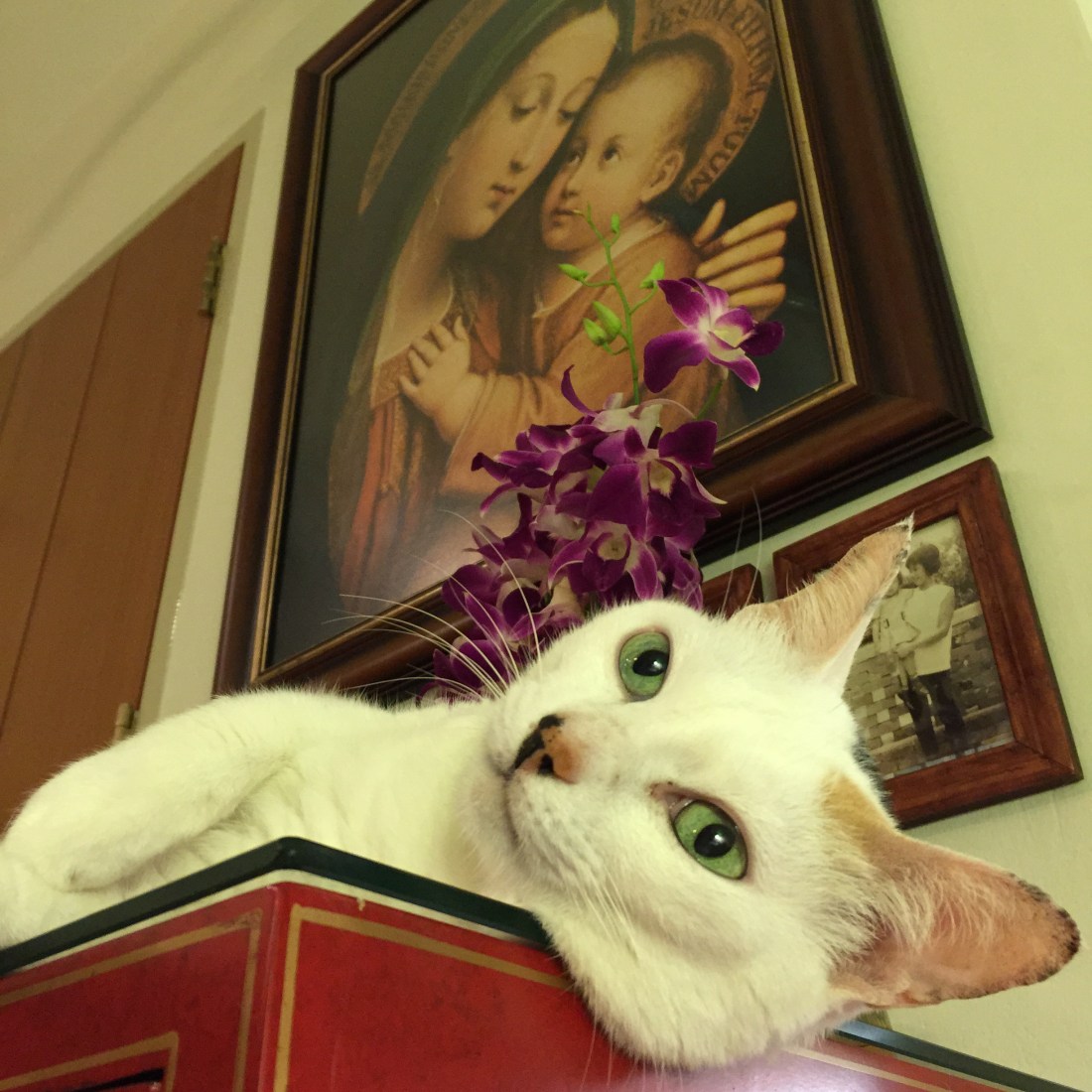
The late Kitty resting under the painting of Mother Mary & Baby Jesus.

When I told him that Jesus entrusted his mother to the care of one of his friends, John, before he died, the young boy gave out a soft sigh.

So this is how an 8-year-old boy who could narrate the story of Baby Jesus just last December, now learns that love is not always about feeling nice. And this Easter he sees that to be able to suffer without becoming bitter is a sign of power.

Each time Niq sees a picture of Kitty, he puts his face next to it. Kitty passed on in August 2018.

Sweet Moments

31 March 2019

This morning the chinese language radio deejay invited callers to describe a sweet moment in their lives.

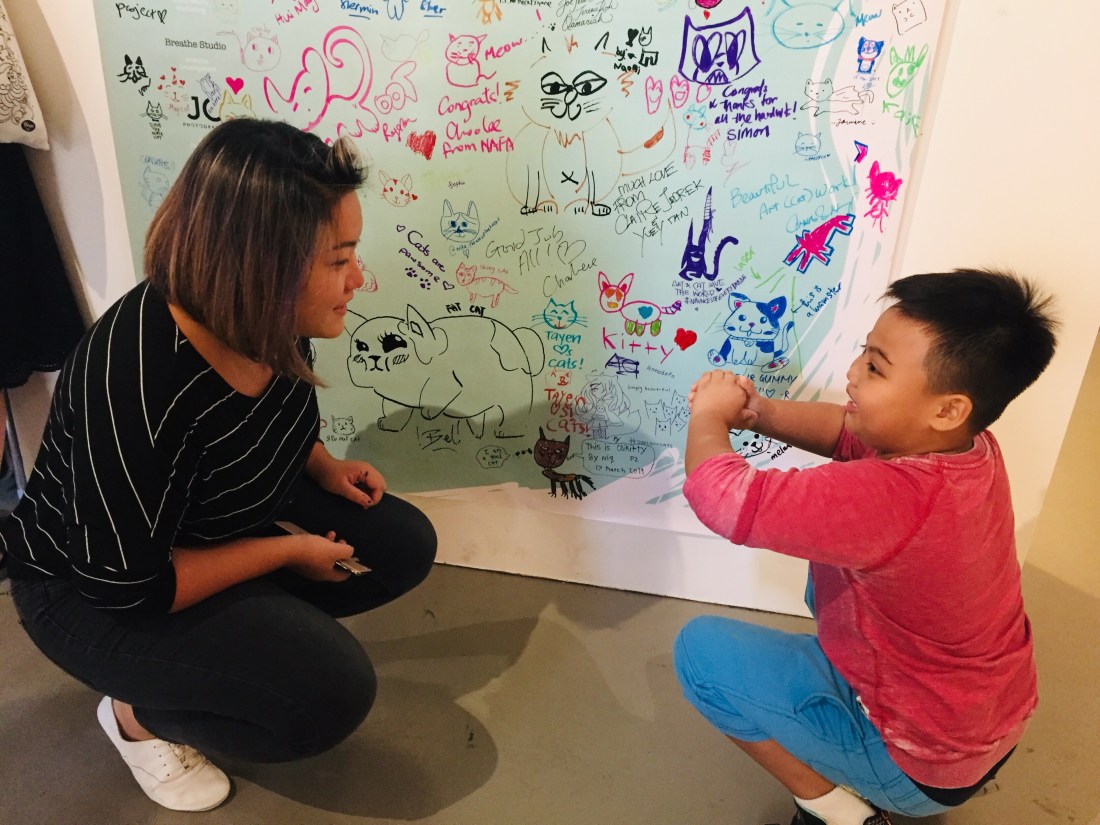
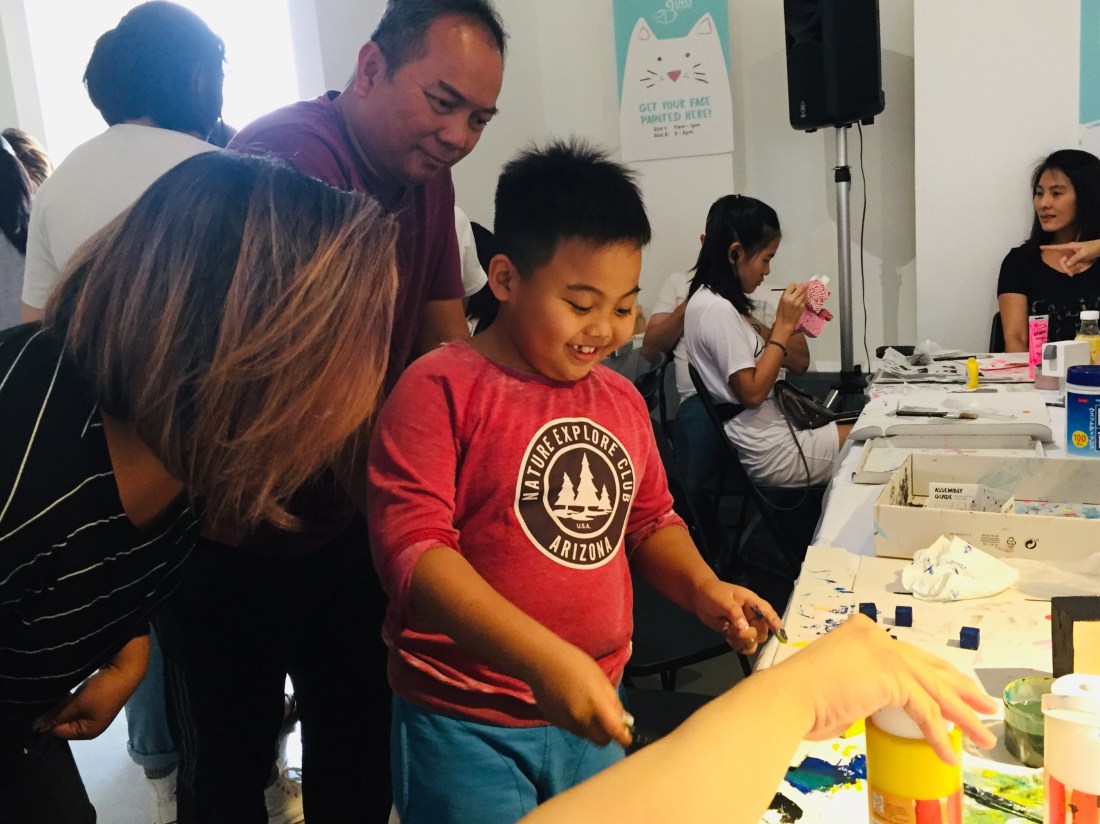
Children can & do appreciate intangible gifts such as your time and presence. Niq explains to Sherlene, a designer volunteer at the 9 Lives Exhibition his drawing on the visitors’ mural. He hugged & thanked her when it was time to say goodbye.

Many recounted episodes of warmth and tenderness shown to them by adults of their childhood.

A male caller shared that he would always remember that morning when his dad saw him off at his primary school.

After the caller had walked a little distance, he turned around to wave at his dad one more time. His dad beckoned him over.

When the boy returned to his dad, the man went on his knees to match his little boy’s height and adjusted his son’s shoe lace before sending him once again on his way.

So many years have passed since then, but that moment with his dad at the school gate was sweeter than his first kiss.

People may forget the occasion or the presents they receive. But they will always remember the way we make them feel.

I’m certain if we give ourselves time to feel and to recall, the sweet moments of encounters with grown ups during our childhood will surface.

And when we honour the memories of adults who treated others kindly even when times were hard for them, we too may be inspired to be kind especially when we’re tempted to be unkind.

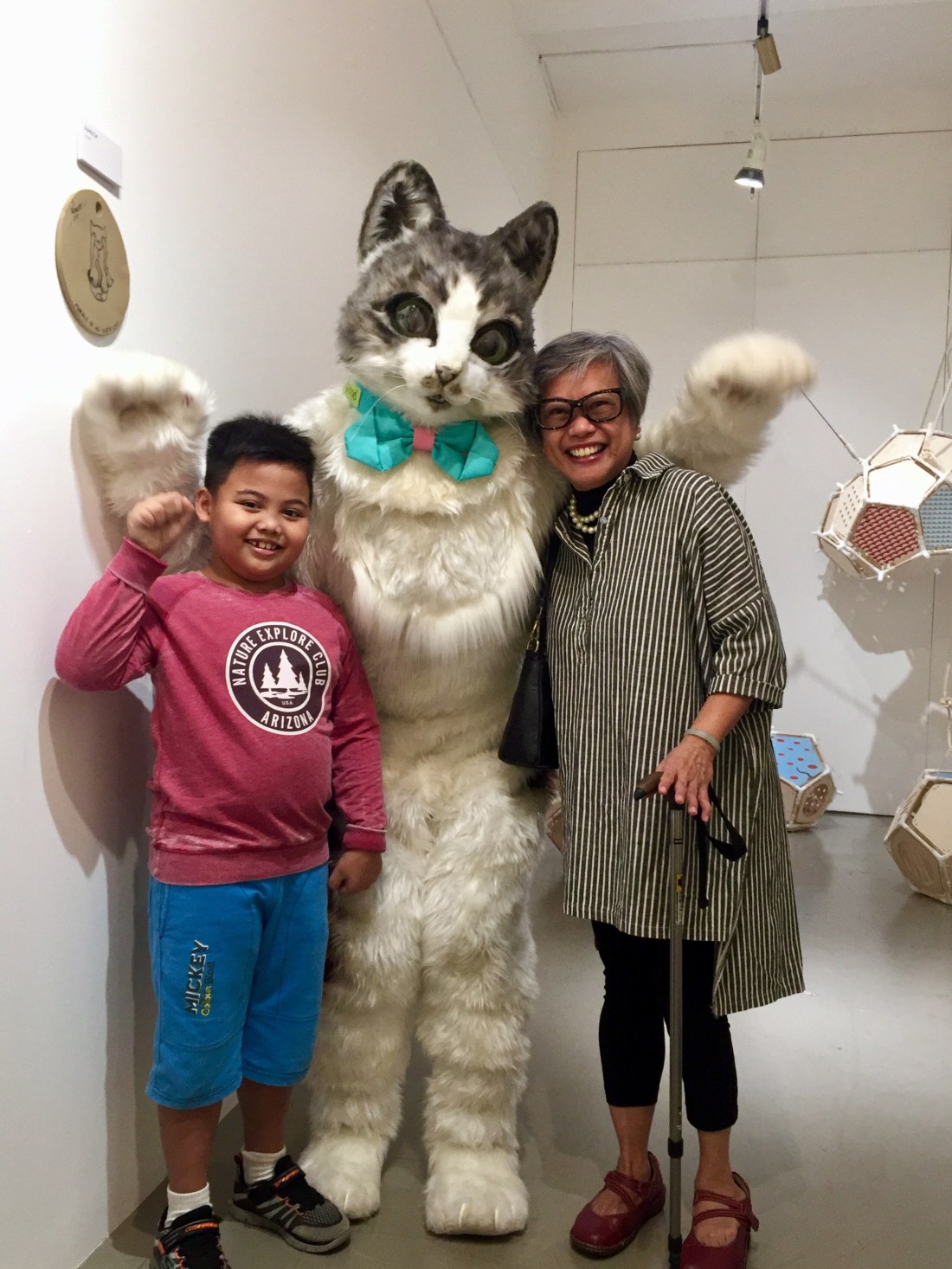
Niq and Sam the Cat Mascot. Niq’s hugs turned fr playful to tender when he realised the person inside the costume had been at work welcoming guests since morning.

Spell to the Moon

(First Full Moon Mandala Dedication)

20 Jan 2019

Ho Ming Fong wrote “Sing to the Dawn.” My dad taught me to sing to the moon when I was 5.

Yesterday was full moon. My tutee Niq is now in Primary 2. His spelling list has gotten longer. Twenty words this time.

I shared with him how singing to the moon when I was a kid taught me not to be afraid of being alone or lost, because wherever I am, there’s always the moon above looking to guide me.

He listened intently. I could see him grappling with the concept that just because we don’t see something, it doesn’t mean it ceases to exist.

We were at Marina Bay waiting for Moonrise. Meanwhile as he explored the grounds, he learnt about rising and falling tides and how they bring in shells & garbage that get stuck on the coastal vegetation when the tide retreats.

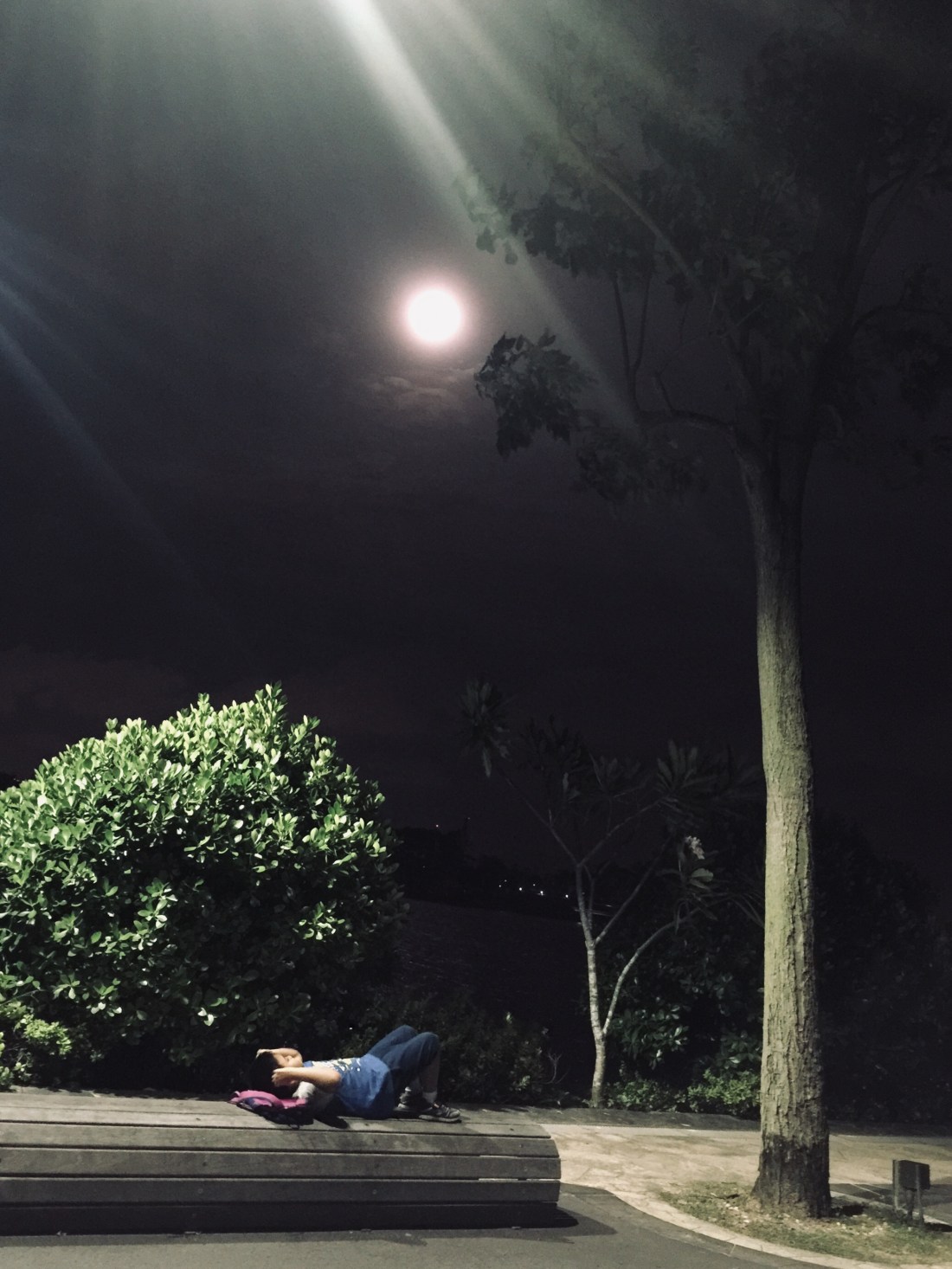

He picked up a broken shell to keep because he wanted to know “what the inside looks like.” But for pieces to give away, he looked for intact ones.

Asking “Why are the shells broken?” led him to learn about impact caused by Man & Nature, and the need to tread lightly on earth so as not to harm others.

Niq picked up this conch shell under the full moon light & gave it to me. The jasper was given to me by a young lady a few years back. She’ll be getting married this year.

He also found an elastic hair band to dispose of properly so that it wouldn’t end up in the stomach of seabirds & marine creatures.

“Why don’t you spell to the Moon?” I prompted, “that way she also knows the words for your spelling test. And when you’re stuck you can think of the Moon and she’ll give the words back to you.”

I’ve found focussing on an aspect of nature, be it the moon or a tree or even a small patch of an open sky can help young people stay calm when they meet problems. In this way a space opens up for solutions to emerge.

“But I also want to sing to the Moon,” he responded.

We waited as the sun set and the wind rose. The lights around the barrage came on. Then a feathery patch in the sky appeared. It shifted in brightness according to the clouds covering it.

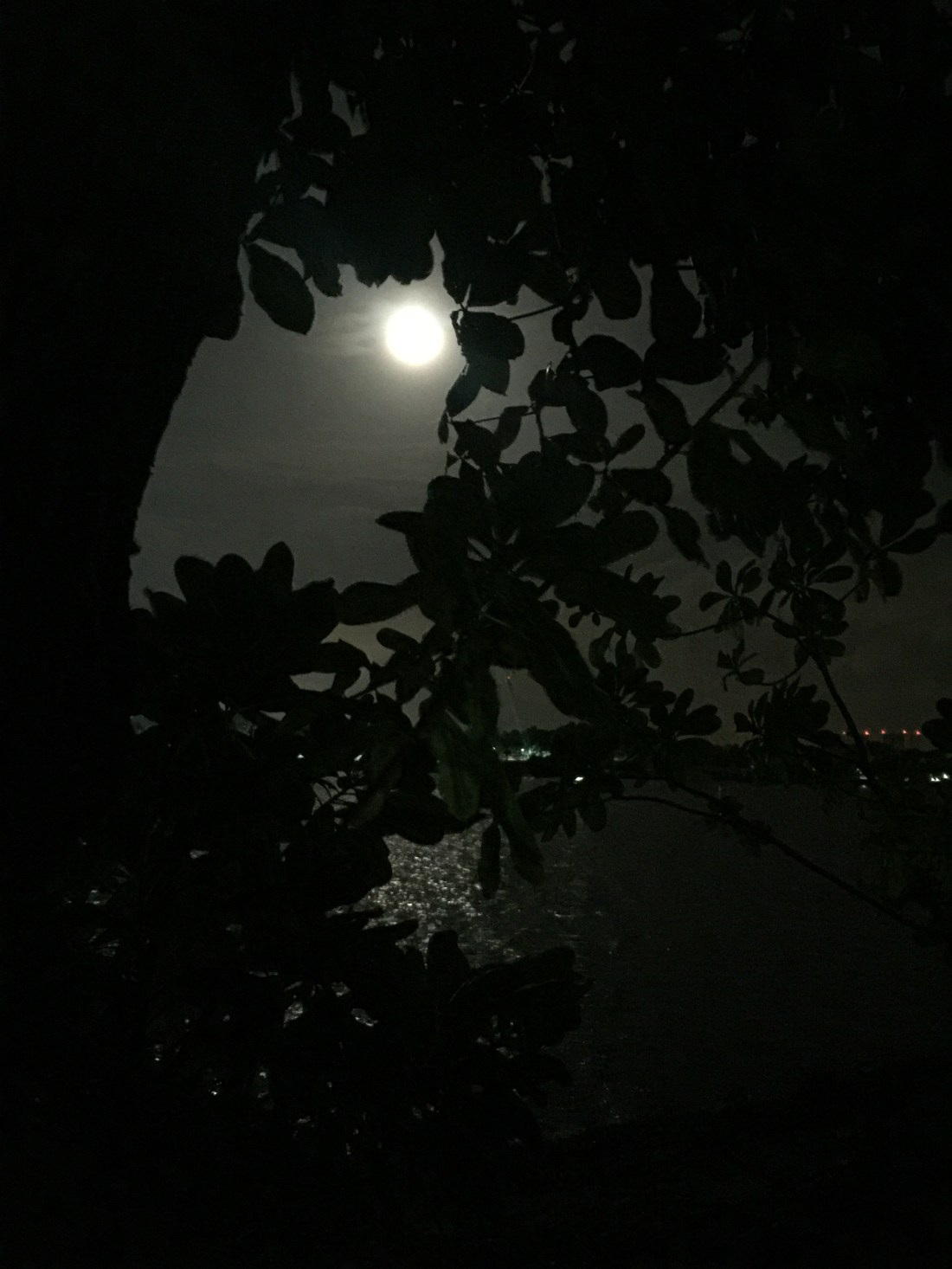
As the Speller sat in the dark, humming a made-up tune the Moon gradually revealed her luminous presence in that magical moment.
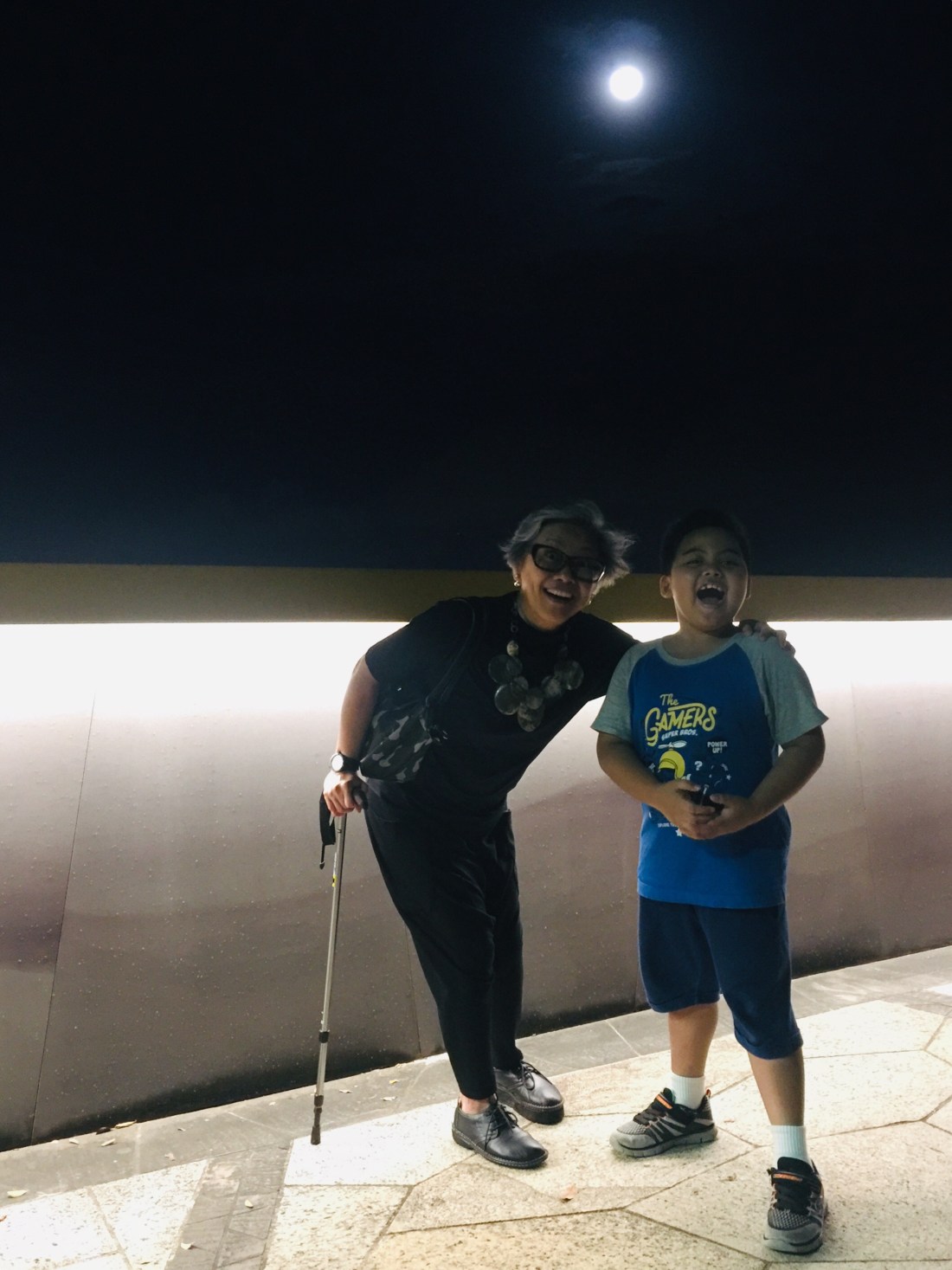
Over dinner under the Moon, Niq said to me in mocked modesty as he munched on a satay,” Don’t ask me to spell ‘nutritious’ cos I don’t know.”

May the full moon bless all sentient beings who have the gift of words and speech to help those who don’t.

And may her light imbue our words with the power to raise the spirit in joy for ourselves and for all sentient beings.

Christmas Without Borders

Christmas without Borders

24 Dec 2018

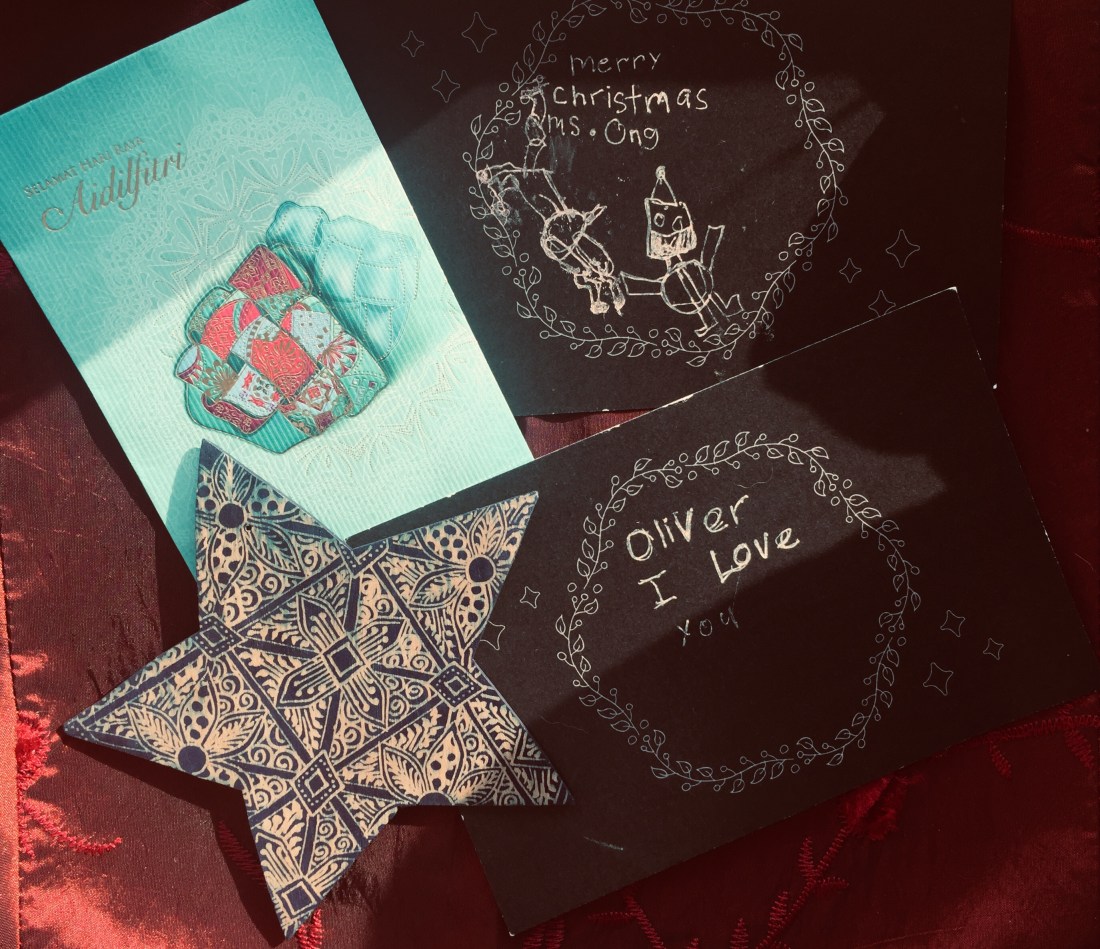
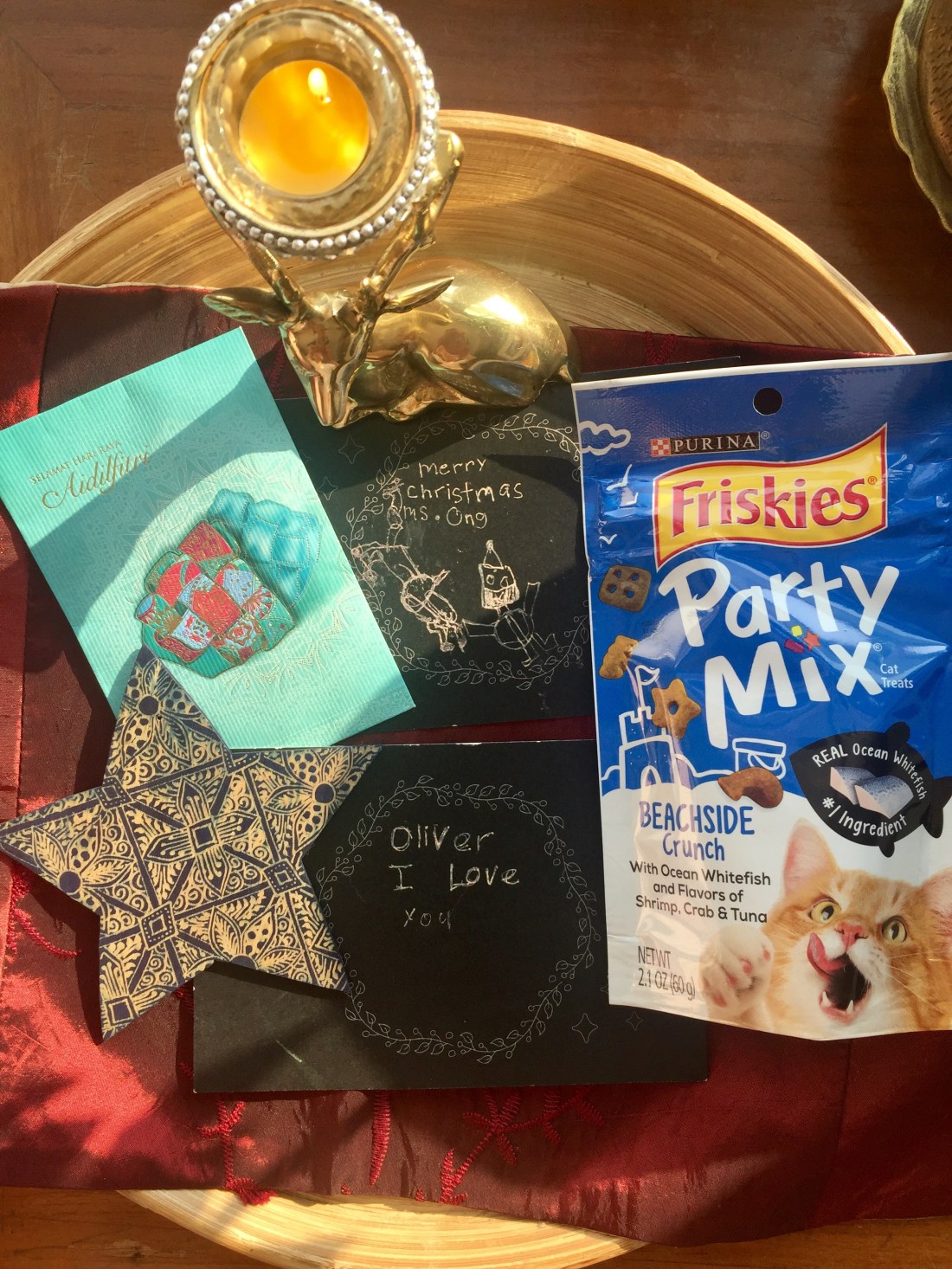
Yesterday I received my first black Christmas card. So did my cat, Oliver. He also received money gift in a Hari Raya envelope to buy cat treats. They were from Niq, my young tutee.

He told me that he had to use a special pen to write on the black background & drew Santa and his deer. He had used these cards because they were free.

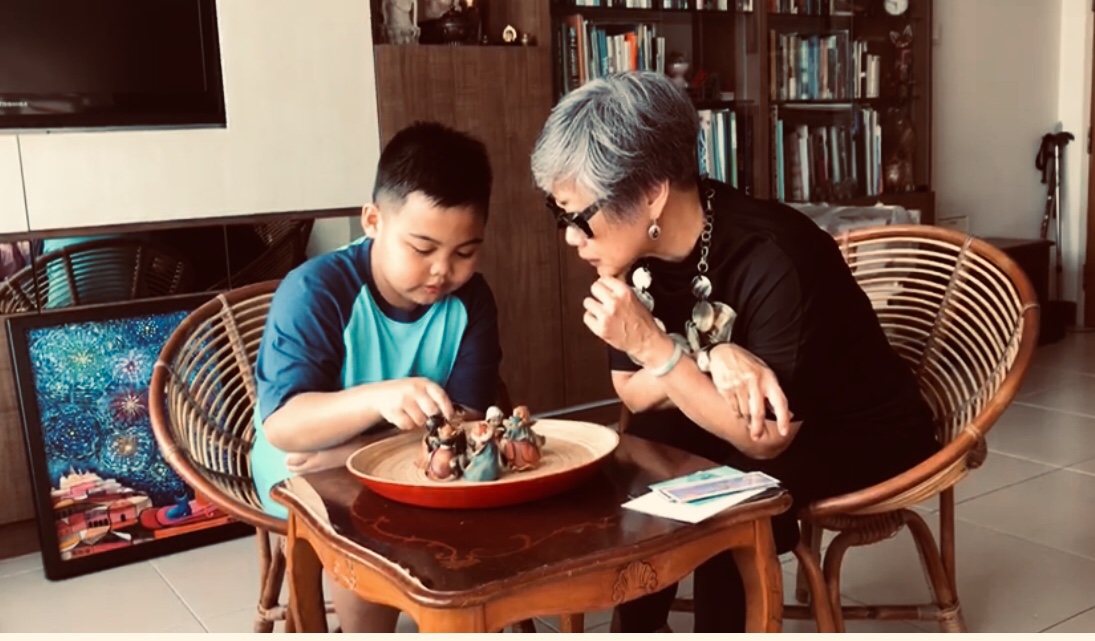
I showed him the figurines for the Nativity scene and invited him to arrange them while telling the story behind Christmas.

He happily accepted the invitation and even included me by giving me the roles of the Angel and Mother Mary. He was King, Shepherd, Sheep, Donkey and Cow.
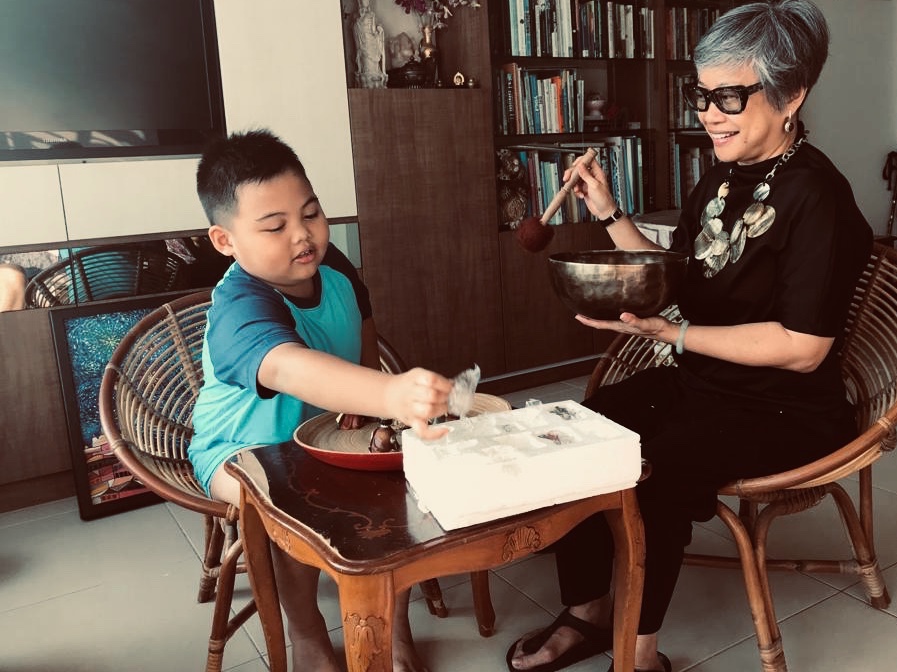
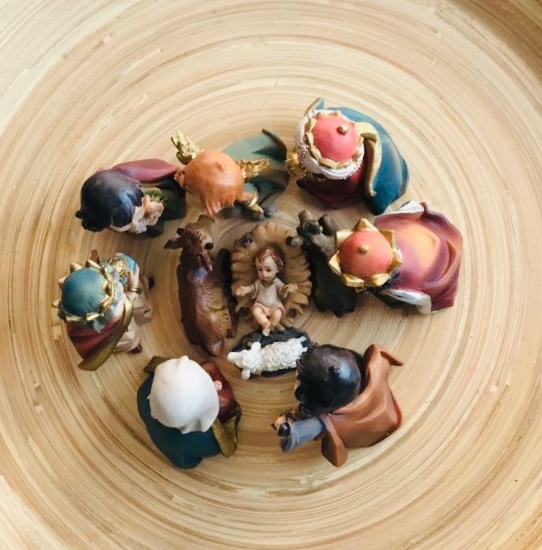
The Himalayan singing bowl added a sense of tempo to our collaboration.

In Niq’s Nativity story, every character had a speaking part, including the animals. And he was very specific about how the animals would protect Jesus when he was still a “precious baby,” but once he became a “grown up”, he would be a shepherd and take good care of them. And when he had trouble carrying wood in the forest, the Angel would help him.

I was quietly amazed at how his story was imbued with symbolic details for someone his age.

Before he left my home, he went to check on Oliver sleeping behind the washing machine in the utility area. And I heard Niq wishing the Cat “Merry Christmas” and telling him that he had made him a Christmas card and given money to buy him treats as Christmas present.

May the Light of Christmas that shone through this little boy bring peace & joy to all sentient beings.