
Category: Houpu, Kinmen (后浦金门)
Wearable Peace
9 June 2020
In our village home at Covent Garden along one of the Singapore canals, there was a fallen tree trunk by the doorway. Depending on who was using it, it was sometimes a bench and sometimes a table.
The tree trunk of nearly black wood was often my grandma’s work bench.

On it my grandma could often be seen crafting her much sought after anklets and necklaces made from embroidery threads of 5 colours.
These “Five Coloured Threads,” or “ngoh sek sua,” as they are called in our minnan dialect, were meant for babies and toddlers, especially those who cried for no apparent reason at night.
Judging by the visits of parents to our home, grandma’s handiworks must have some positive outcomes.
My grandma had suffered unexplained losses in her life. Yet she could provide this support to her community willingly & cheerfully, as she rolled the 5 threads representing the 5 elements into one wearable work of Peace to soothe a restless baby and to calm an anxious parent.
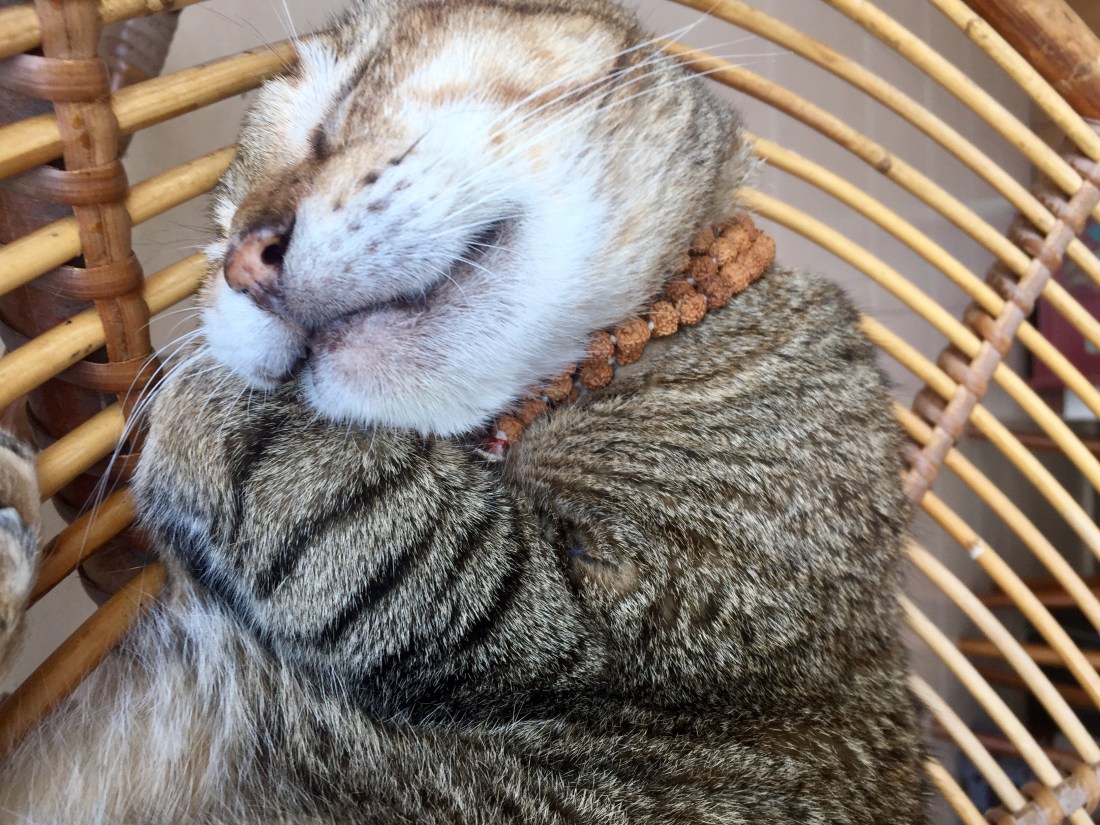
Years later when I wear rudraskha beads on my wrist and pass them over the head or back of animals as I pat them, my grandma’s hands were on me.

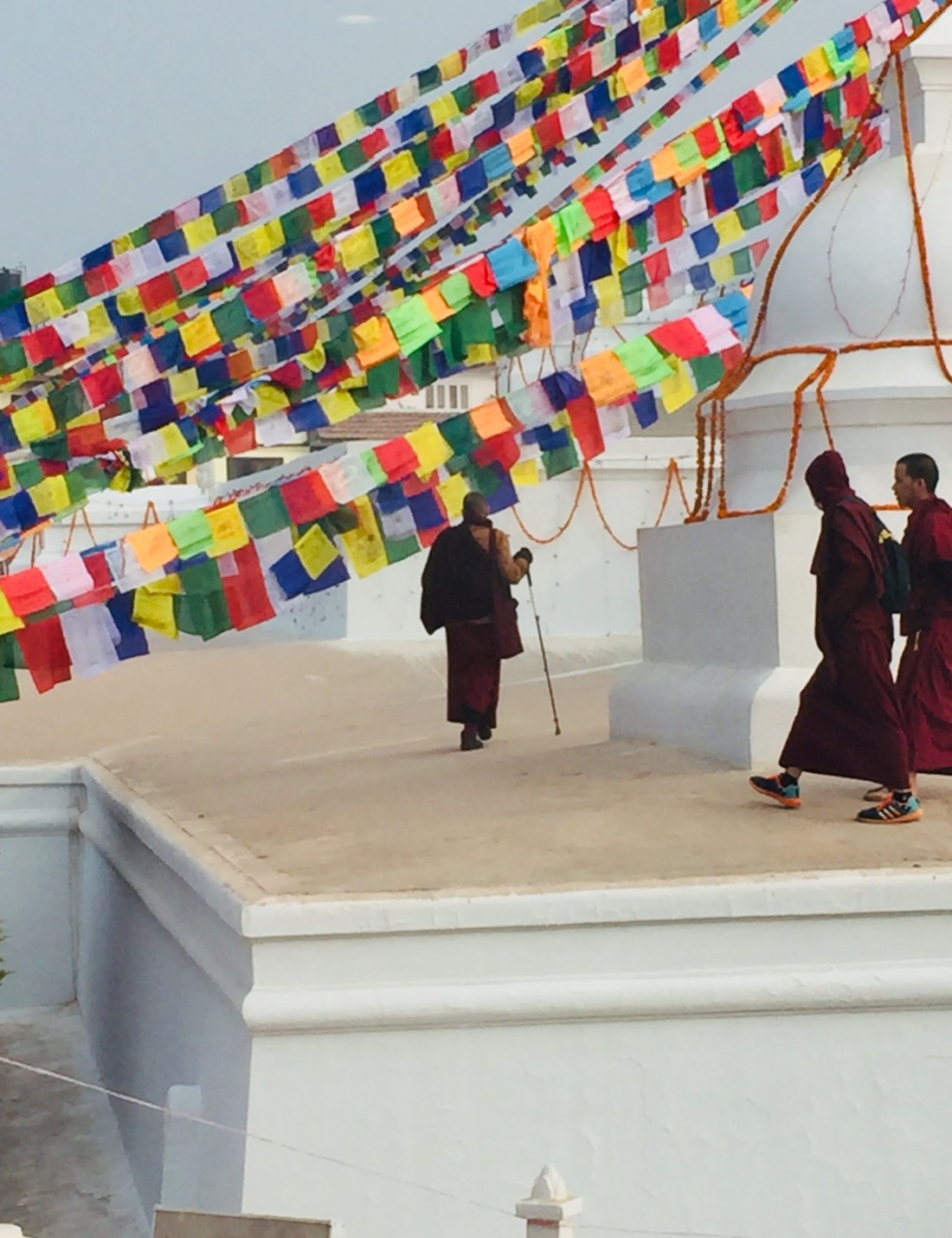
And who have known that my grandma’s simple blending of the elements to make peace would prepare me for my affinity with prayers flags 40 plus years later in Nepal?
Sweet Potato Porridge
20-02-20
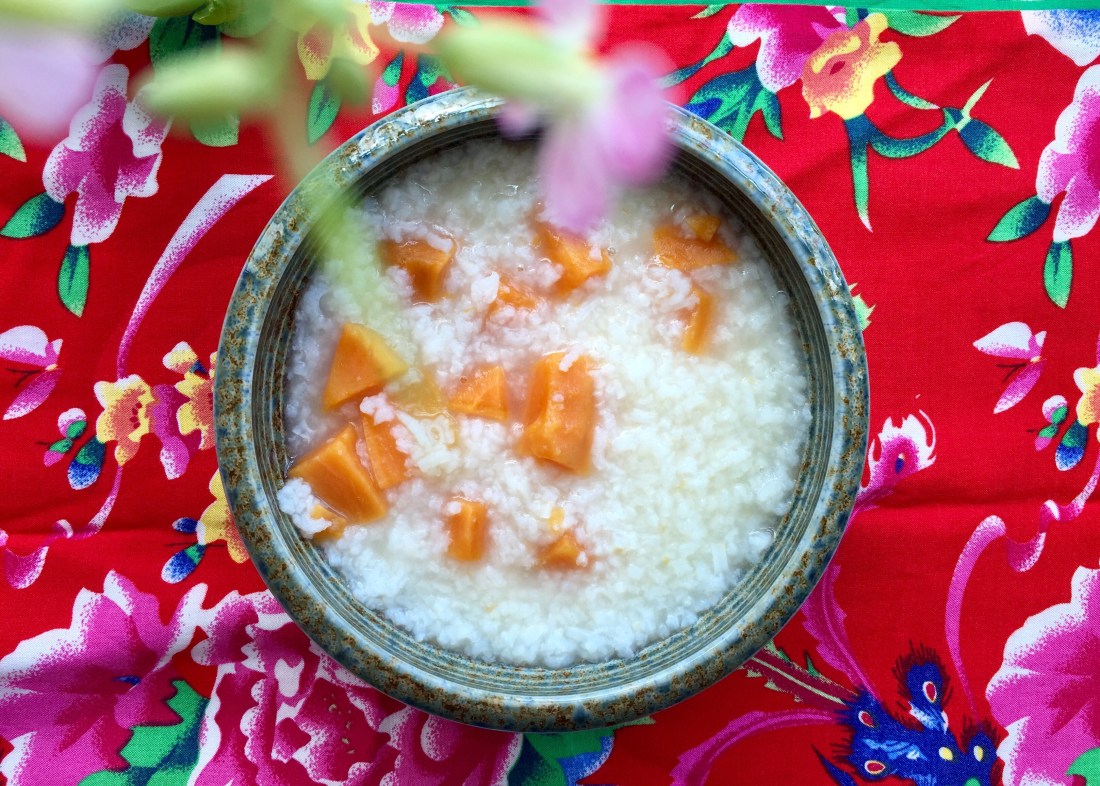
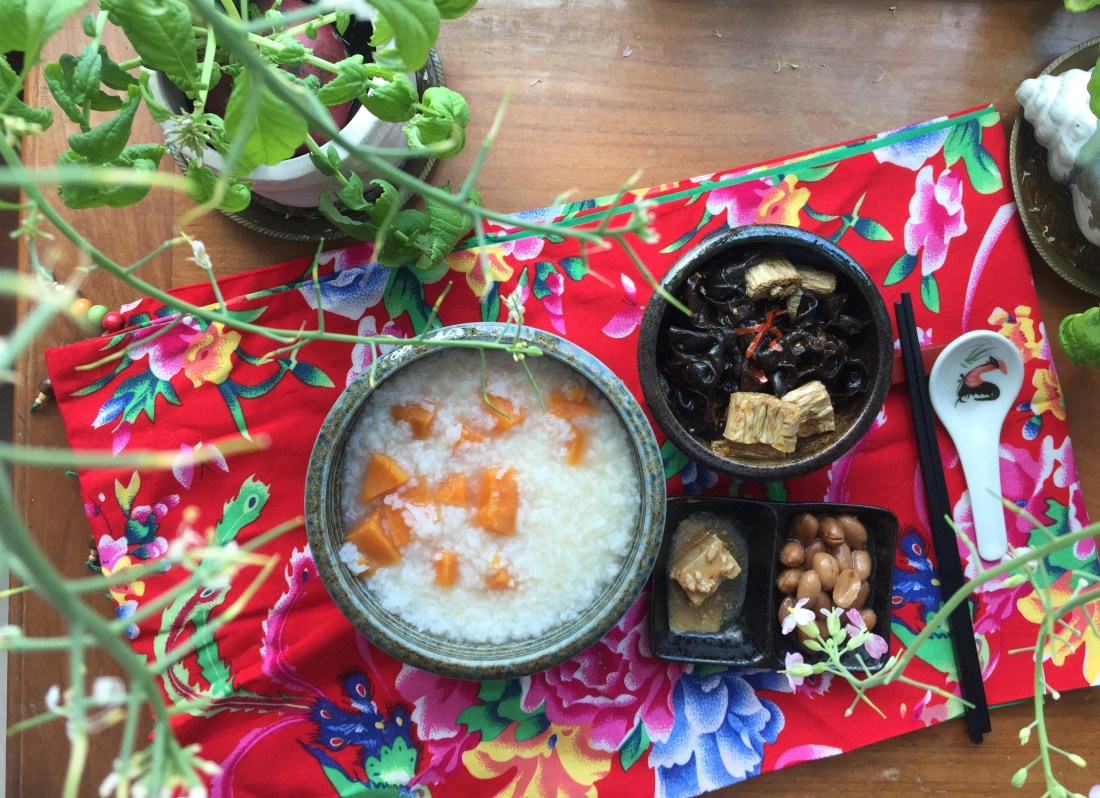
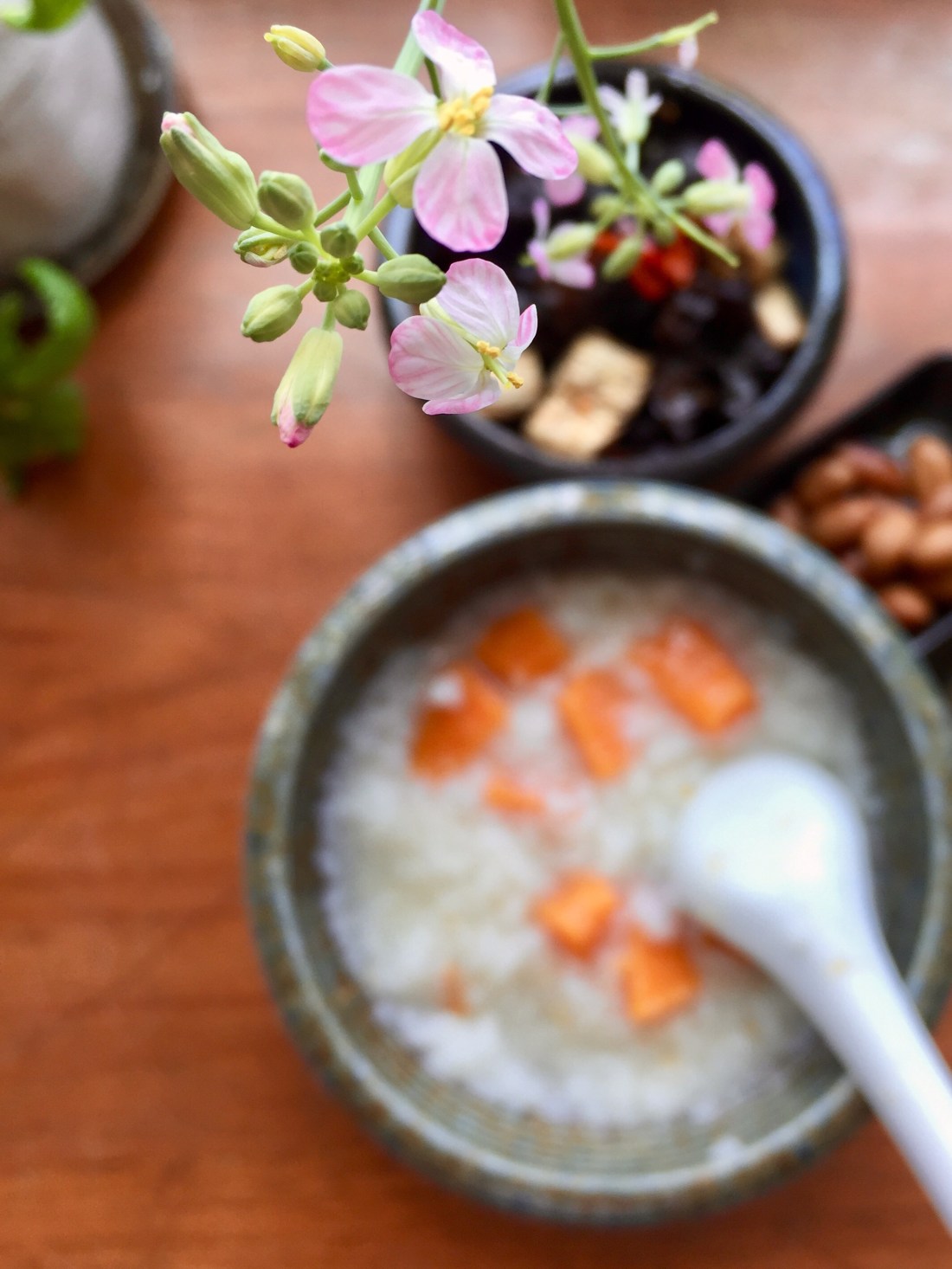
Today I cooked sweet potato porridge in memory of my Kinmenese grandmother.
Where she came from, the soil was not conducive to rice farming, but good for growing sweet potato, yam(taro) and groundnut.
Adding sweet potato to rice porridge created bulk that filled the tummy. It also sweetened the plain porridge, and augmented the aroma of cooked rice.But most of all, it kept big families with little money from going hungry.
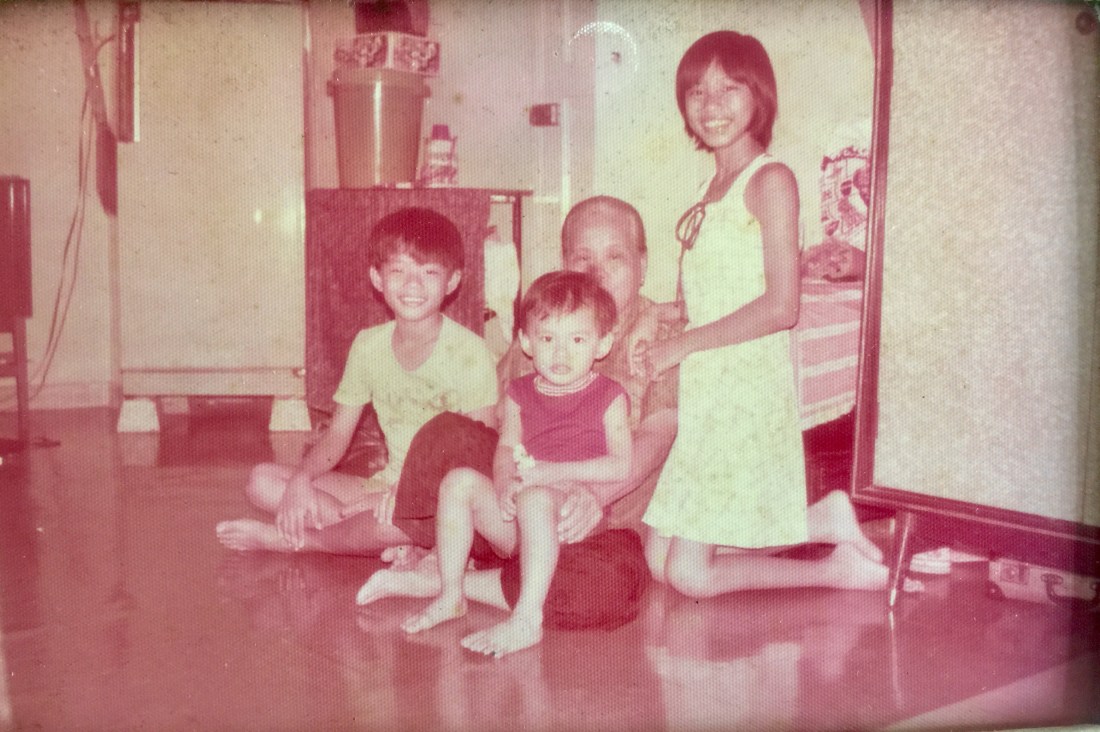
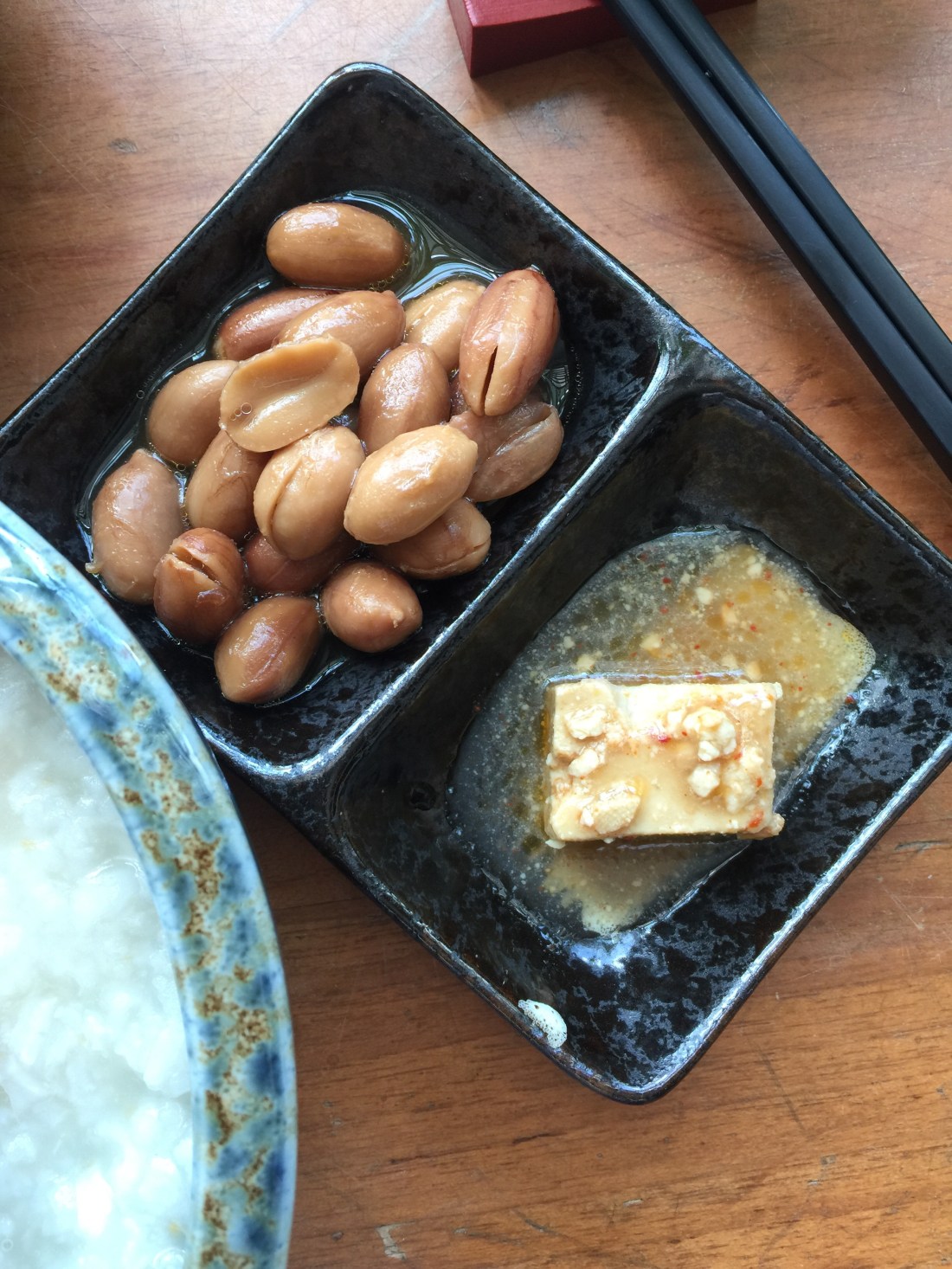
Each day after school, we would come home to my grandmother’s sweet potato porridge. Whatever meat side dishes were reserved for the evening meal when everyone was home. For lunch, my brother and I were happy with fried eggs and fermented bean curds or braised groundnuts to go with our porridge.
I can still see my brother in my mind – crew cut and bare torsoed in his primary school maroon shorts fanning his piping hot porridge with his exercise book impatiently.
Sometimes on a hot day, a watery bowl of rice porridge with sweet potato bits in it was all the nourishment I needed.
Over the years I’ve seen the humble sweet potato porridge listed in restaurants and hotel eateries. Many people who have the means to order far more superior staples on the menu gush over the sweet potato porridge.
Like some ritual food that binds a people to their cultural origins, the sweet potato porridge is more than a comfort food to me.
It reminds me of the generosity & ingenuity of Providence, and the faith of our forefathers that life would improve despite being confronted with evidence of scarcity & uncertainties everywhere.
If people before us could survive on such humble food and open up so many opportunities for others, our generation will definitely do better.
Day of the Horse (马日)
30 January 2020 (Day 6 of CNY)
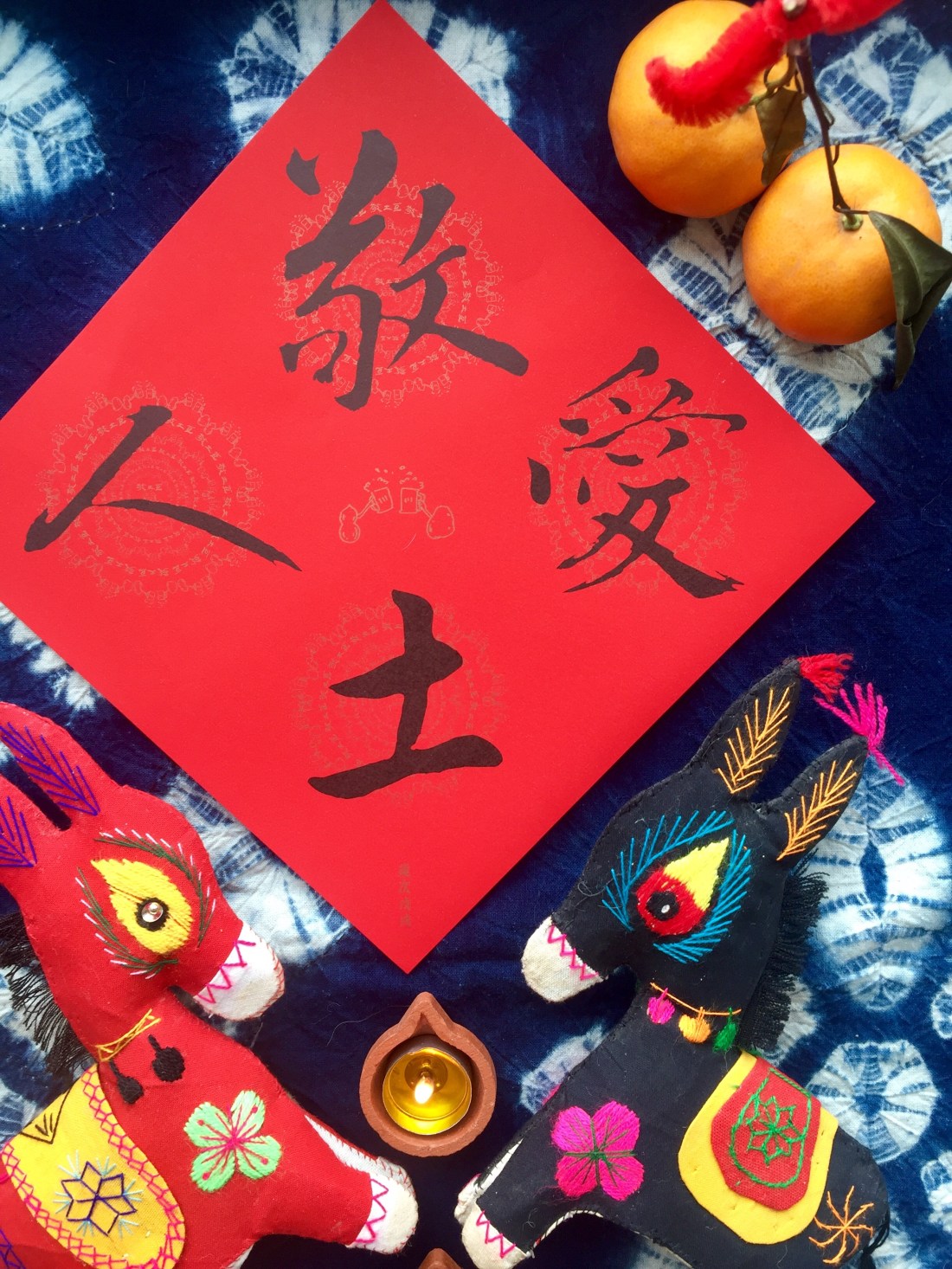
According to chinese folklores, horses were born on the 6th day of the lunar new year celebration.
My Kimenese grandma was very mindful of animals, flowers and trees even when she was observing mainly human-centric rituals.
For example we were not allowed to sew anything on the first day of the lunar new year lest we sewed shut the eyes of baby animals born around this time.
It seemed like a load of superstitious nonsense in my youth, but my exposure to animals over the years taught me that my grandma’s belief & practice was her way of not causing harm to others in whatever ways she could.

The Chinese characters on the red paper, [敬土爱人] which came from her birthplace of Kinmen Island can be translated into “Respecting Earth, Loving Humans.” It is an exhortation to love the soil that we walk on and to love people as well.
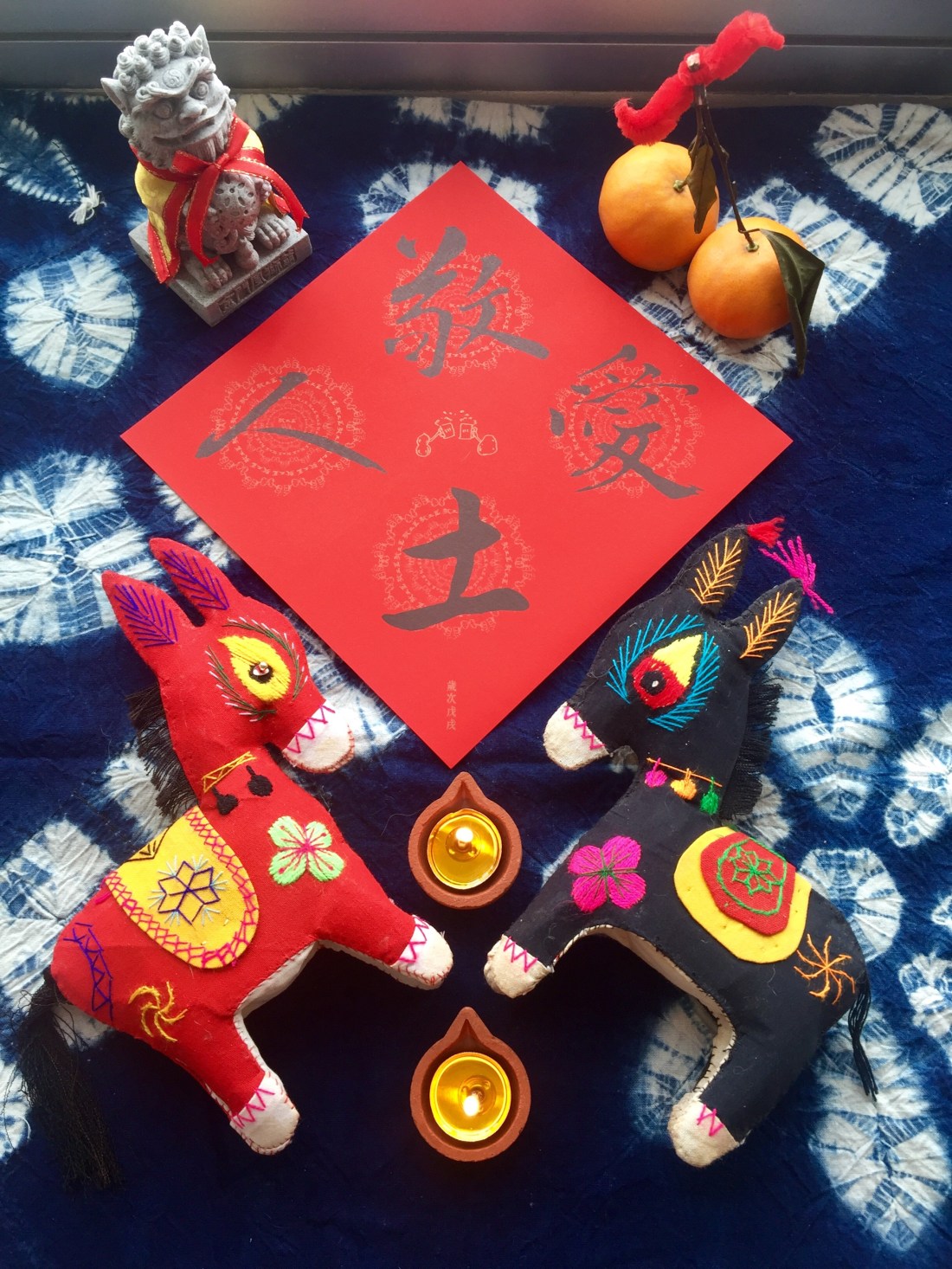
This pair of handsewn donkeys represents all equine animals, including horses. I got them from a craft fair years and years ago.
So on this Day of the Horse, may we respect Earth and all her inhabitants, animals included, and become loving people.
Returning (归来)
16 January 2020
I don’t normally approve of stealing.
But there was this Chinese magazine that I wanted badly, but couldn’t get hold of or subscribe to because of my weak command of the Chinese Language.
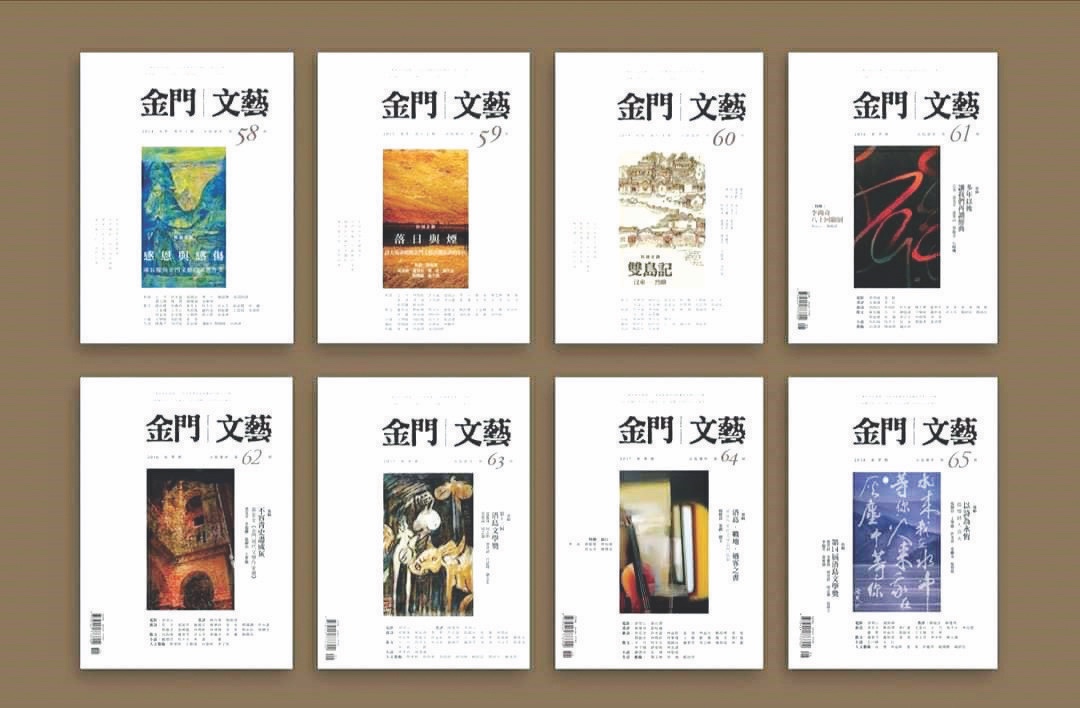
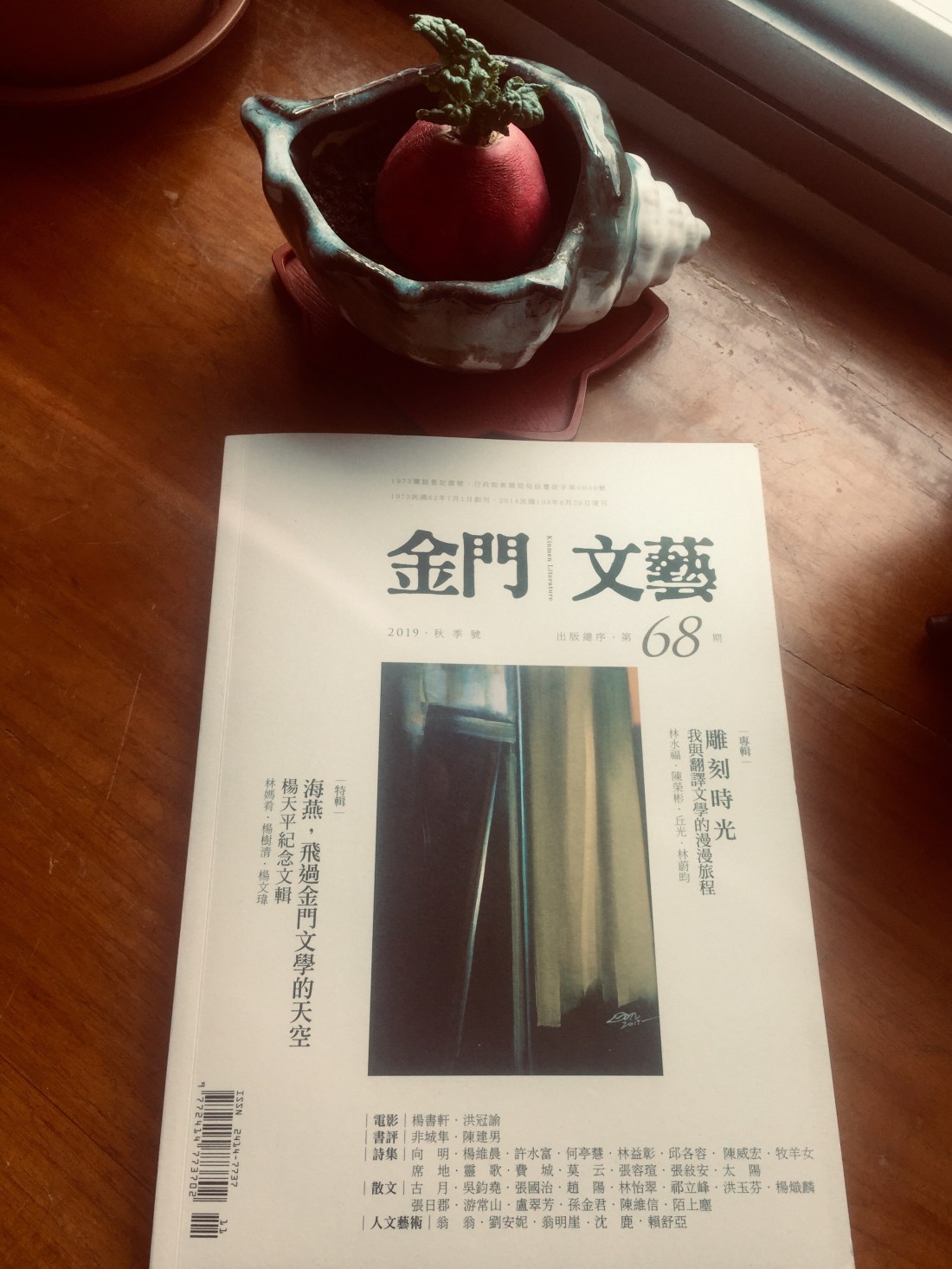
This elusive magazine is known as 金门文艺 or Kinmen Literature. It is a collection of mostly Kinmen inspired literary and art pieces published bi-annually by people who are determined to promote & preserve Kinmen’s intangible heritage.
I like the artistic layout of its cover page, and the feel of its paper quality. I cherish the chance to have a glimpse of the Kinmen spirit through the poems, essays, artworks, photographs and even advertisements of Gaoliang wine that appear in the magazine.
But most of all, I’m in love with Kinmen Literature because Kinmen is where my grandma was born.
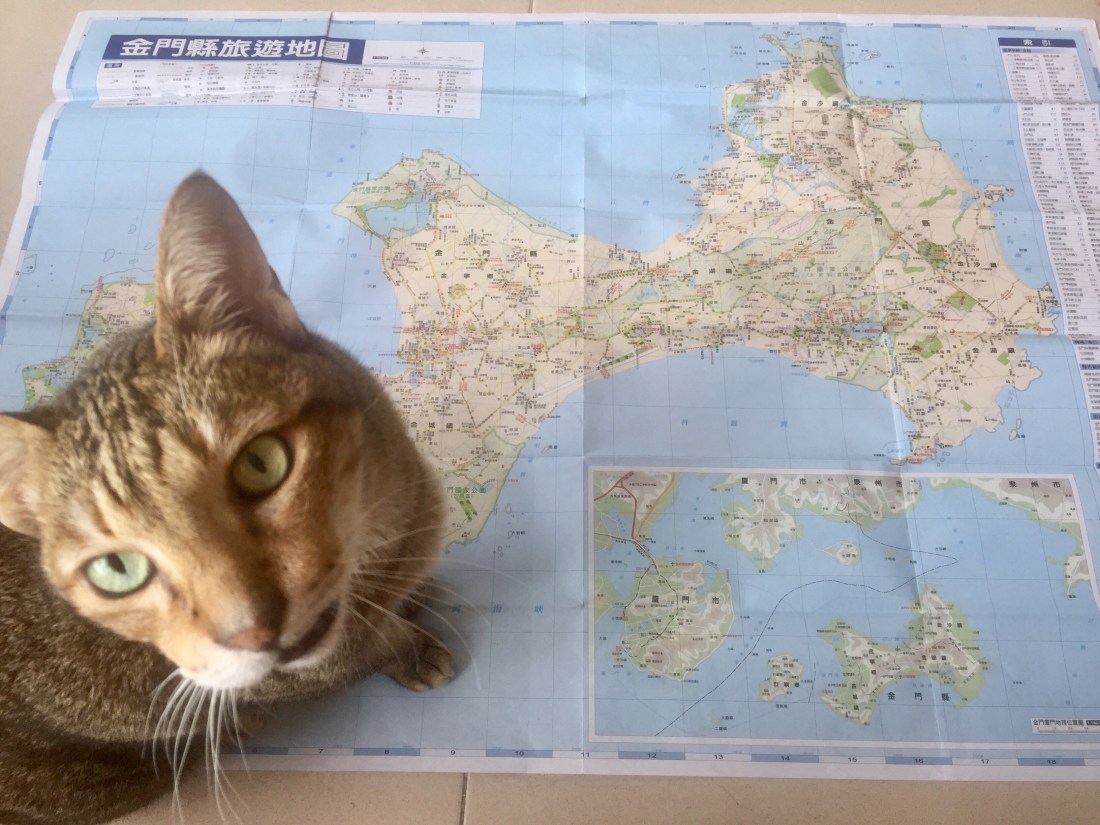
As a Chinese woman who makes a living teaching English Language and Literature, I felt that an annual subscription of Kinmen Literature would let me stay connected to Kinmen while honoring the team behind this labour of love.
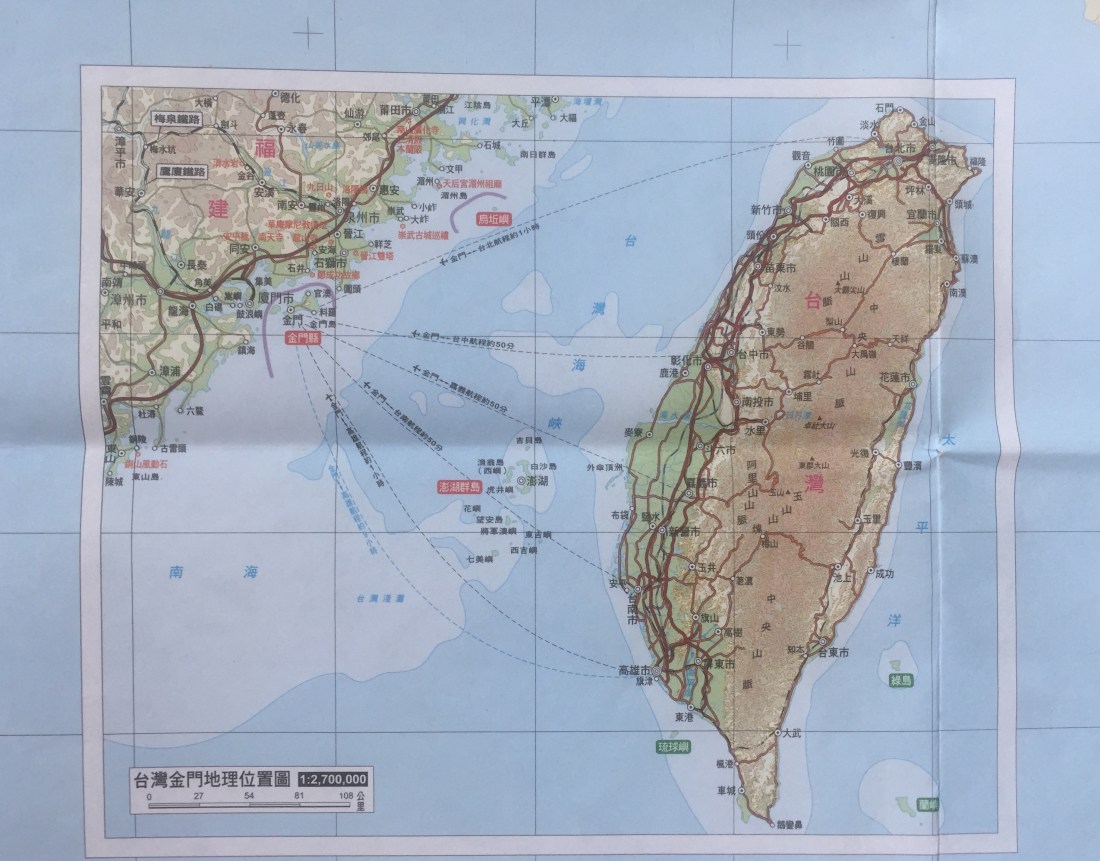
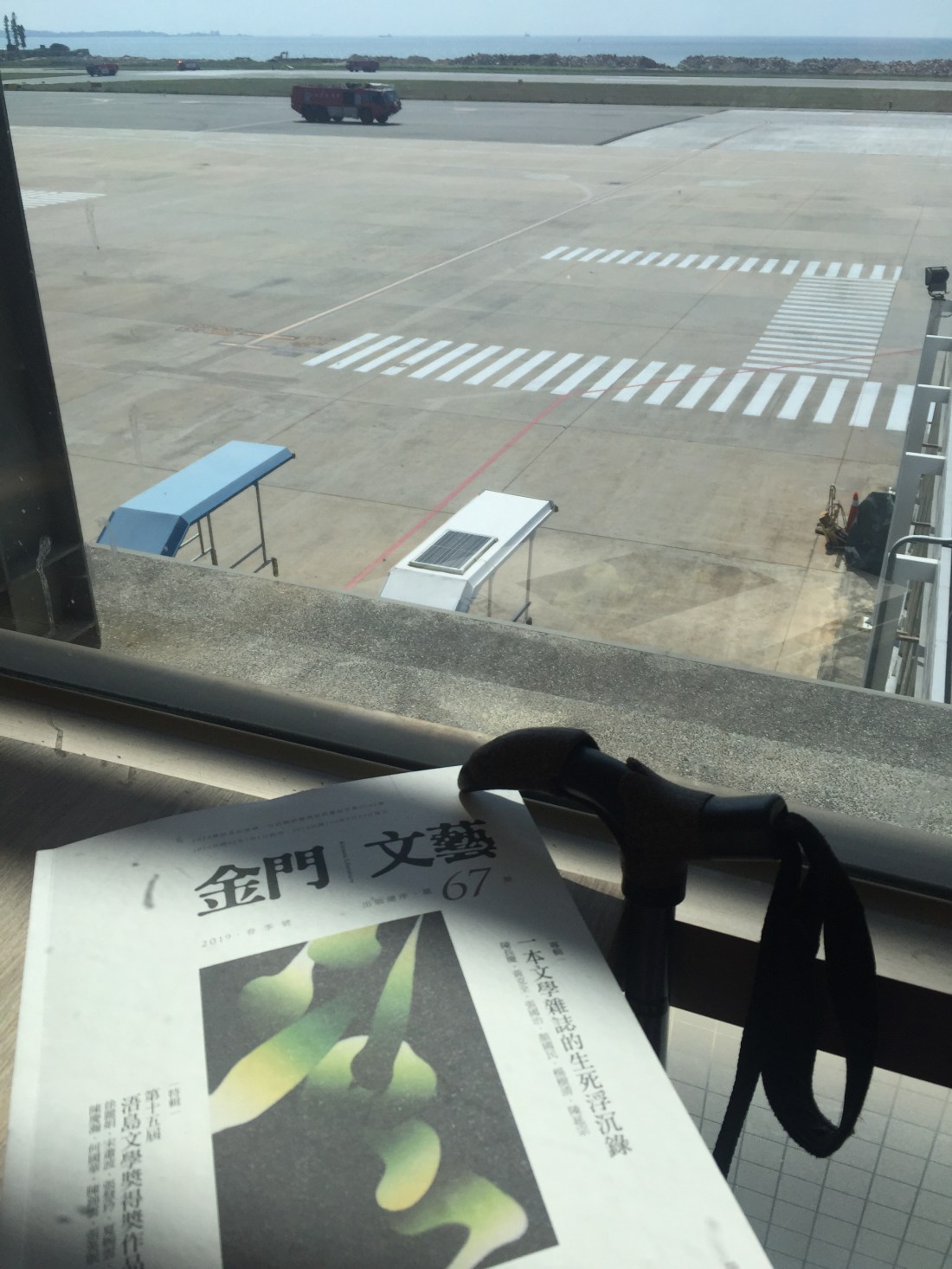
Last September in 2019, on the day of our flight from Kinmen to Taiwan for our return flight to Singapore, I saw copies of the 67th edition of Kinmen Literature at the Kinmen Airport reading lounge.
Should I just “take” one copy to Sg as a souvenir? Who knows when will I be able to return to Kinmen again?
And after all there was no cashier counter where I could make payment for the copy even if I had wanted to, the thief in me reasoned.
Furthermore there was no sign saying that the magazine had to be returned, the justification for dishonesty strengthened.
But then again there was no information anywhere that stated the magazine was free either. A sliver of light broke through my muddled mind.
Pre-boarding, my thoughts continued to oscillate between keeping the magazine which was actually stealing, and letting it go.
Finally at the last moment, I decided to return it to the shelves where I found it.
But not before taking many many shots of the copy next to my walking cane as if the magazine was a person.😊
In mid-November 2019, a couple of months after I triumphed over the temptation of taking what’s not mine in Kinmen, an Facebook friend from Taiwan asked if we could meet up. She was in Singapore for a very short visit.
Miao Ling (陈妙玲)had read my Facebook posts about my grandma’s childhood and my journeys in Kinmen for her. Even though Miao Ling knew I wasn’t proficient in Chinese and might not even have time to meet her, she decided to bring a copy of the latest edition of Kinmen Literature for me!♥️
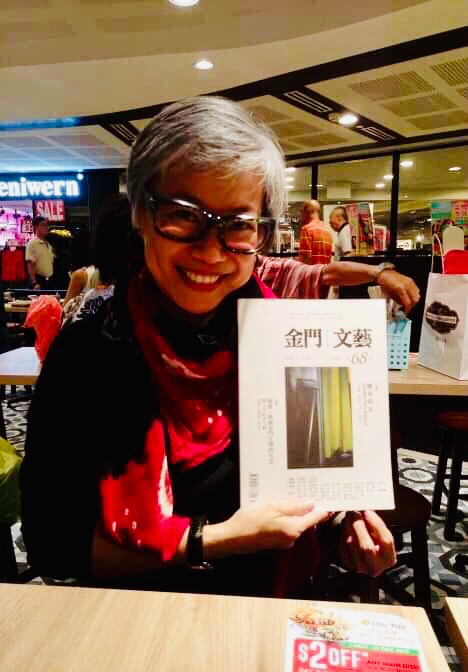
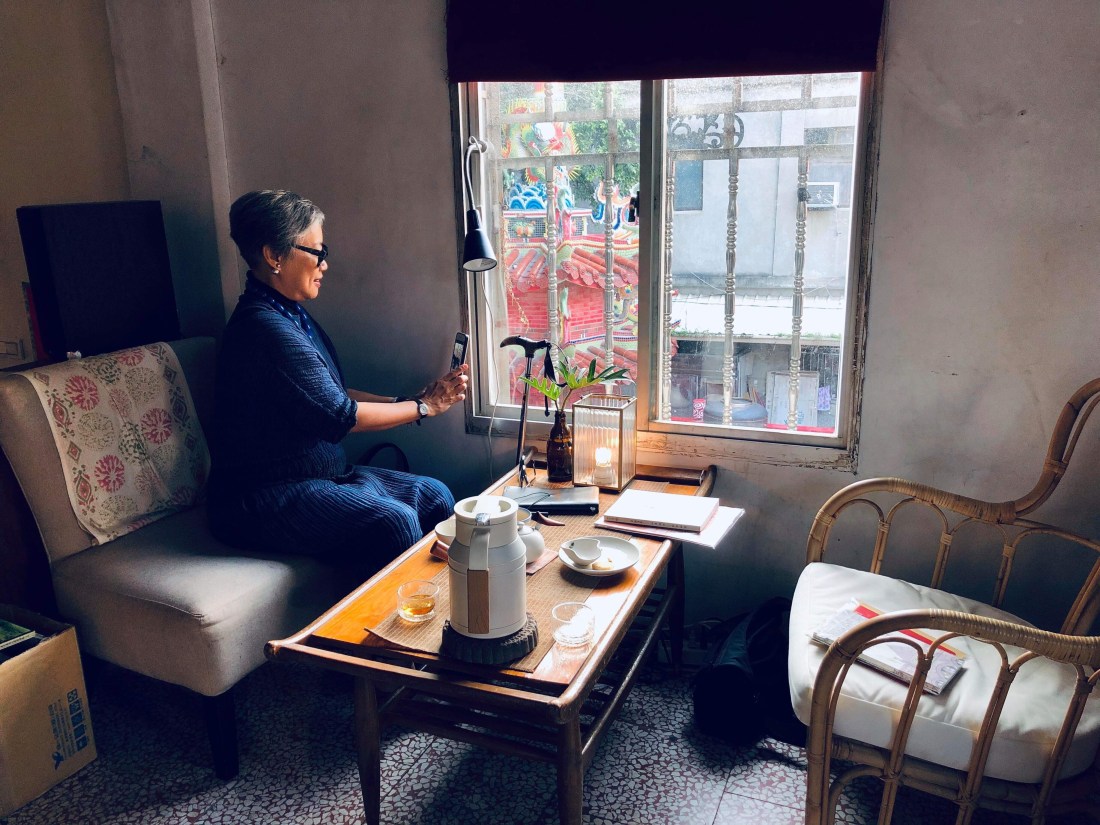
At the Nanyang Cafe in Chinatown Point on 16 Nov 2019, I received my very own copy of the literary magazine from Ms Chen Miao Ling, who was also on the editorial team of the magazine that I coveted.
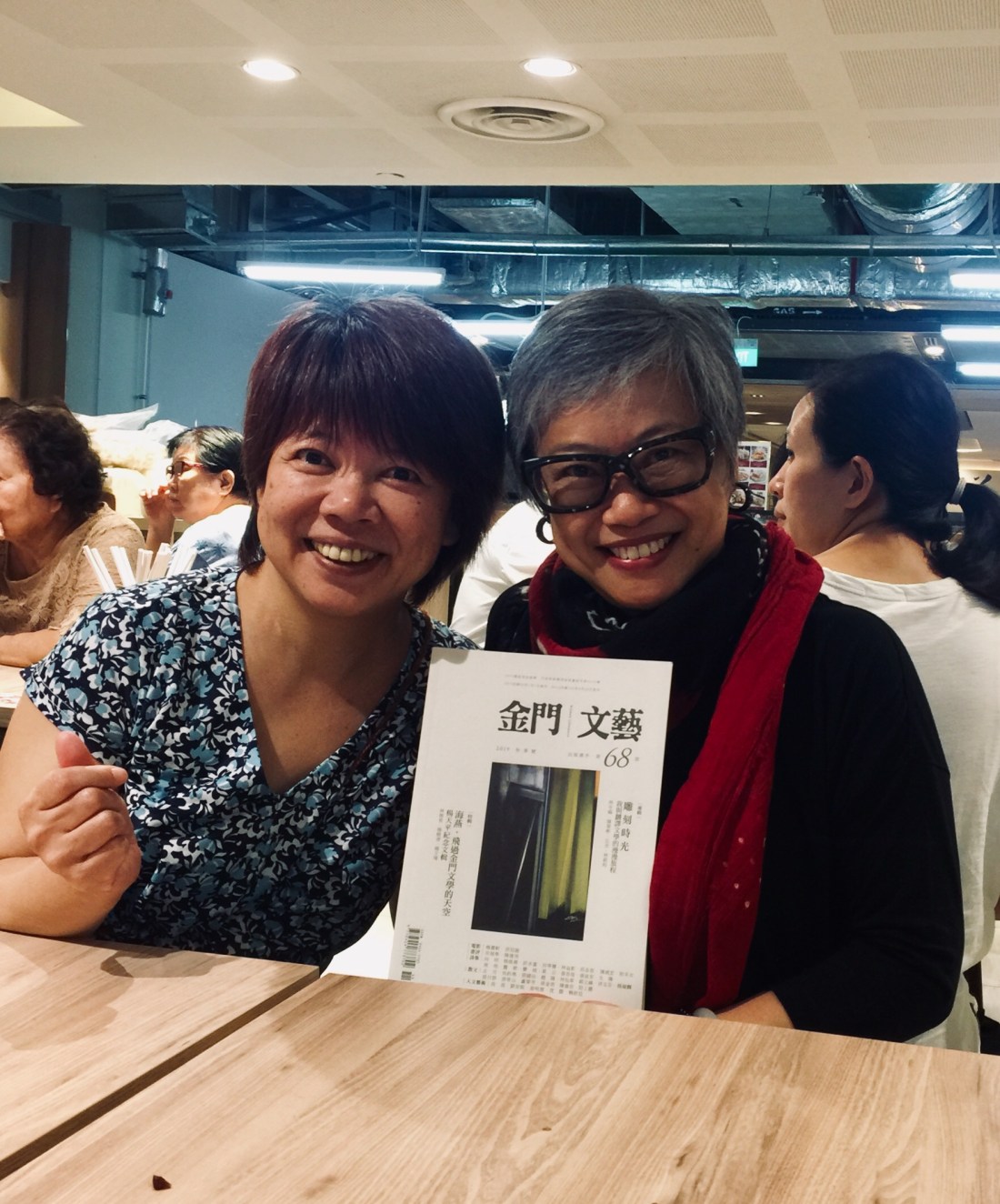
Miao Ling indulged me as I gushed in a mixture of English, Chinese and Minan Dialect about my encounters with Kinmen Literature, including the attempt to steal one from the Kinmen Airport.
And so there we were, two modern day Kinmen daughters exchanging information of our family histories.
As we spoke, we felt the fears & tears of daughters before us in olden times, many as young as 7 or 9 years old, forced to leave their homes to be raised by near strangers because of changes in their family fortunes brought on by politics & wars.
Before we parted, Miao Ling & I took some pictures together. A Filipino lady from across our table helped us to record this meet up that started a century ago, in 1914, the birth year of my grandma.
It’s now 2020. Last week I learnt that my grandma’s love for Kinmen and my visits have found their way to Kinmen Daily (金門日報) and Indonesian- Chinese Daily (印華日報) through Miao Ling’s writing.
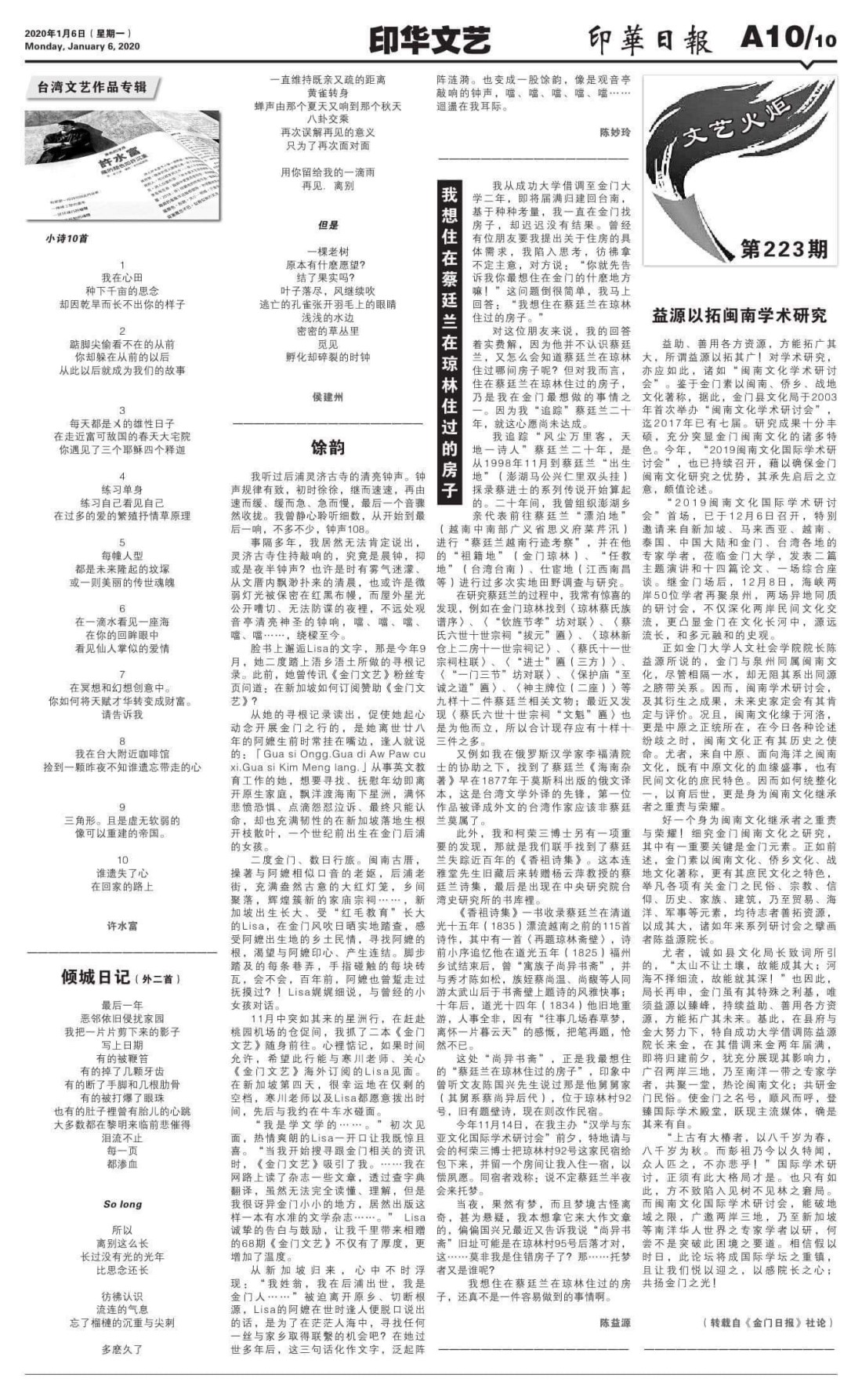
In her essay, Miao Ling likened the 108 chimes of the temple bell in her childhood to my grandma’s constant pining for her birthplace.
She communicated poignantly my attempts to sync with Kinmen and my grandma’s 3 phrases of attachment to her birthplace that she recited like a mantra throughout her life.
Miao Ling’s publication in the newspaper has enabled an unknown 7-year-old girl, born more than a 100 years ago in Kinmen, to return to the embrace of her birthplace.
Love can really cross oceans and seas, transcend histories and navigate around all kinds of logistical & language difficulties.
Our duty is perhaps not to be disheartened or feel silly, and talk ourselves out of loving what matters to us.
Honouring Ancestor
21 Dec 2019
Tomorrow is the Winter Solstice. Today is my grandma’s 28th death anniversary.
She was born on Kinmen Island in 1914. This year I visited her birthplace twice and walked the streets in the old city she would have walked in when she was a kid.
This June as I was wondering what item of importance that belonged to her could I still find to take with me on my trip, a much cherished silver belt that she wore all her life emerged.
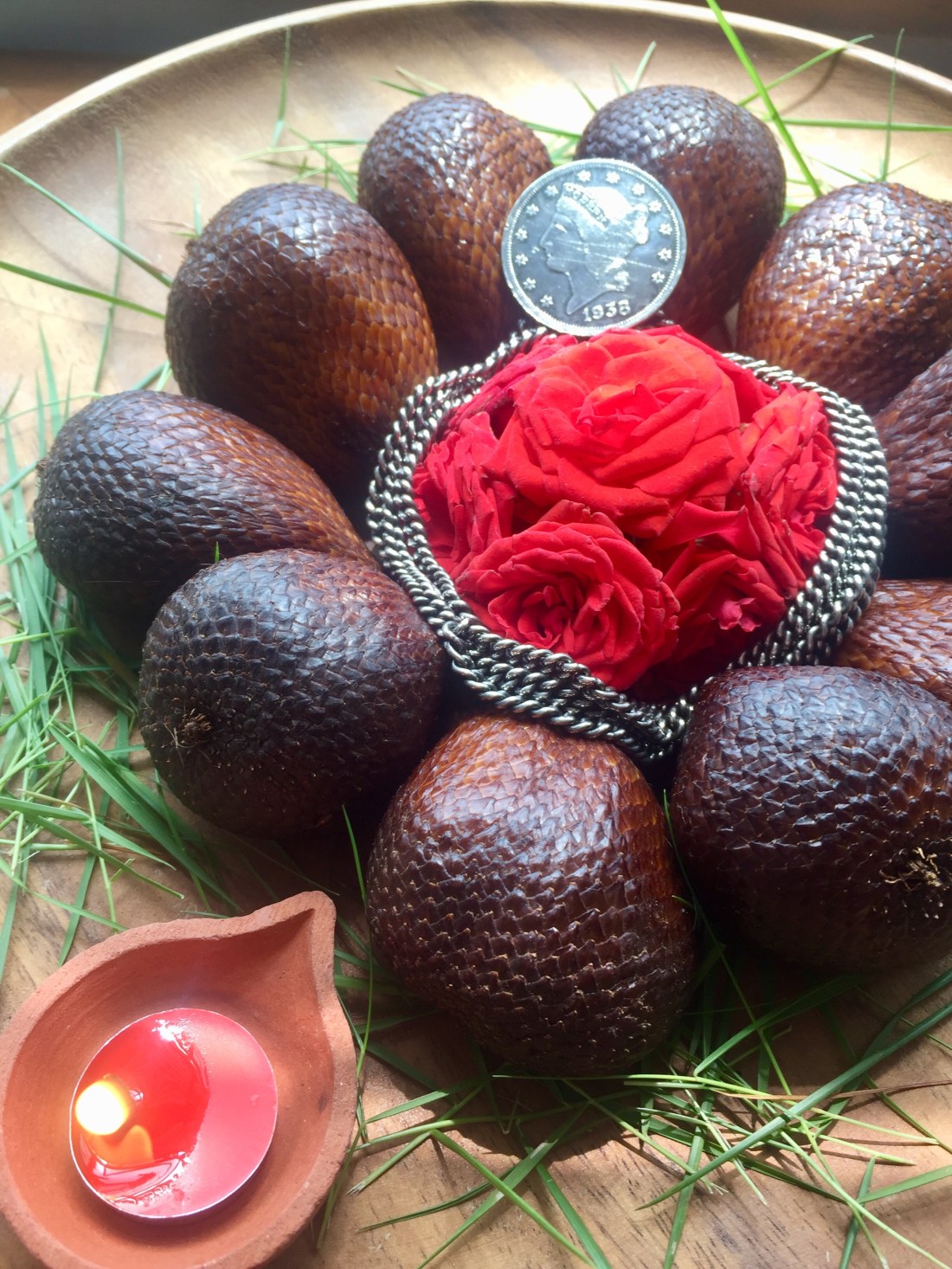
And a few days ago, while buying coffee powder at Sheng Shiong, I came across her favourite fruit known as Salak or Snake Fruit. As far as I can remember the Salak is the only fruit my grandma cared about.
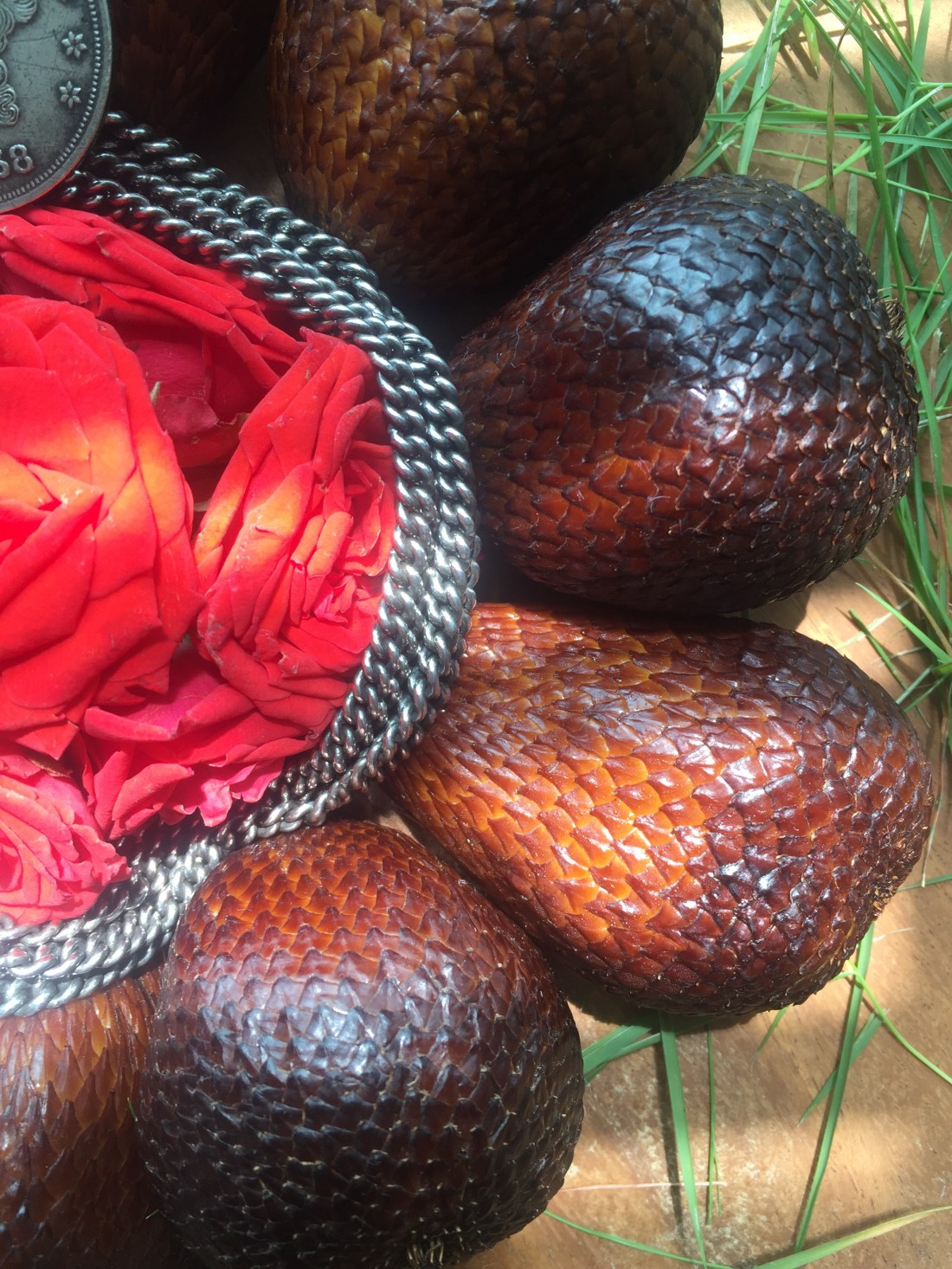
Yesterday a friend invited me to hang out with him at Boon Lay Shopping Centre. We had lunch, foot massage and bought flowers at the Indian grocery shop.
My grandma also loved having flowers in her hair.
So today instead of travelling to the columbarium to stand a few minutes in front of my grandma’s niche, I decided to take my time & quietly dedicate a mandala made up of her favourite things.
And I hope as we find our own ways of acknowledging our forefathers & foremothers, what’s broken can be mended and what’s good can become even better, for our own benefit and the benefit of all sentient beings. ♥️🌈🐾

If Things Could Talk…
26 Sep 2019
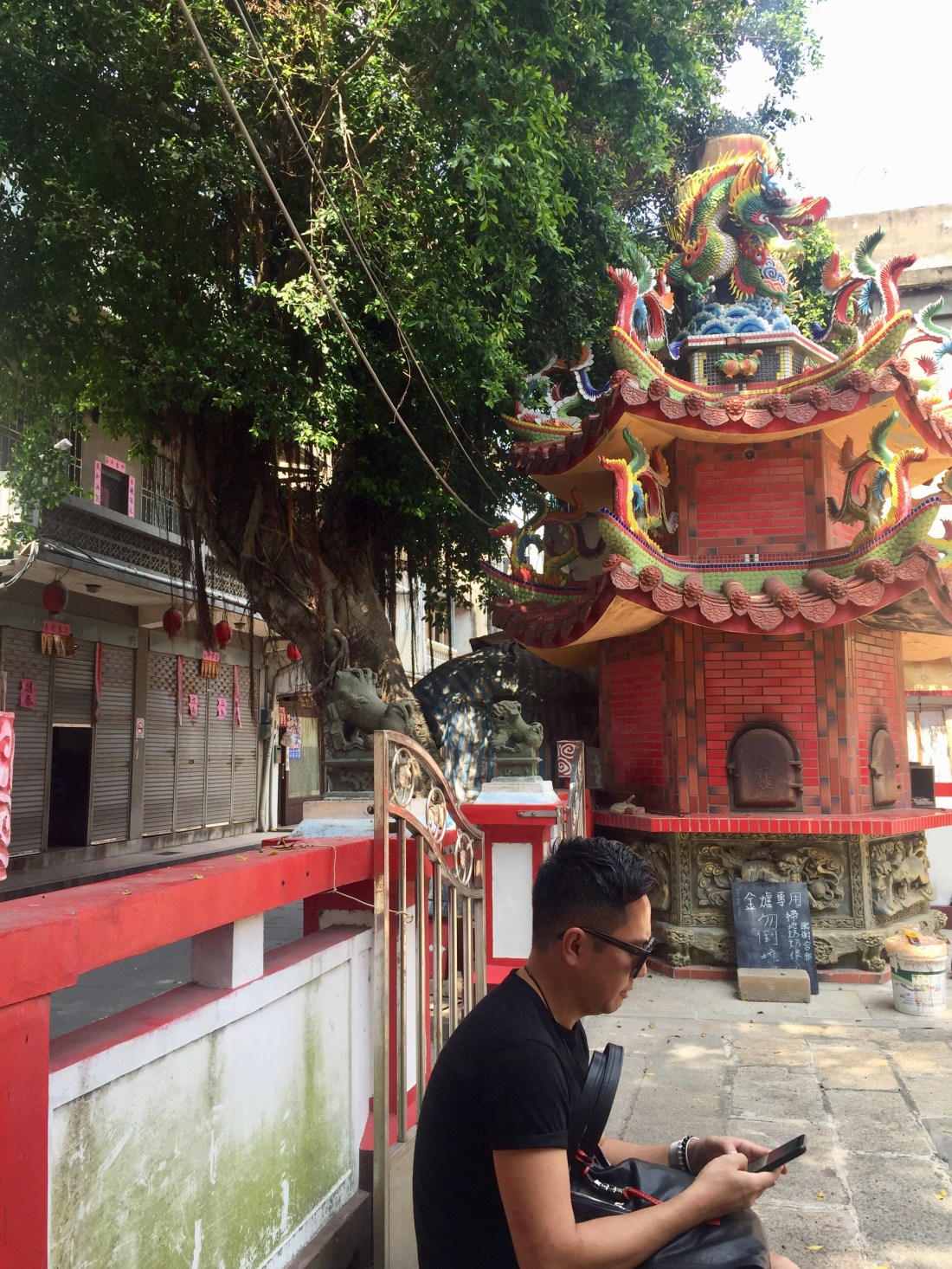
I was resting in the temple courtyard when I chanced upon this rusty rack holding up containers of beautiful young plants.
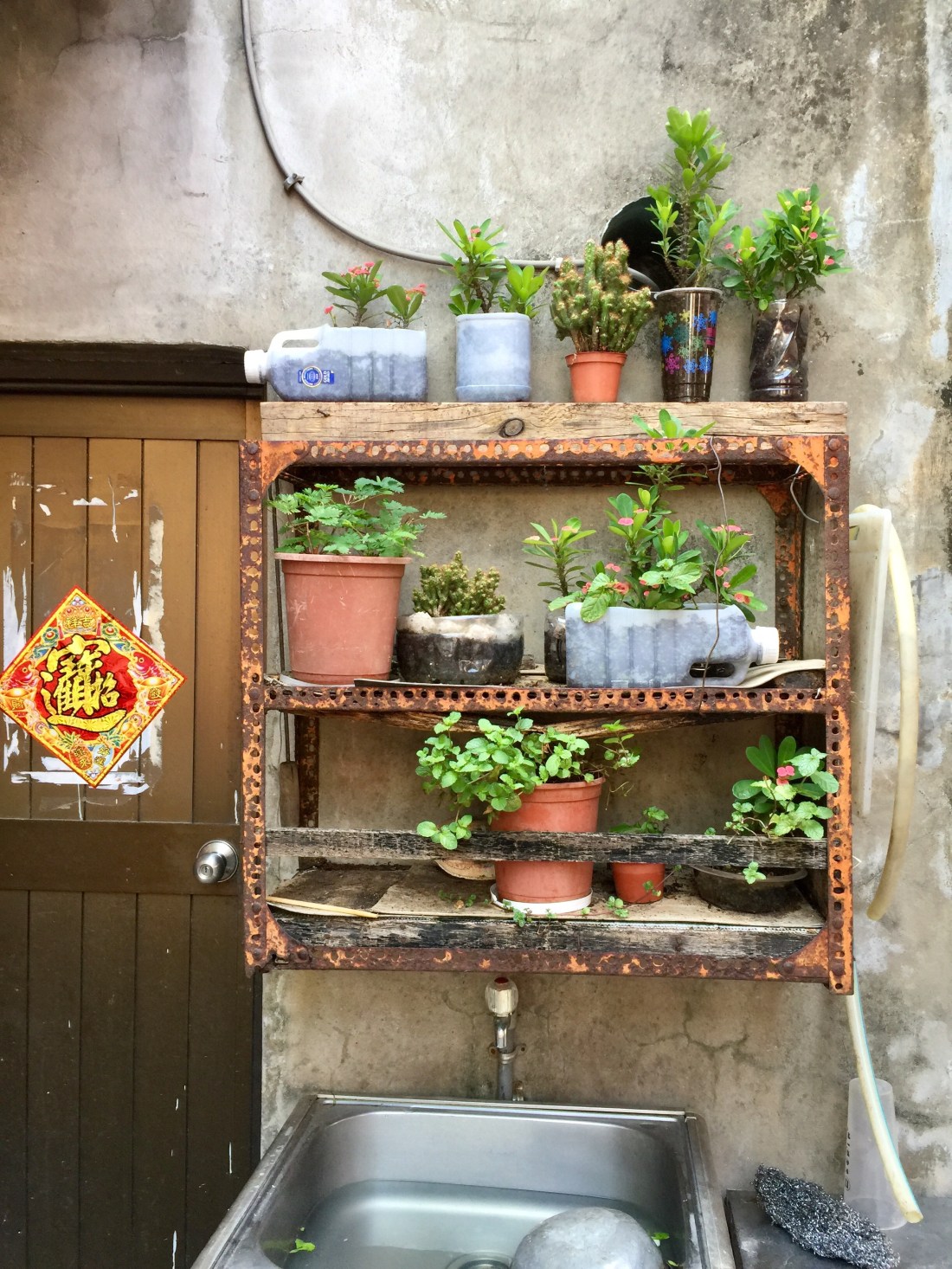
This calls for a trip to IKEA, the Singaporean shopaholic in me remarked inwardly.
But somehow the rotting planks, rusty bits and worn out containers formed a poignant contrast to the succulent foliage.

It felt like I was looking at an altar dedicated to an Unseen Benevolence.
It felt like I was facing at altar dedicated to an Unseen Benevolent Presence.
I lingered respectfully and felt the compulsion to bow before moving on.
Bridges in the Teahouse
22 Sep 2019
Two Sundays ago (8 Sept) we called on Wang Ling at the Local Teahouse (后浦泡茶间) in Houpu, Kinmen Island (金门)
She was my first point of Kinmen contact when I was reading up for my first trip in June to seek out my grandma’s birthplace.
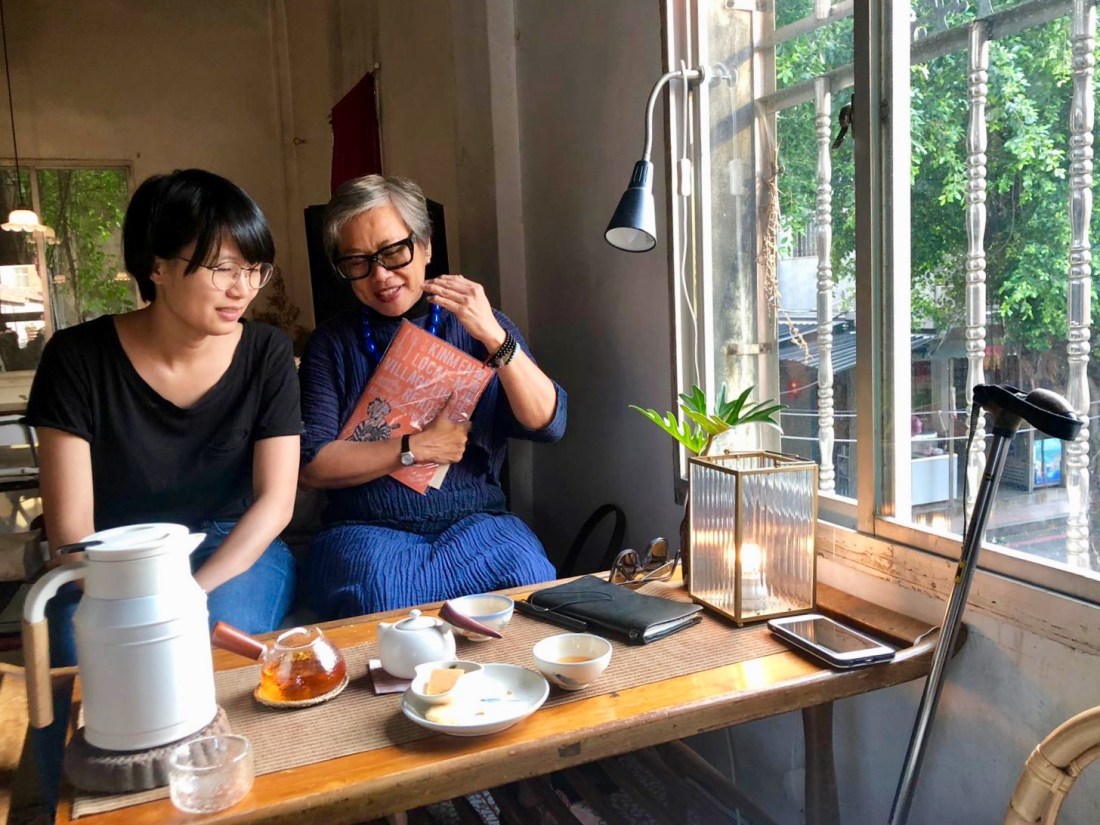
On this second trip I was keen to show my travel mates, El & Ron, the juxtaposition of Wang Ling’s youthful hospitality with the nostalgic ambience of the quaint teahouse setting.

Over light Taiwanese tea paired with local kinmen snacks, conversations among the four of us from different backgrounds & ages flowed effortlessly.
The Local Teahouse was set up primarily to facilitate communication & cultural exchanges among young local working adults.
Apart from serving snacks & beverages, it also has specially curated merchandise & talks that promote interest and respect for folk cultures, literature, architecture and the arts. As a result, the Local Teahouse also welcomes overseas visitors.

On this trip I was also very eager to pick up my copy of Local-M Village Live Reader, a magazine that promotes village revitalisation through music and many interesting activities.
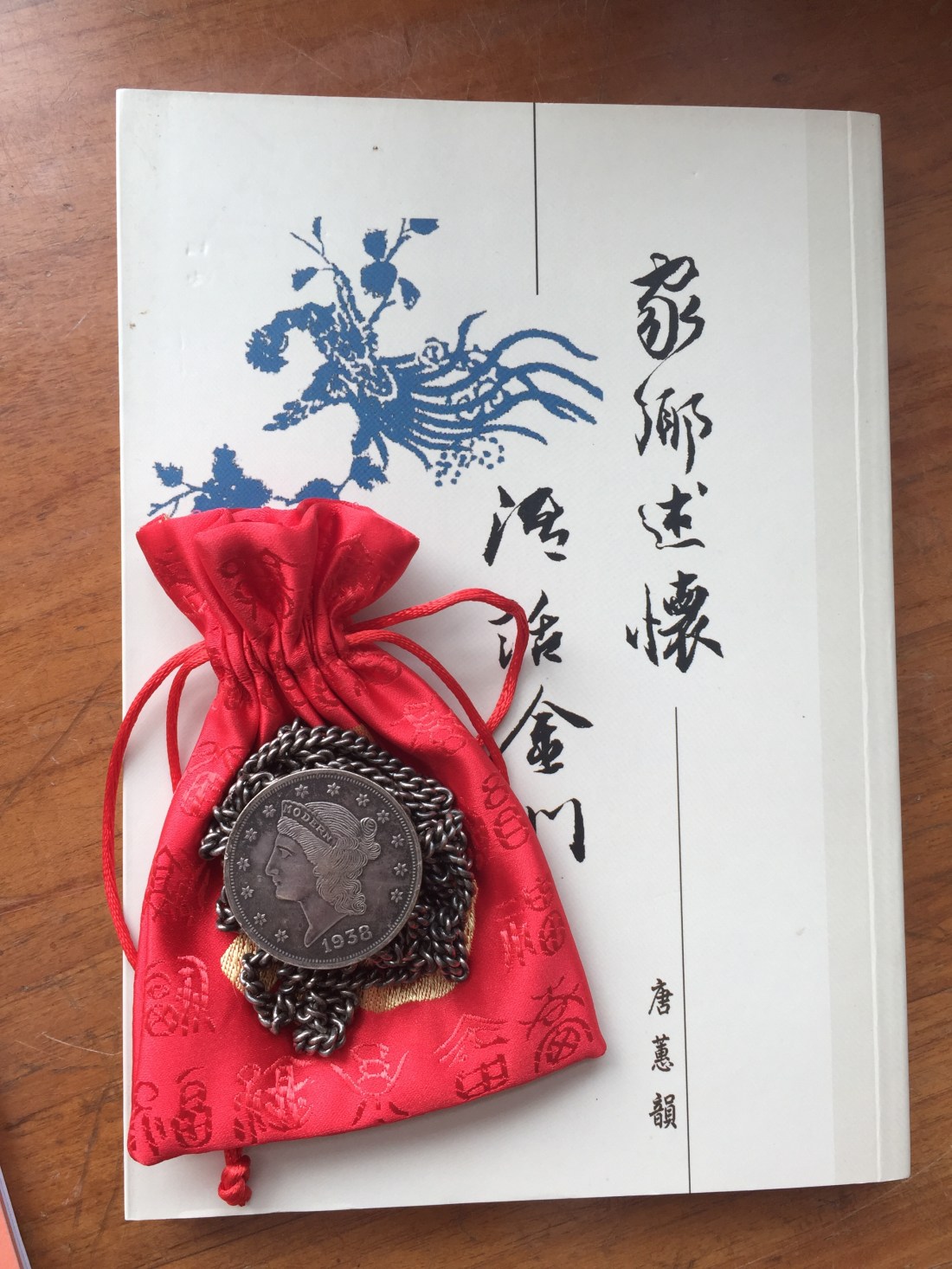
Along with the magazine, I was very happy to receive a book by scholar ethnographer, 唐蕙韻, of the Kinmen University.

The writer happens to share the same birthplace as my grandma. Even though she was born 58 years after my grandma, her book contains precious photos of old places in Houpu that my grandma might have seen and most certainly walked in.
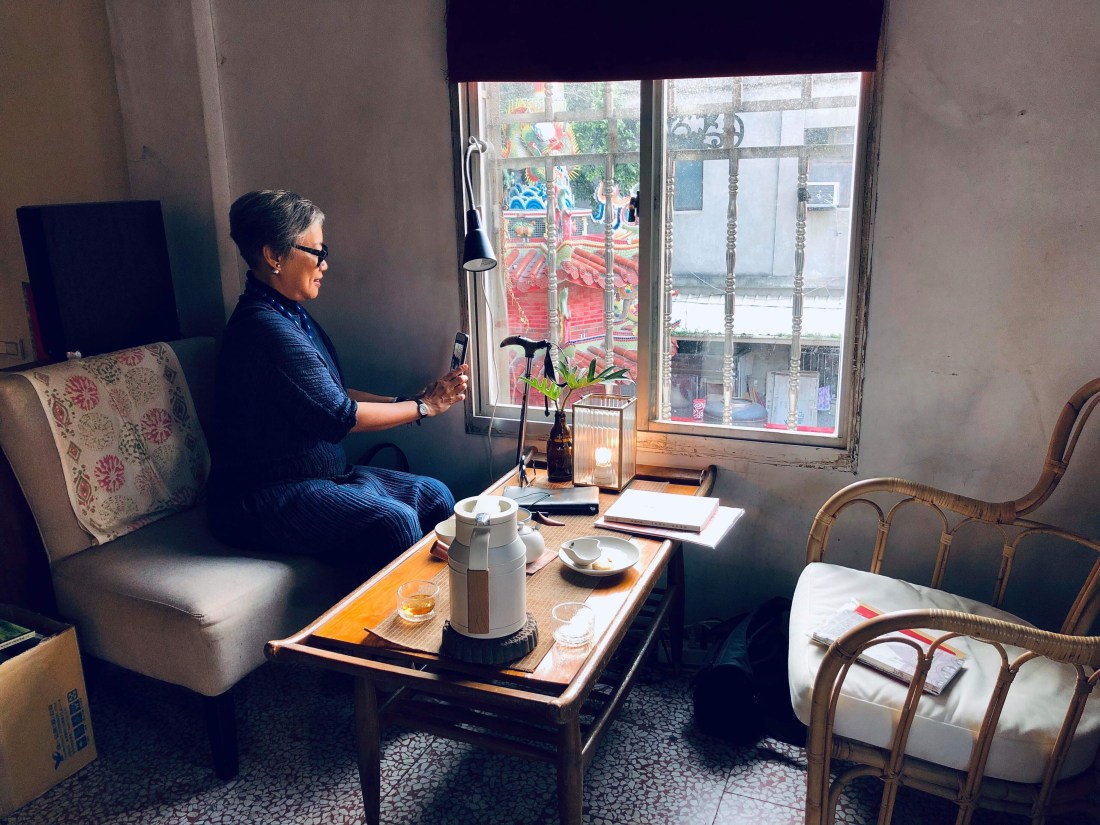
The passage of time is indeed relentless.
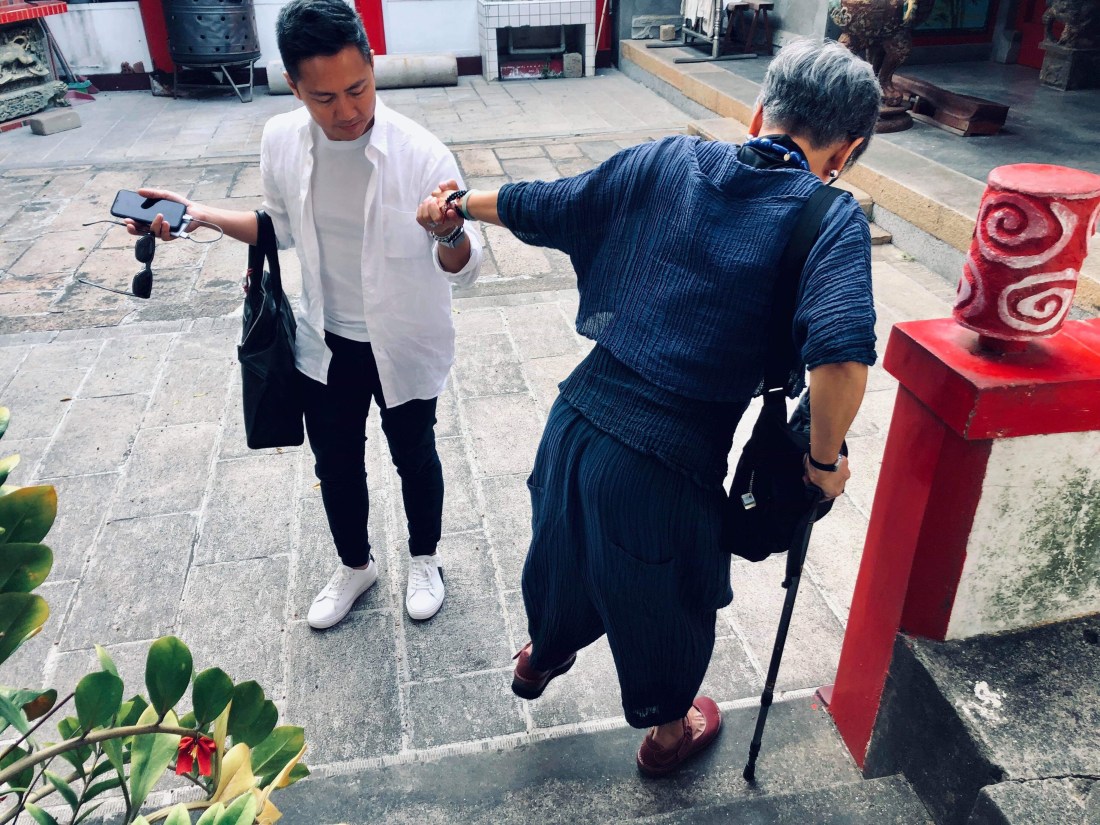
In my search to make sense of life, my trembling hands have found support and my aging feet have found bridges to walk on, thanks to the youthful vigour and compassionate hearts of the people that I’ve had the great fortune to meet.
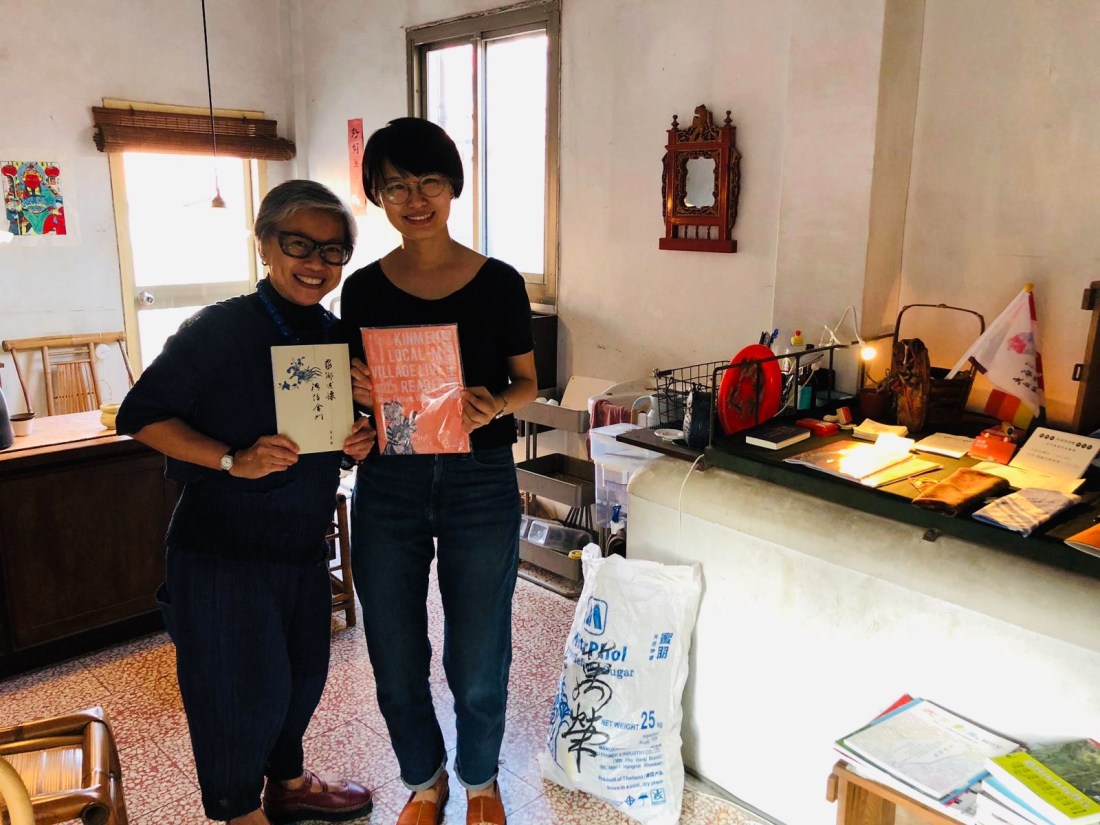
And I wish for all youthful passions to be augmented with wisdom and compassion, so that a better world could emerge through the building of bridges, not barricades.
Holding On for Peace (为了和平)
21 Sep 2019
Kinmen Island is much more than a former military base or a war zone between the CCP and KMT.
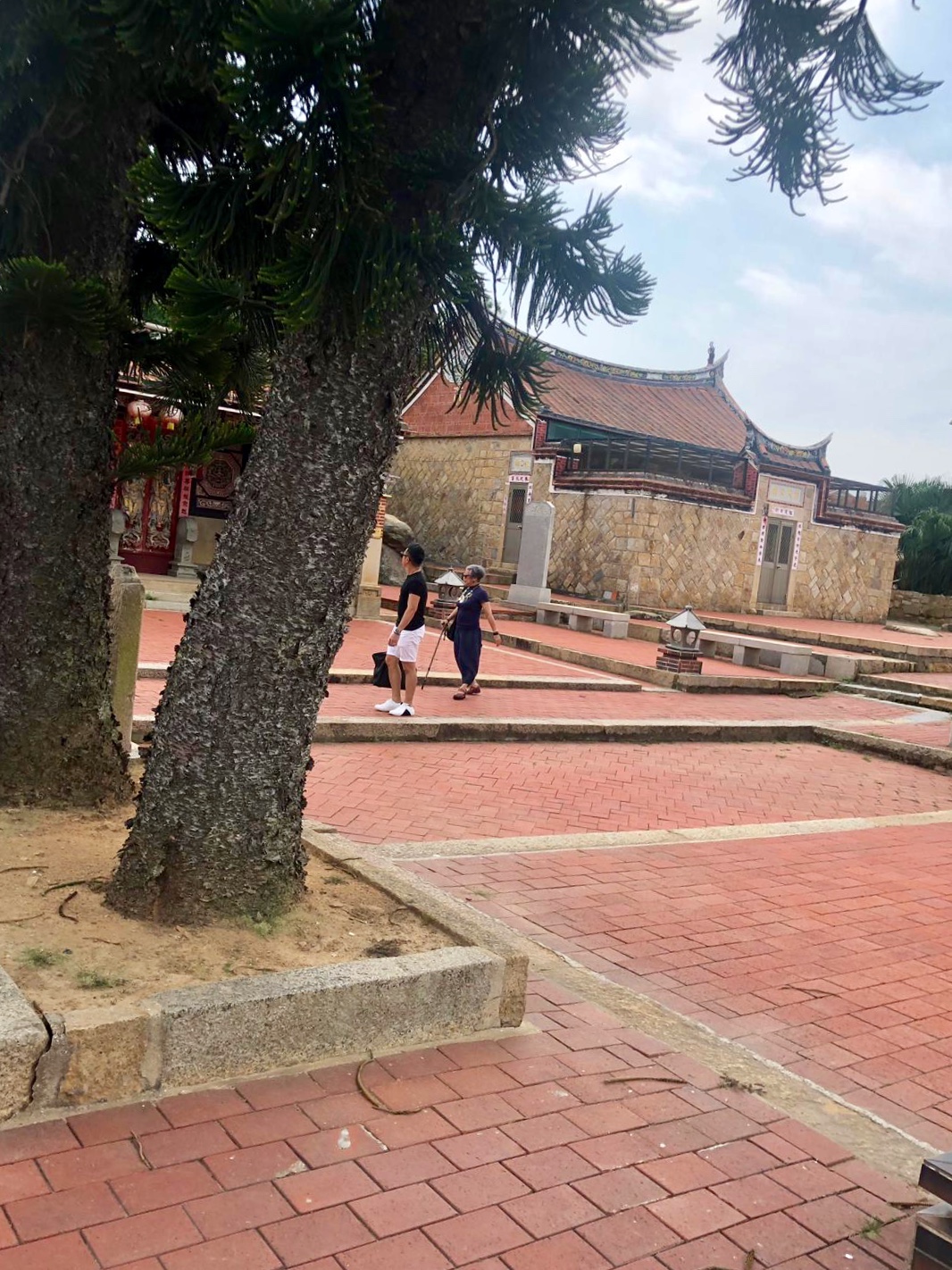
This little island that has survived the ravages of bombing also contains shrines & human dwellings bearing features of Minnan architecture dating from 600 years ago.
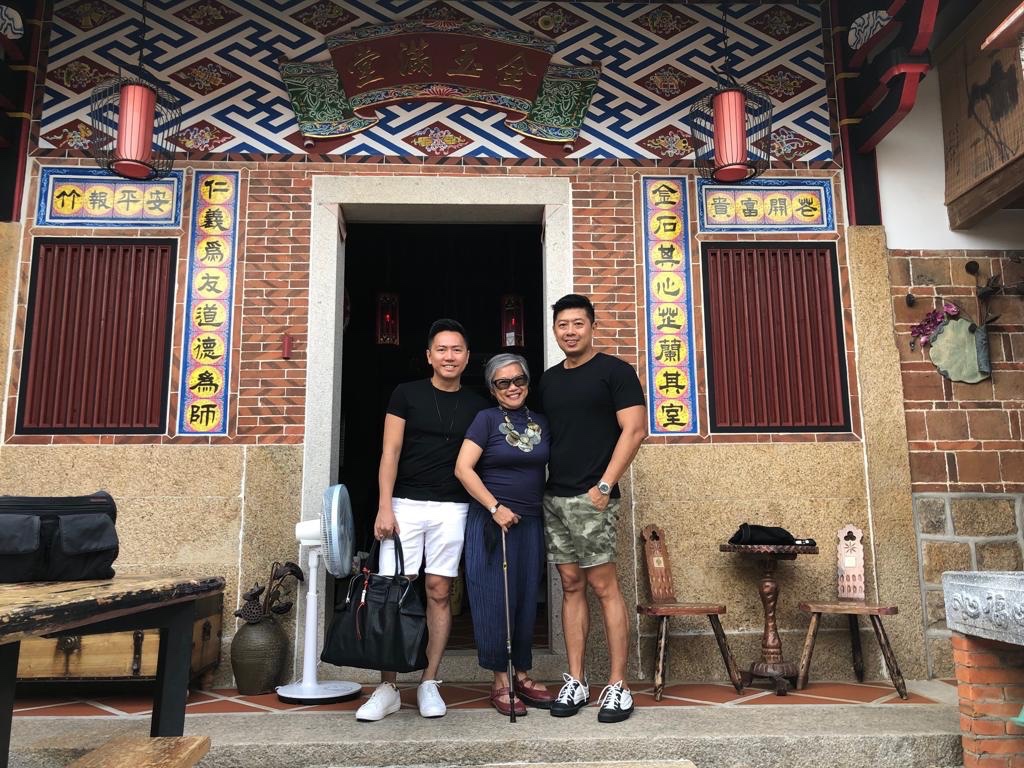
Our lodging this time was in the village of Zhushan (珠山), a short drive from the old city of Houpu(后浦) where my grandma was born.
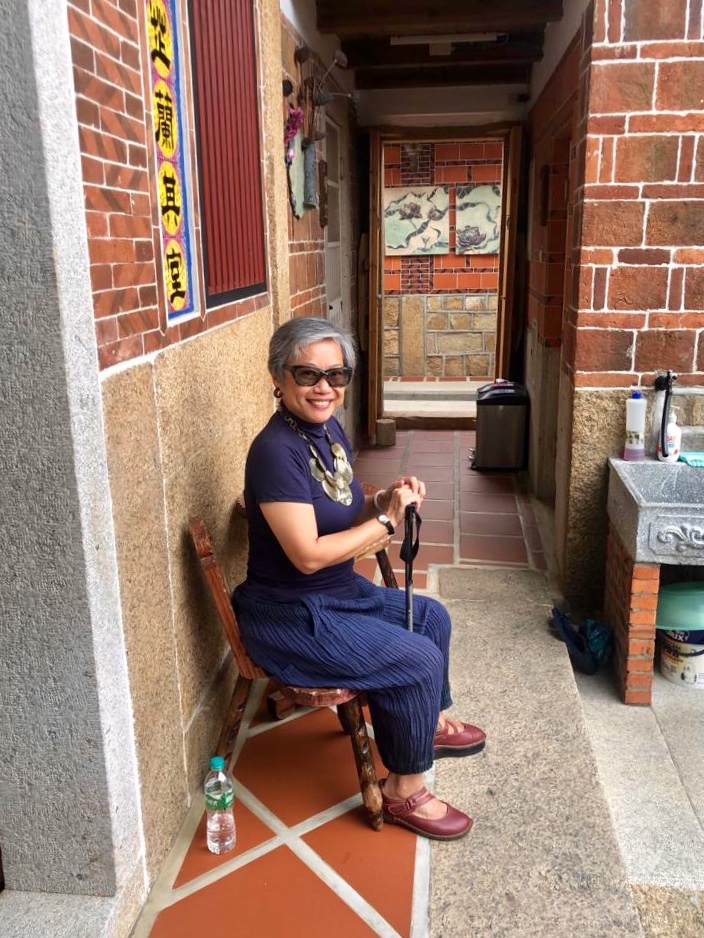
One morning as I sat gazing into the courtyard of the 200-year-old house while the birds chirped and a black butterfly lingered, I felt a deep sense of peace followed by gratitude to the Kinmen people, especially the elders.
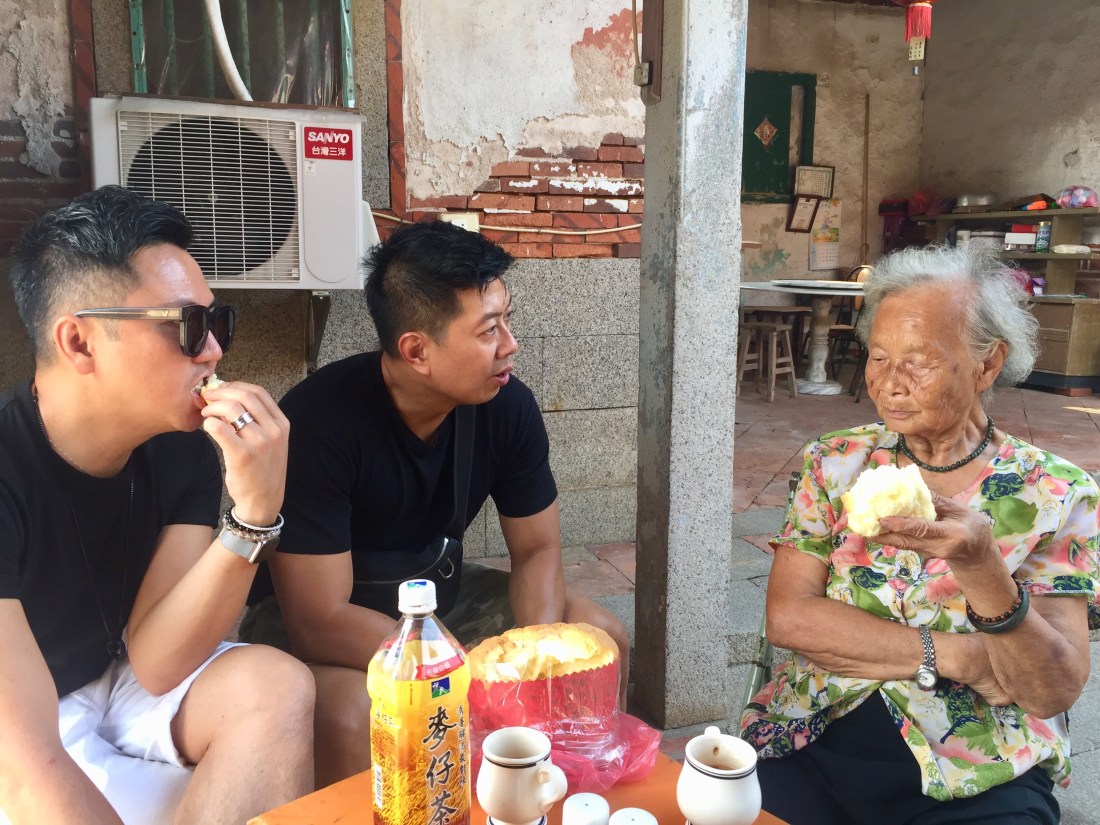
The older generations had suffered terribly during the wars, but they held on to their homes so that someone like us get to savour the peace and appreciate a bit of history.

Almost Full Moon in Kinmen
11-09-2019
The evening before we flew back to Taipei, we sat on a stone ledge near Grandma Ongg’s (翁奶奶) house in Kinmen Island and watched the moon rise. I was back to 5 years old again.
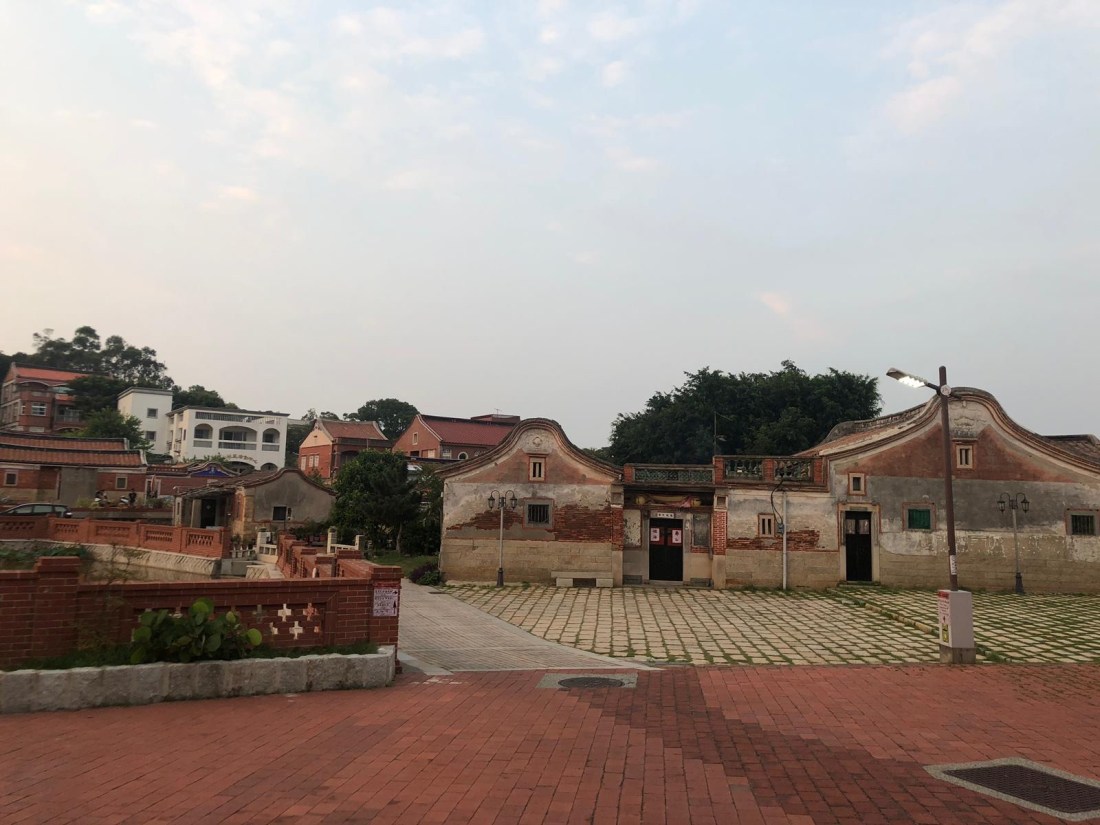
Some tourists passed us by. Too bogged down by their shopping bags and a bit anxious to locate their homestay houses they didn’t notice the Moon glowing benevolently above them.
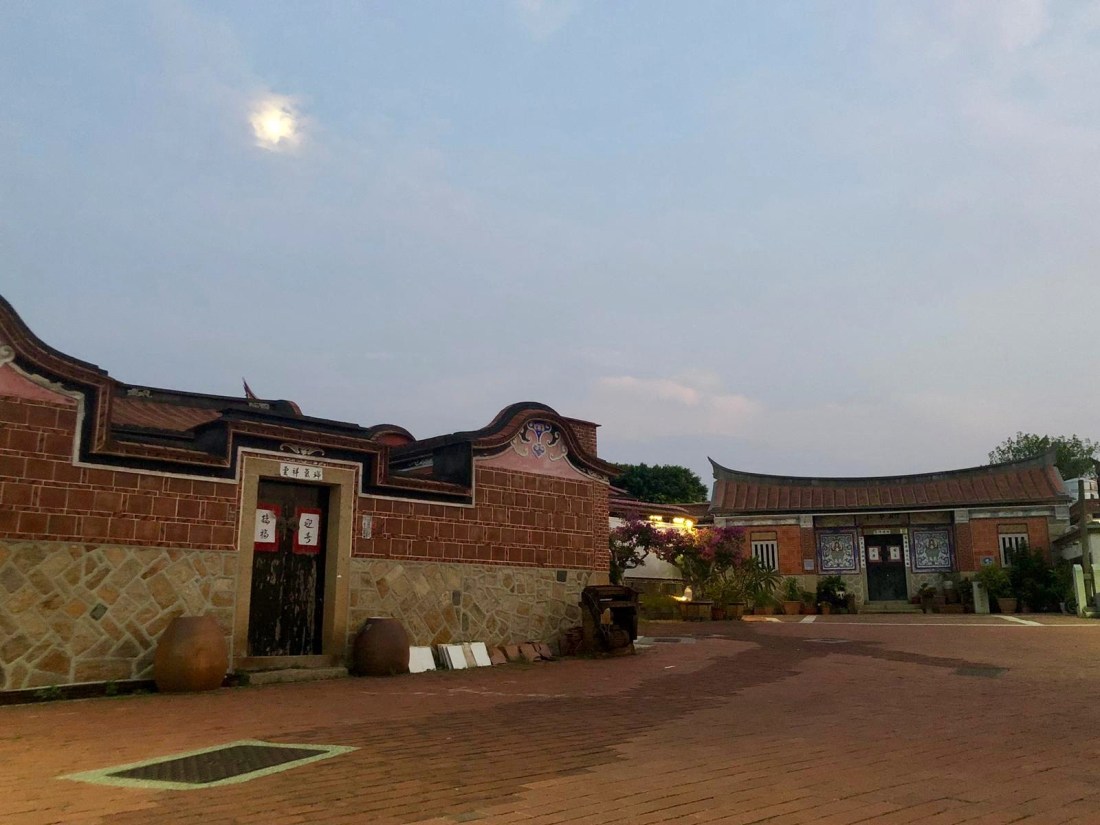
The Moon wasn’t full yet, but her brilliance wasn’t any less because of that.
84-year-old Grandma Ongg had spotted us from the entrance of her 400-year-old house and decided to join us for a bit of moon watching.

We chatted in low tones and looked to the Moon as she weaved in & out of the clouds, her circular outline gaining prominence while we waited for her in the gathering dusk.
How often in our struggles with life we insist that we gotta be this or that in order to feel complete, when perhaps we are essentially complete. We just need time & space to notice it.
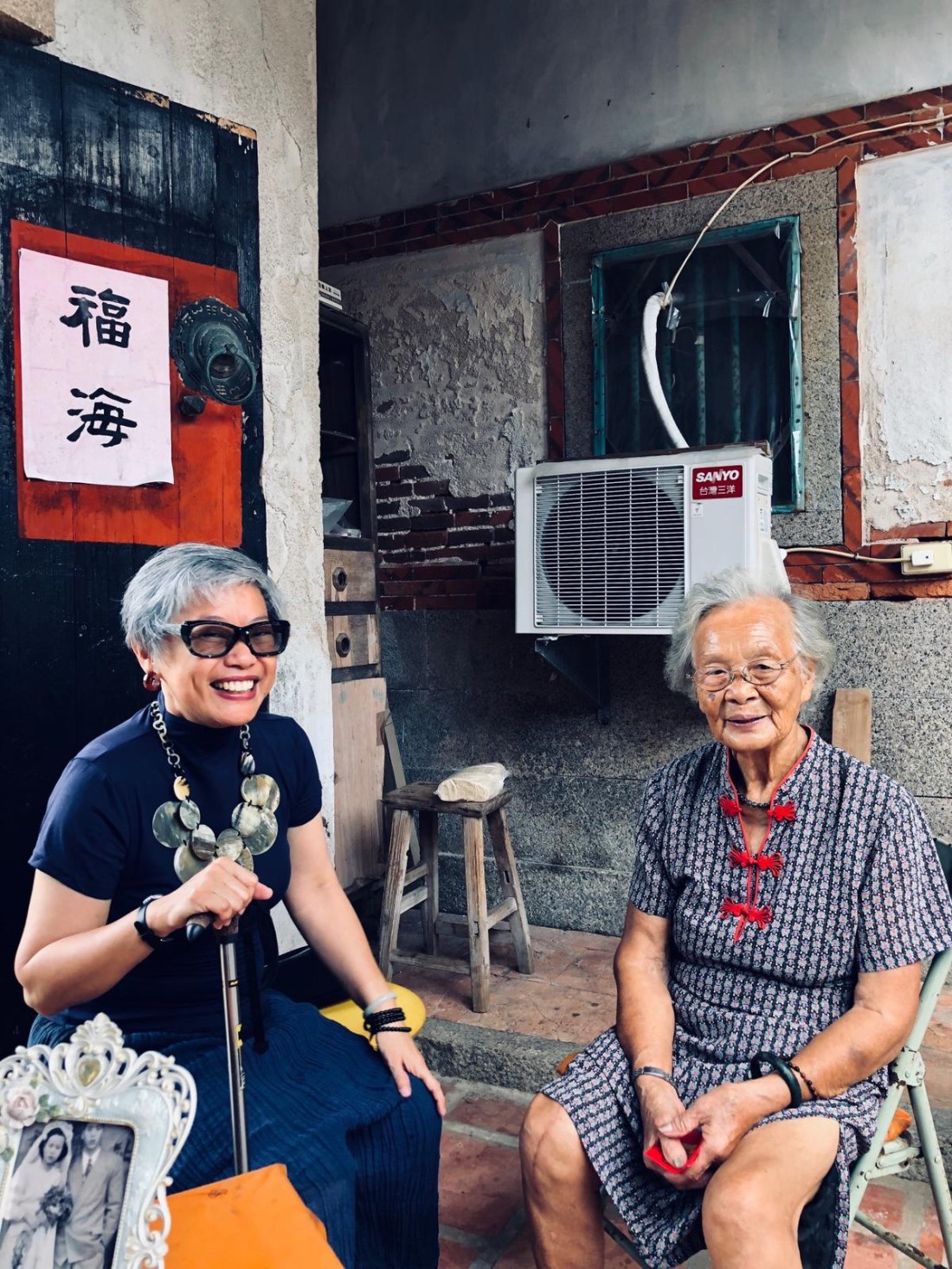
Like the almost full moon in Kinmen, we can still shine even if we’re chipped around the corners, or frayed around the edges by life’s challenges.
 Lisa Ong