This afternoon, the pet supplies arrived. There were kibbles, canned food and pee pads for the feline mob I share my home with.
If I’m not home, the goods will be discreetly stacked outside my door till I return.
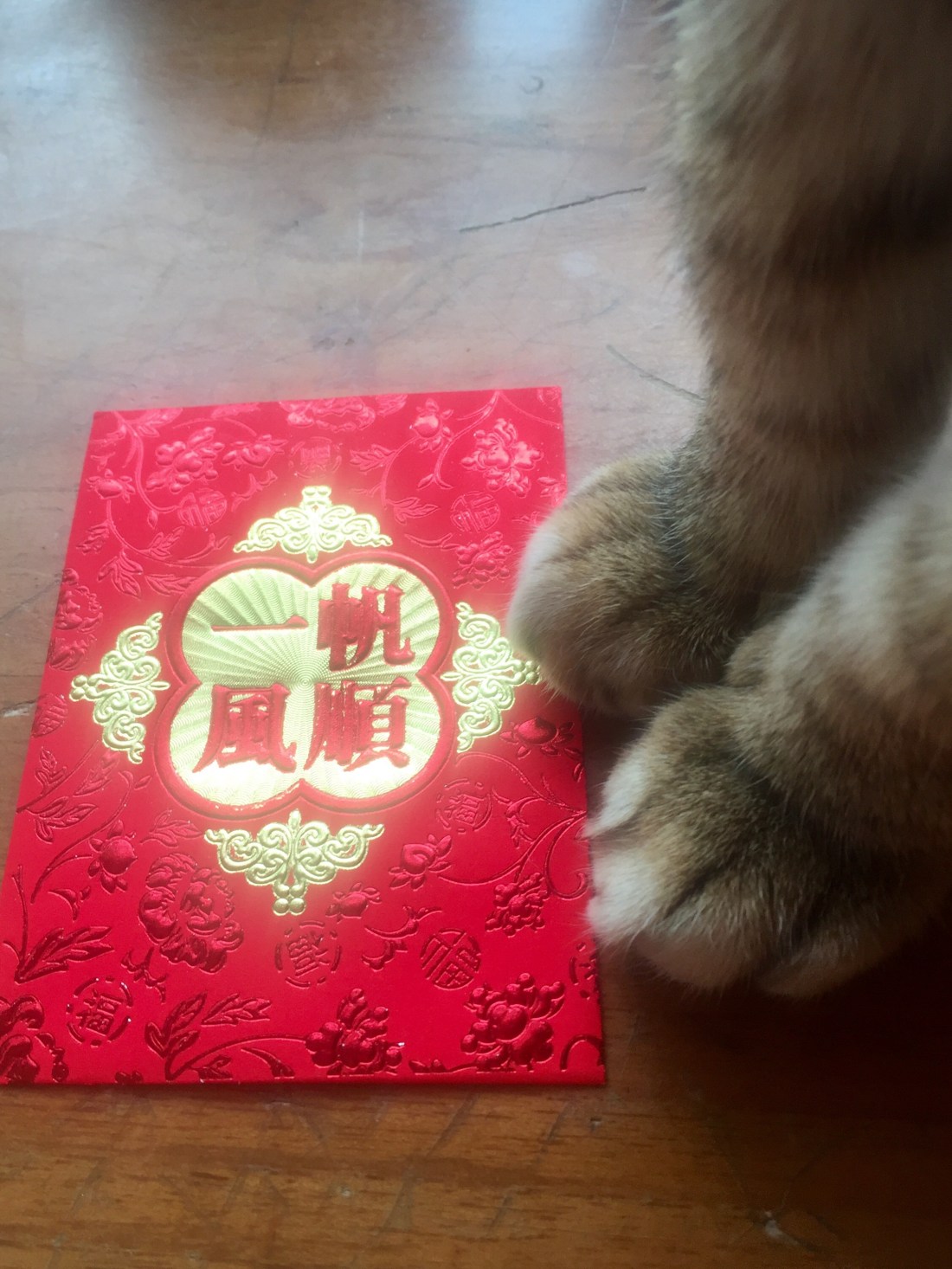
Today I was home. So I gave the delivery boy a small tip by placing some money in a red packet that has 4 gold characters 一帆顺风 on it. They wish the recipient great ease in all undertakings .
As I handed the non-Chinese boy the red packet I took care to explain to him what the characters on it meant. Then I wished him smooth travel and safe driving wherever he goes in the course of his job.
He was very touched by the gesture. Delivery staff often brave crazy traffic, & tight deadlines, not to mention bearing the brunt of clients’ anger when the delivery goes wrong.
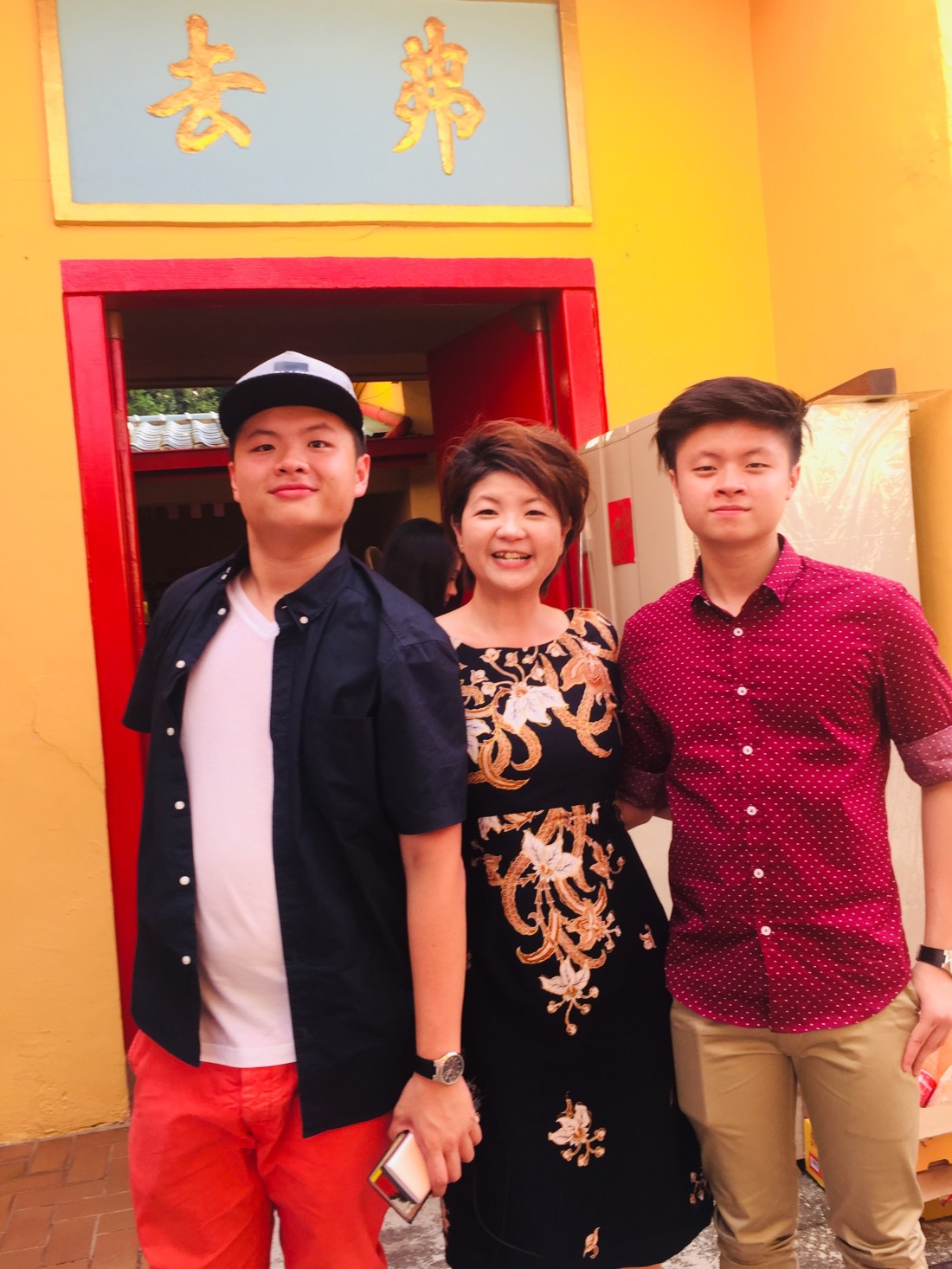
My nephews and their mom at the temple on Chinese New Year in 2018.
I have 2 nephews. In a few years’ time they’ll enter the workforce.
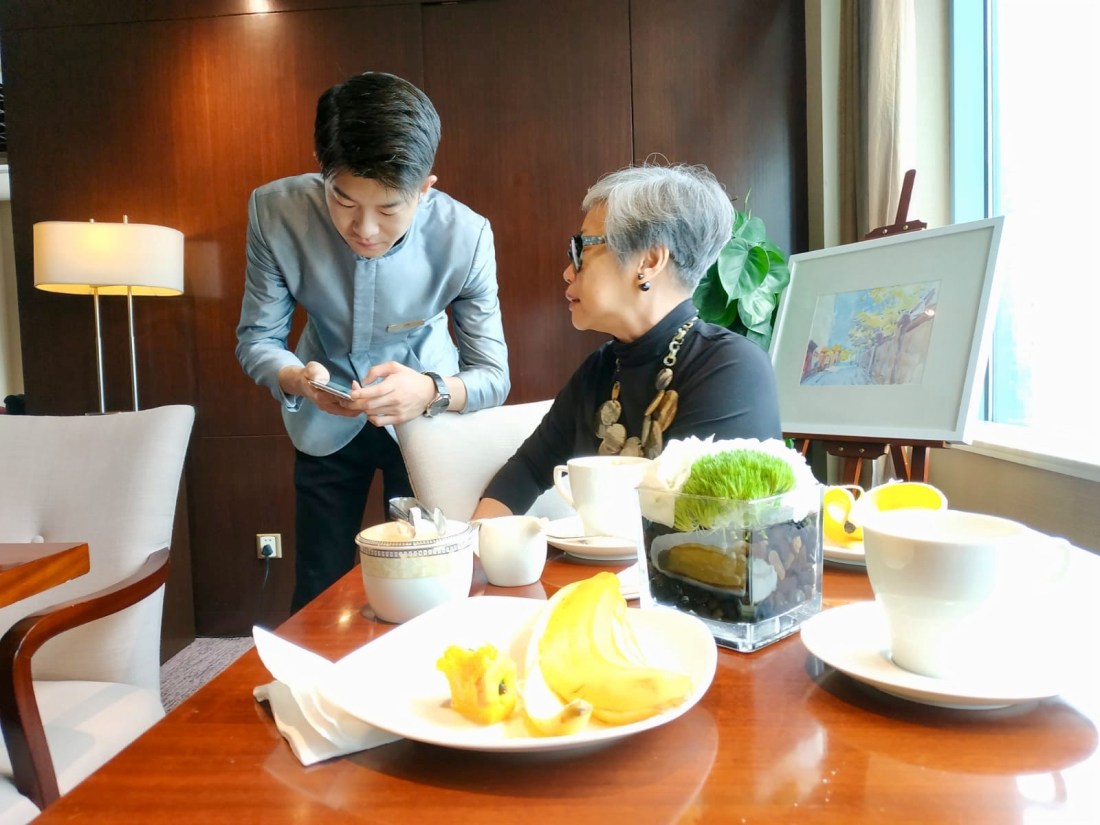
I make it a point to address service staff respectfully and look them in the eye. Xiao Wang (小汪)of Pan Pacific taught me how to book ferry tickets to Kinmen. (June 2019)
I believe when I’m kind to other people’s sons and daughters, my nephews will meet kind people too. So I needn’t worry about who they will meet, because everyone has the potential to be kind.
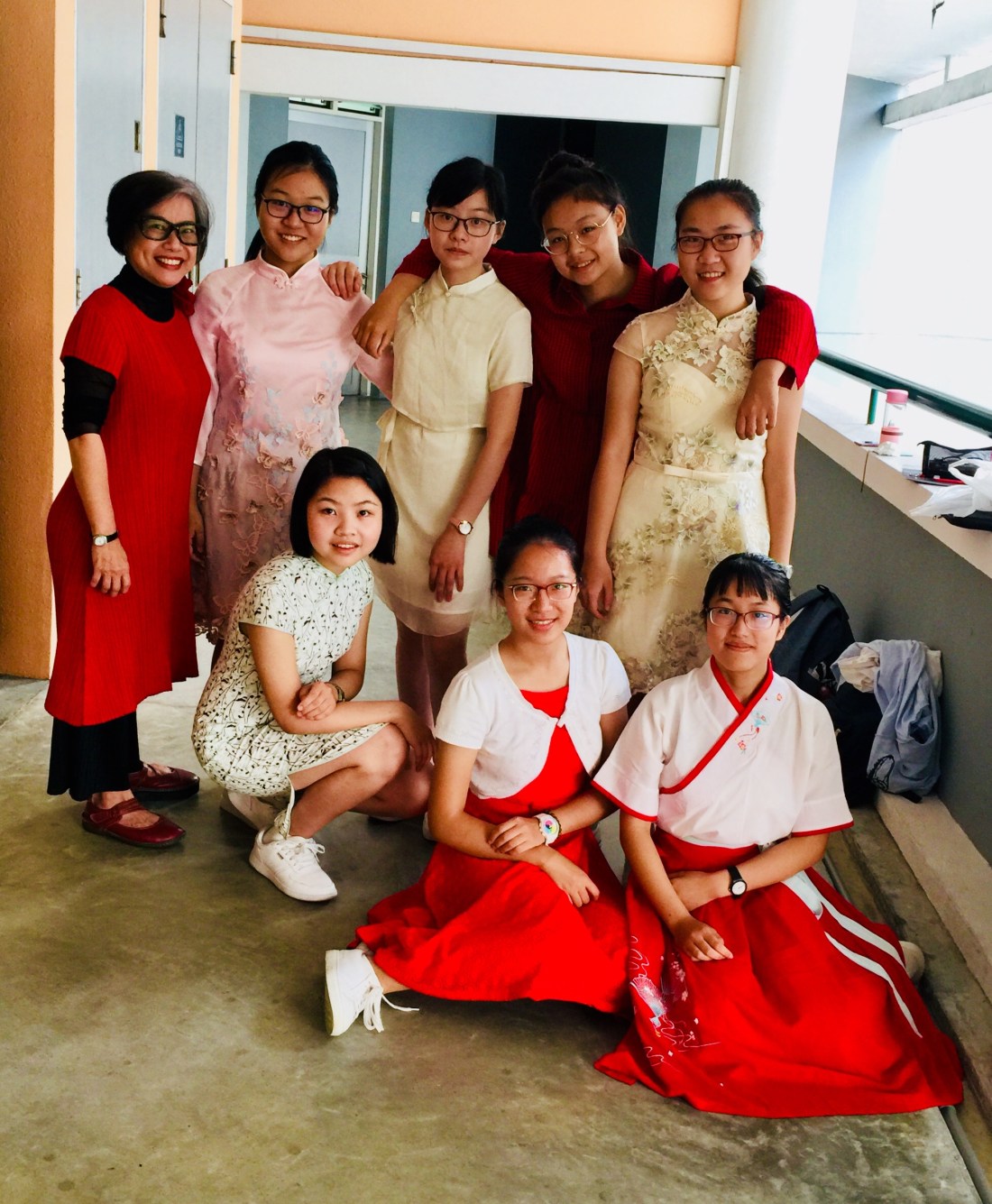
Celebrating Chinese New Year in 2018 with a group of daughters.
But there was this Chinese magazine that I wanted badly, but couldn’t get hold of or subscribe to because of my weak command of the Chinese Language.
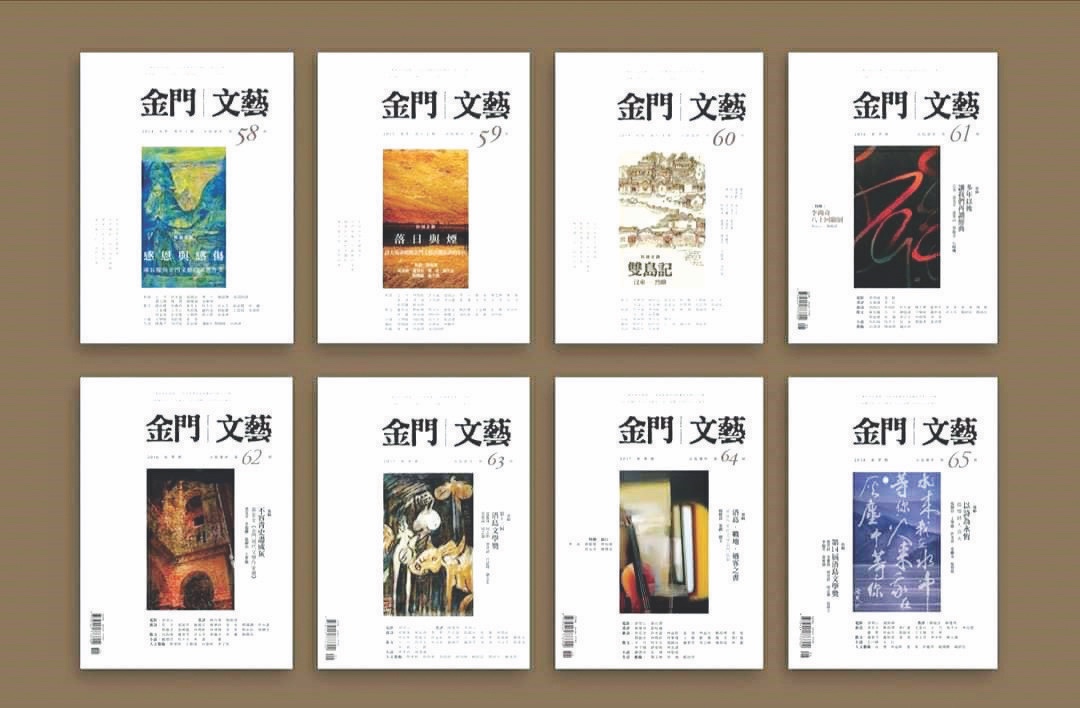
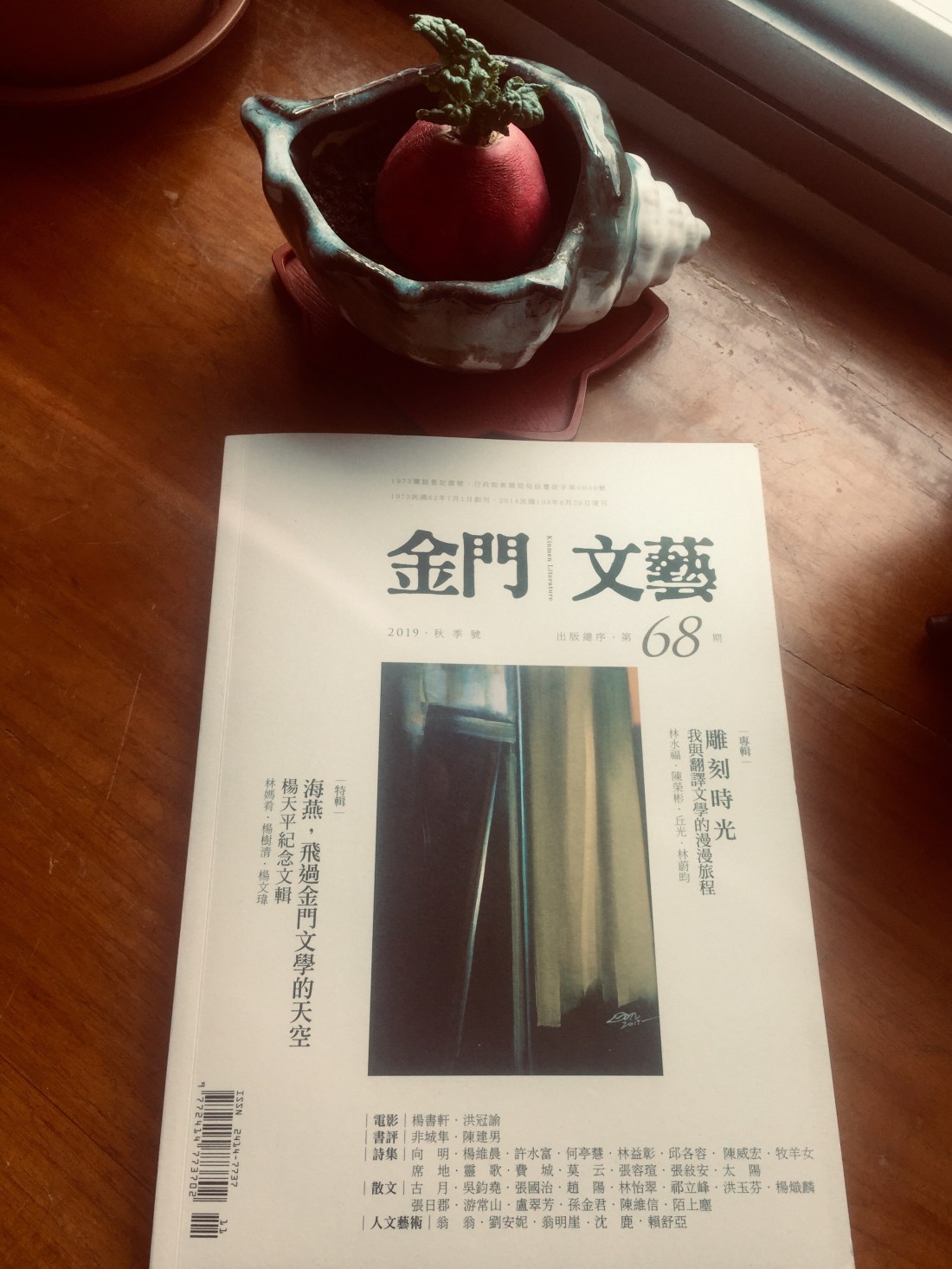
This elusive magazine is known as 金门文艺 or Kinmen Literature. It is a collection of mostly Kinmen inspired literary and art pieces published bi-annually by people who are determined to promote & preserve Kinmen’s intangible heritage.
I like the artistic layout of its cover page, and the feel of its paper quality. I cherish the chance to have a glimpse of the Kinmen spirit through the poems, essays, artworks, photographs and even advertisements of Gaoliang wine that appear in the magazine.
But most of all, I’m in love with Kinmen Literature because Kinmen is where my grandma was born.
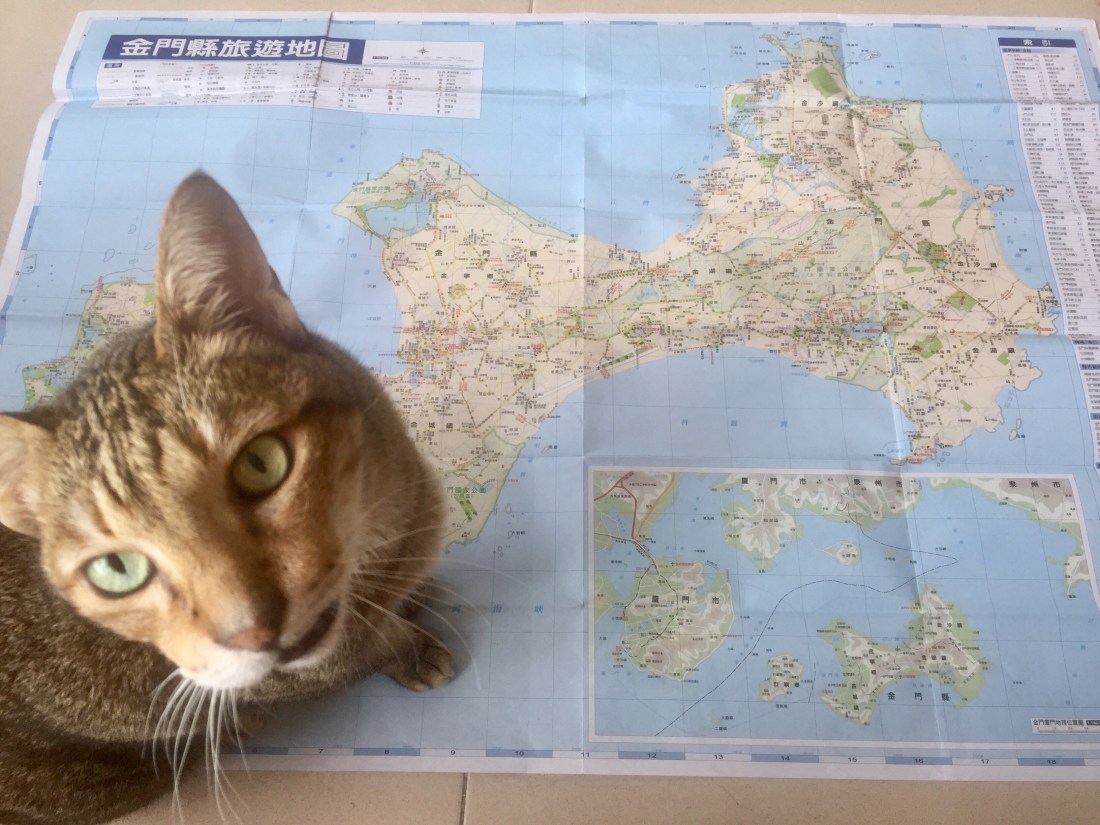
The map of Kinmen Island resembles a puppy making a play bow. Olli the cat of course has to assert his feline stake, so that dogs will know who really owns the world.
As a Chinese woman who makes a living teaching English Language and Literature, I felt that an annual subscription of Kinmen Literature would let me stay connected to Kinmen while honoring the team behind this labour of love.
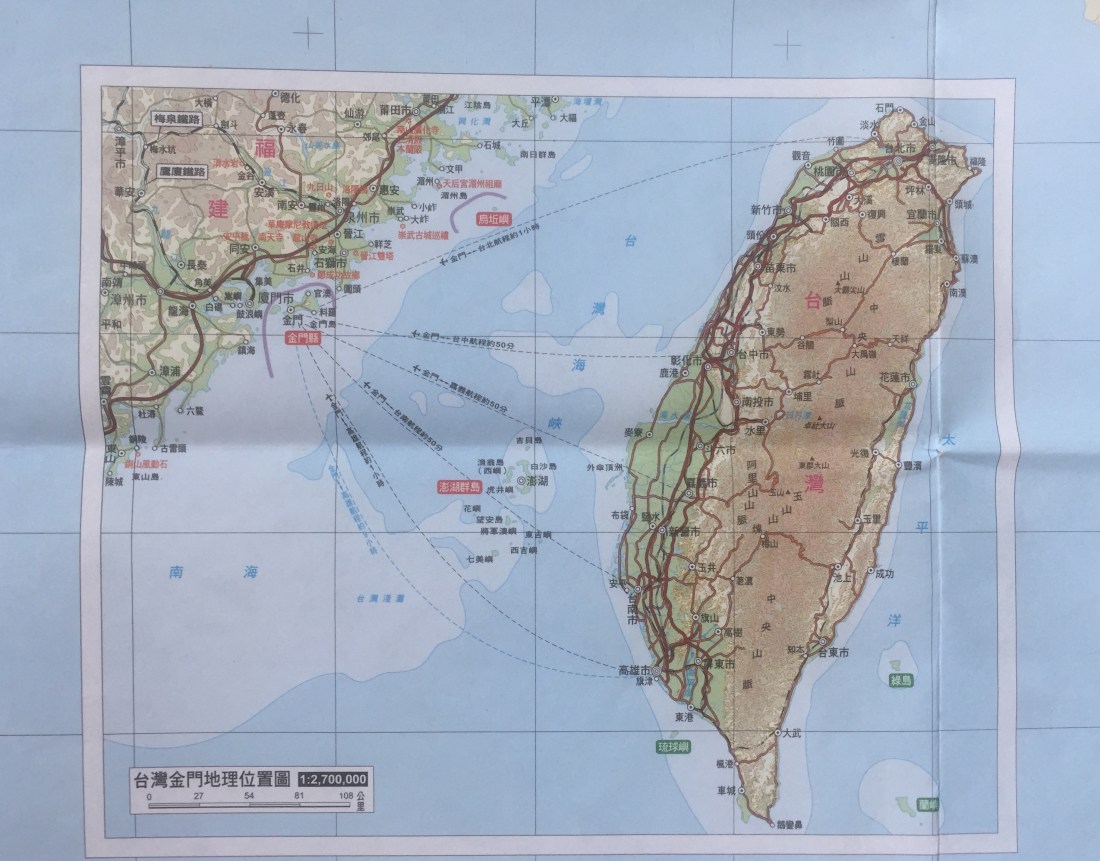
Kinmen Island lies in the sea between mainland China and Taiwan. It is 20 mins away by ferry from Xiamen and less than an hour by flight from the Song Shan Military Airport in Taipei. There are no direct flights from Singapore to Kinmen Island. The song lyrics of “漂洋过海来看你” (Crossing oceans & seas to see you) by Jonathan Li was deeply felt as I made those crossings for my grandma.
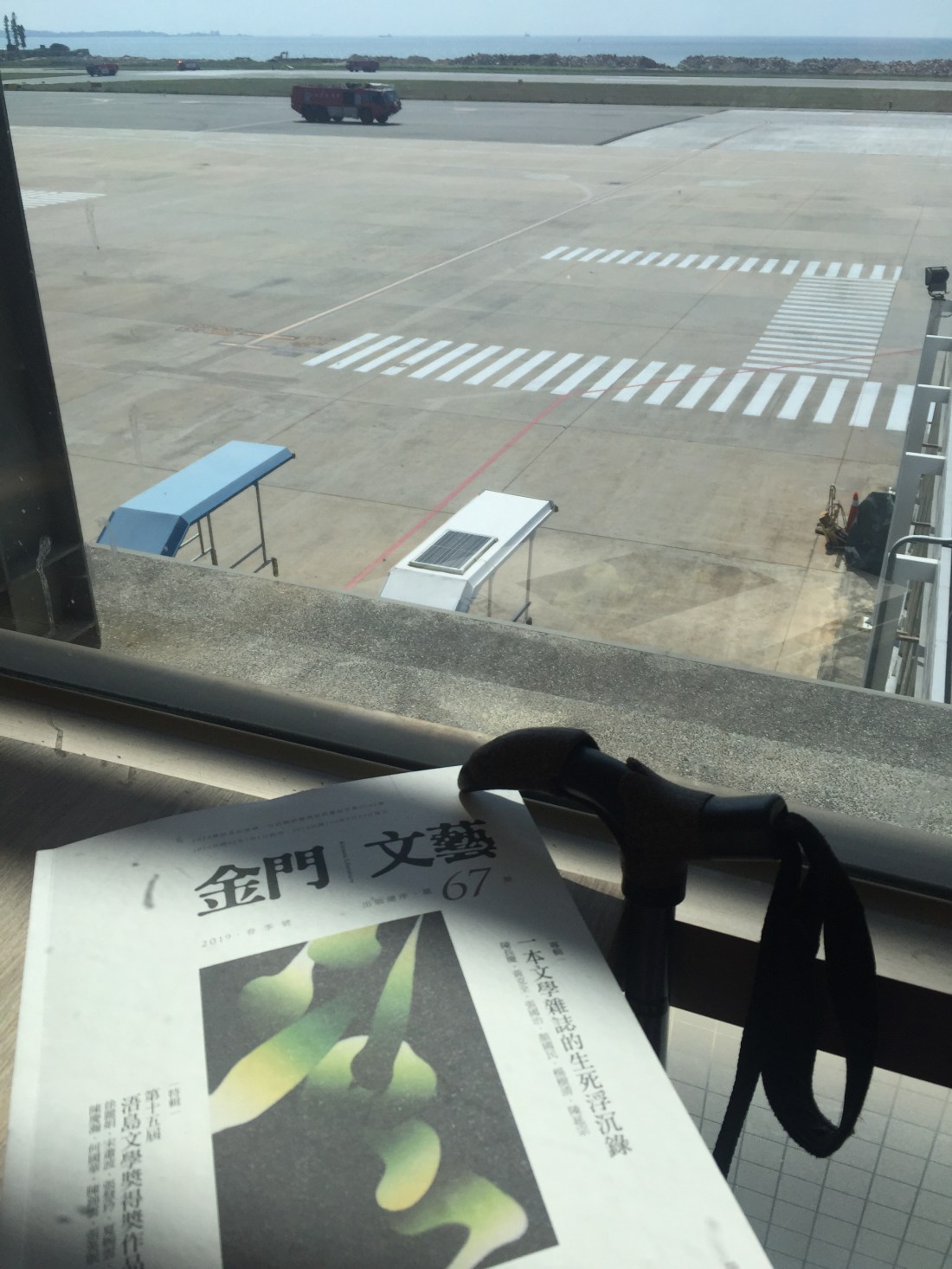
Last September in 2019, on the day of our flight from Kinmen to Taiwan for our return flight to Singapore, I saw copies of the 67th edition of Kinmen Literature at the Kinmen Airport reading lounge.
Should I just “take” one copy to Sg as a souvenir? Who knows when will I be able to return to Kinmen again?
And after all there was no cashier counter where I could make payment for the copy even if I had wanted to, the thief in me reasoned.
Furthermore there was no sign saying that the magazine had to be returned, the justification for dishonesty strengthened.
But then again there was no information anywhere that stated the magazine was free either. A sliver of light broke through my muddled mind.
Pre-boarding, my thoughts continued to oscillate between keeping the magazine which was actually stealing, and letting it go.
Finally at the last moment, I decided to return it to the shelves where I found it.
But not before taking many many shots of the copy next to my walking cane as if the magazine was a person.😊
Kinmen Literature & my walking cane overlooking the airport runway of Kinmen Airport before I put the magazine back in the reading lounge.
In mid-November 2019, a couple of months after I triumphed over the temptation of taking what’s not mine in Kinmen, an Facebook friend from Taiwan asked if we could meet up. She was in Singapore for a very short visit.
Miao Ling (陈妙玲)had read my Facebook posts about my grandma’s childhood and my journeys in Kinmen for her. Even though Miao Ling knew I wasn’t proficient in Chinese and might not even have time to meet her, she decided to bring a copy of the latest edition of Kinmen Literature for me!♥️
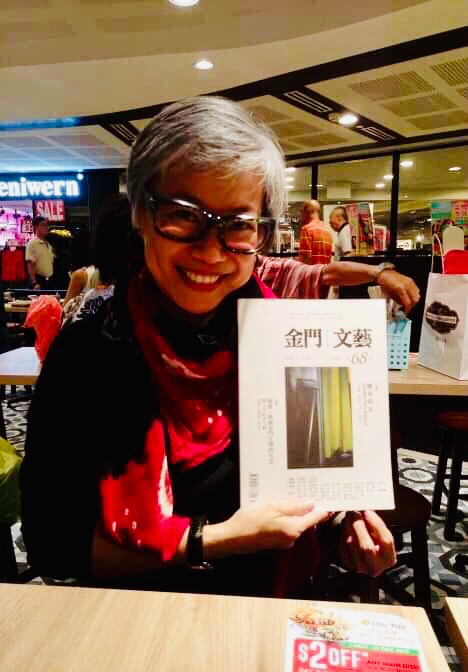
Holding the 68th publication of Kinmen Literature hand delivered from Taiwan to Singapore for me, courtesy of editorial member, Ms Chen Miao Ling. She had read my subscription enquiries.
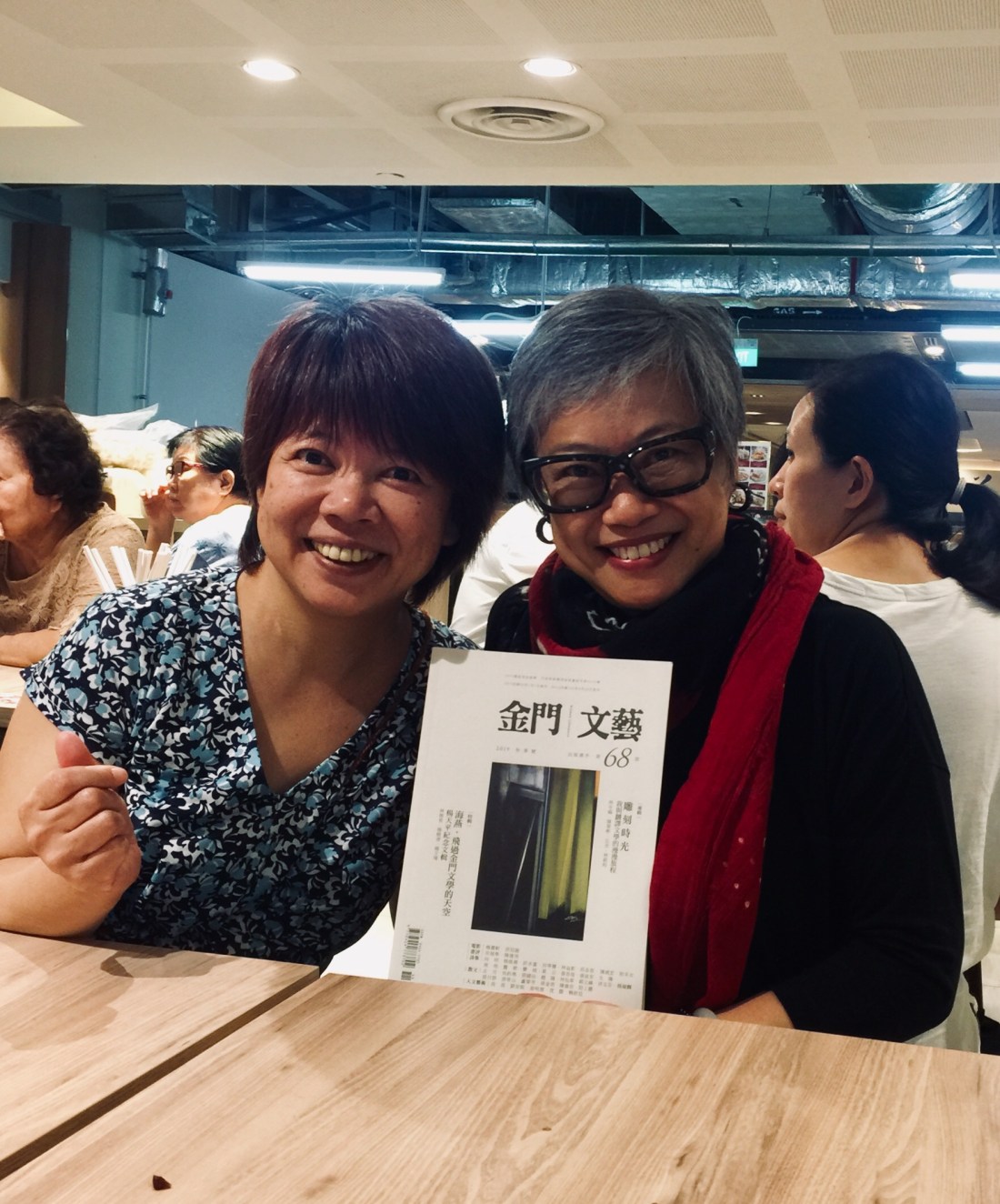
At the Nanyang Cafe in Chinatown Point on 16 Nov 2019, I received my very own copy of the literary magazine from Ms Chen Miao Ling, who was also on the editorial team of the magazine that I coveted.
Miao Ling (陈妙玲) took the trouble to bring a copy of Kinmen Literature to Sg for me without even knowing if she had the time to meet up with me. 🙏
Miao Ling indulged me as I gushed in a mixture of English, Chinese and Minan Dialect about my encounters with Kinmen Literature, including the attempt to steal one from the Kinmen Airport.
And so there we were, two modern day Kinmen daughters exchanging information of our family histories.
As we spoke, we felt the fears & tears of daughters before us in olden times, many as young as 7 or 9 years old, forced to leave their homes to be raised by near strangers because of changes in their family fortunes brought on by politics & wars.
Before we parted, Miao Ling & I took some pictures together. A Filipino lady from across our table helped us to record this meet up that started a century ago, in 1914, the birth year of my grandma.
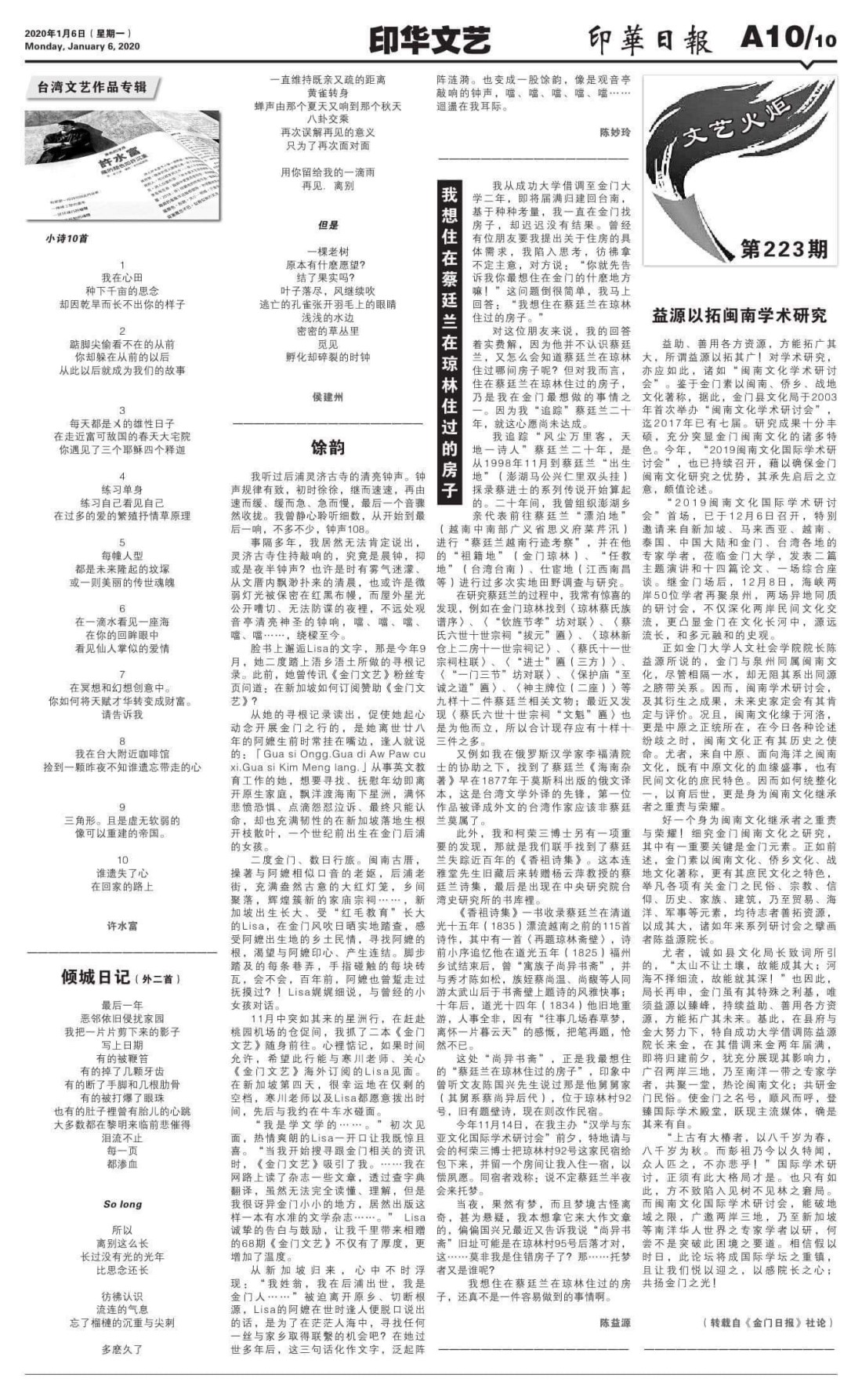
It’s now 2020. Last week I learnt that my grandma’s love for Kinmen and my visits have found their way to Kinmen Daily (金門日報) and Indonesian- Chinese Daily (印華日報) through Miao Ling’s writing.
Miao Ling’s essay in the Indonesian-Chinese Daily dated 6 Jan 2020. To the writer and those proficient in the Chinese Language, please accept my apology in advance if my interpretation does not do justice to Miao Ling’s words. 🙏
In her essay, Miao Ling likened the 108 chimes of the temple bell in her childhood to my grandma’s constant pining for her birthplace.
She communicated poignantly my attempts to sync with Kinmen and my grandma’s 3 phrases of attachment to her birthplace that she recited like a mantra throughout her life.
Miao Ling’s publication in the newspaper has enabled an unknown 7-year-old girl, born more than a 100 years ago in Kinmen, to return to the embrace of her birthplace.
Love can really cross oceans and seas, transcend histories and navigate around all kinds of logistical & language difficulties.
Our duty is perhaps not to be disheartened or feel silly, and talk ourselves out of loving what matters to us.
I’ve been using blue ink to teach penmanship to younger students since 2014. Blue is easier to clean and more forgiving on kids’ clothes. And I’ve used blue so regularly that I’ve forgotten about black.
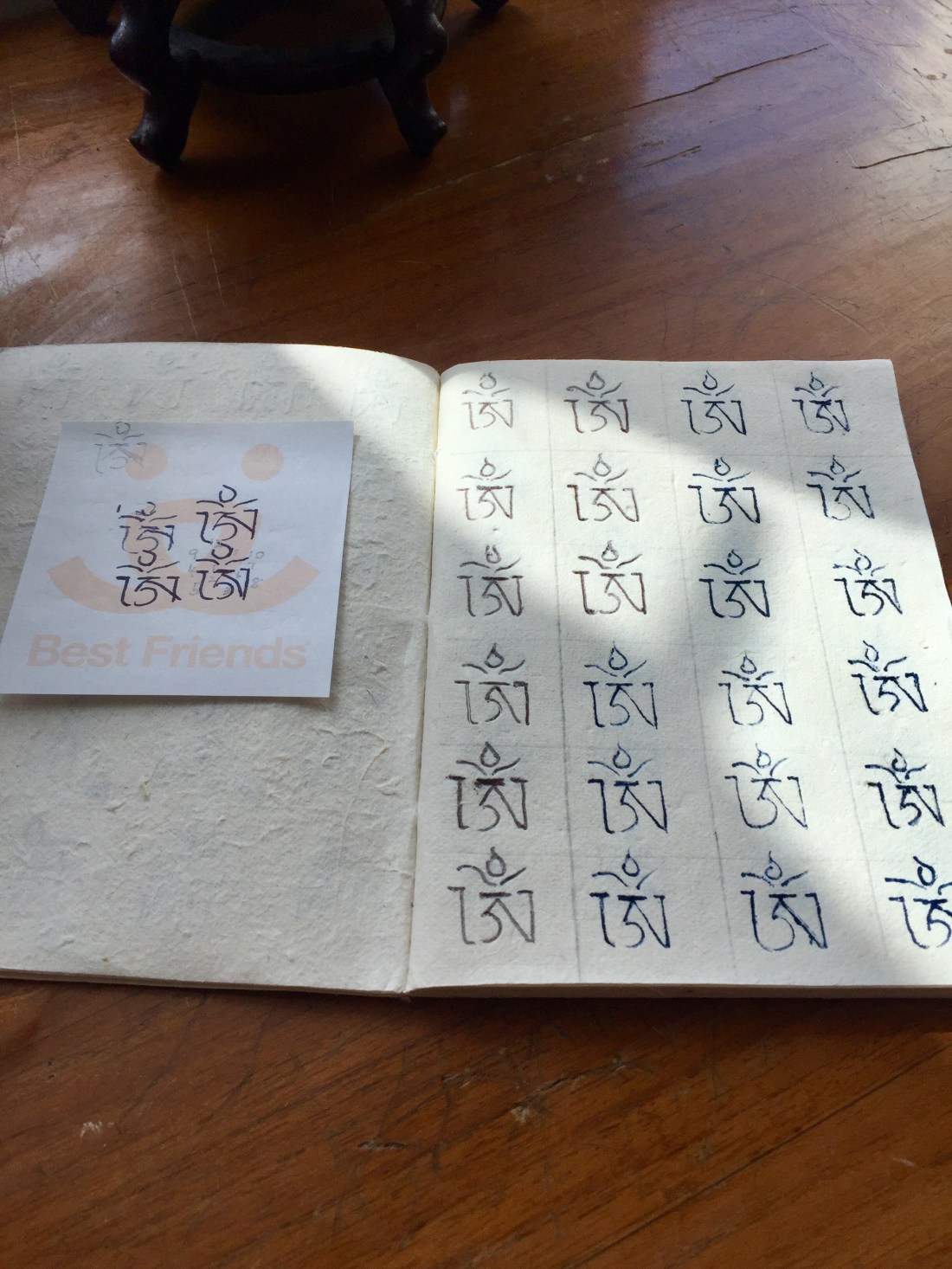
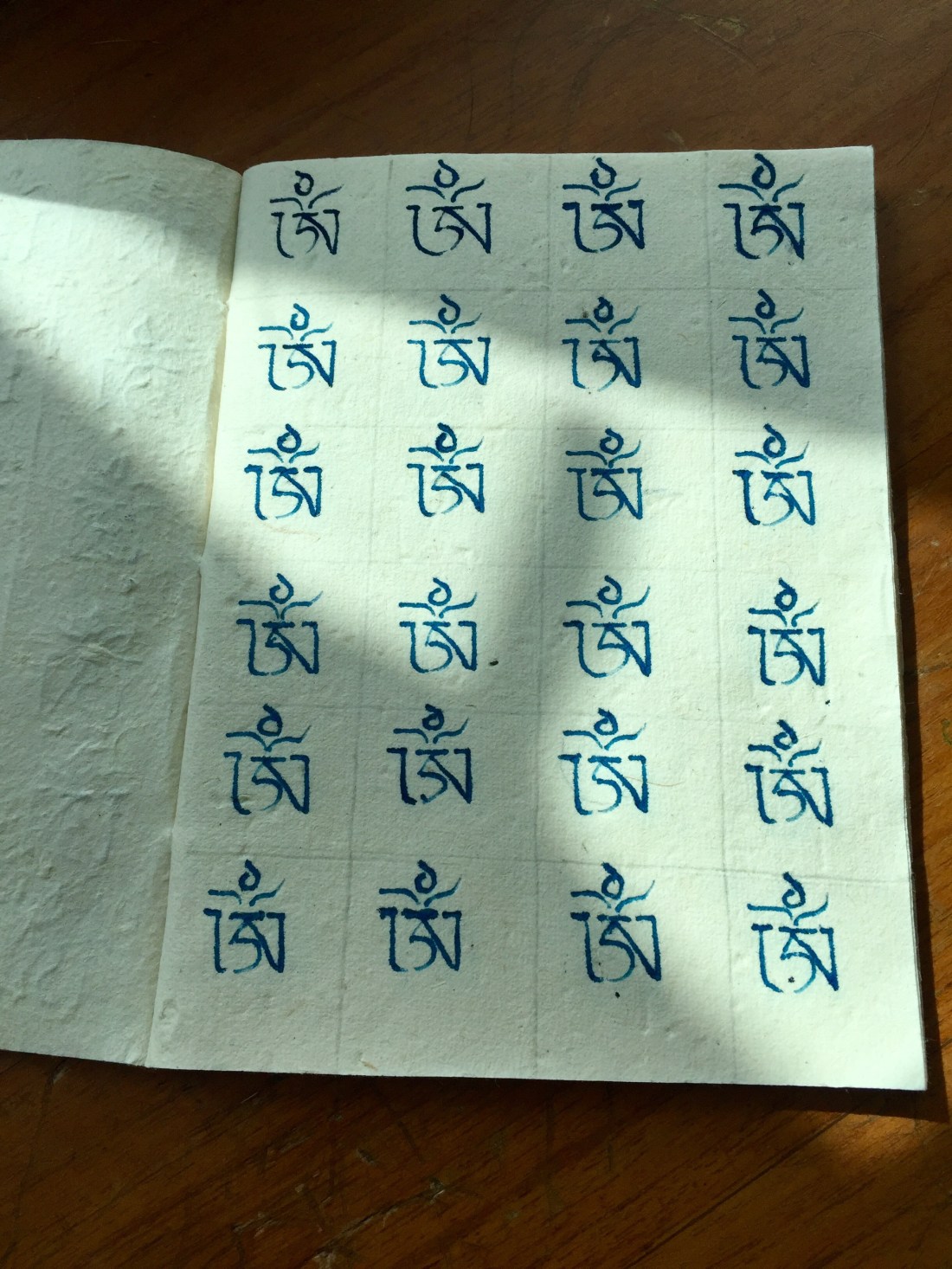
But ever since this new year when I started writing OM, my interest in black ink has returned.
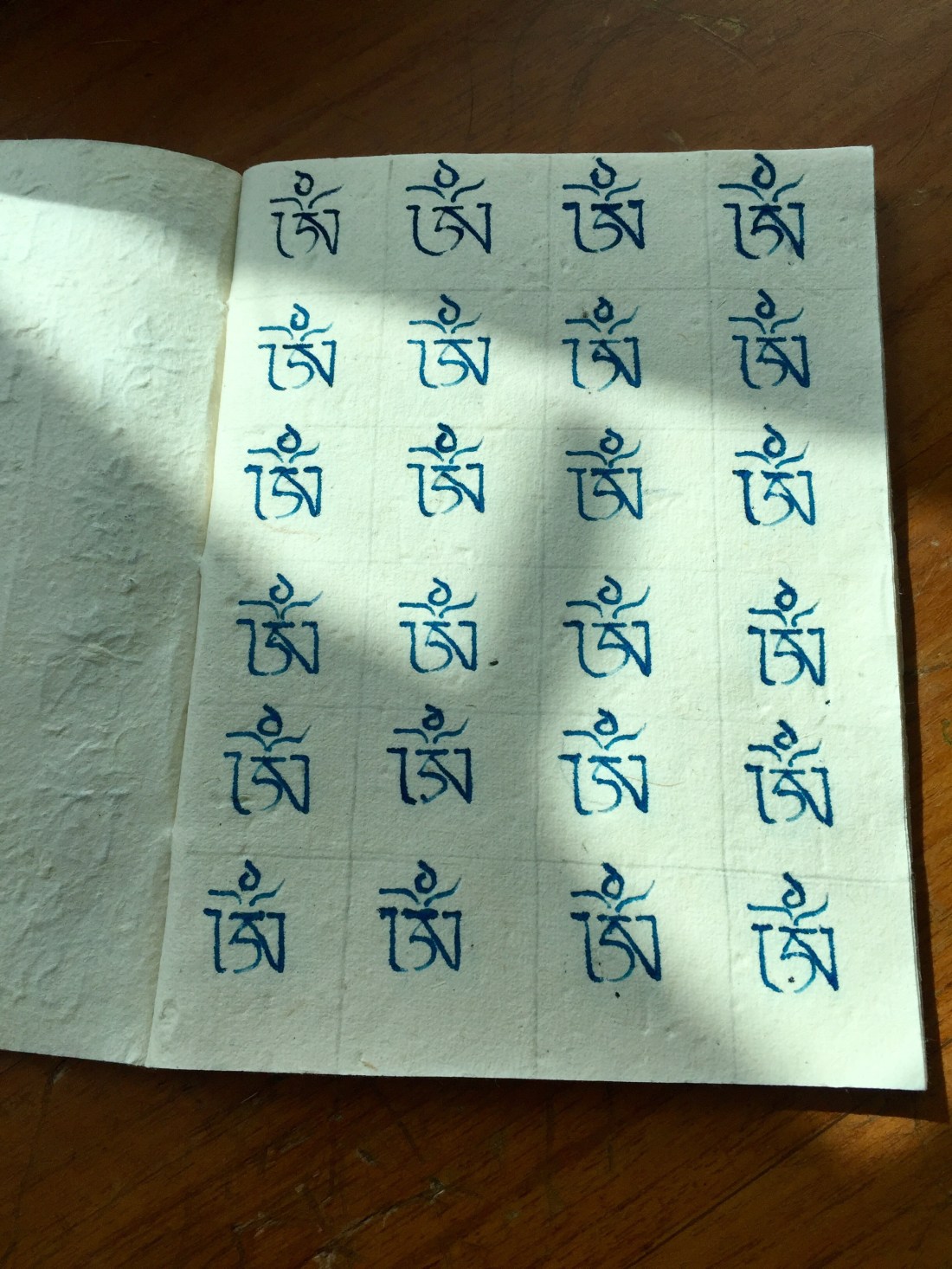
OM in blue.
So the day before yesterday, I went to West Coast Plaza specifically to collect my shoes at the cobbler’s, and to look for black ink at the stationery supplies store there.
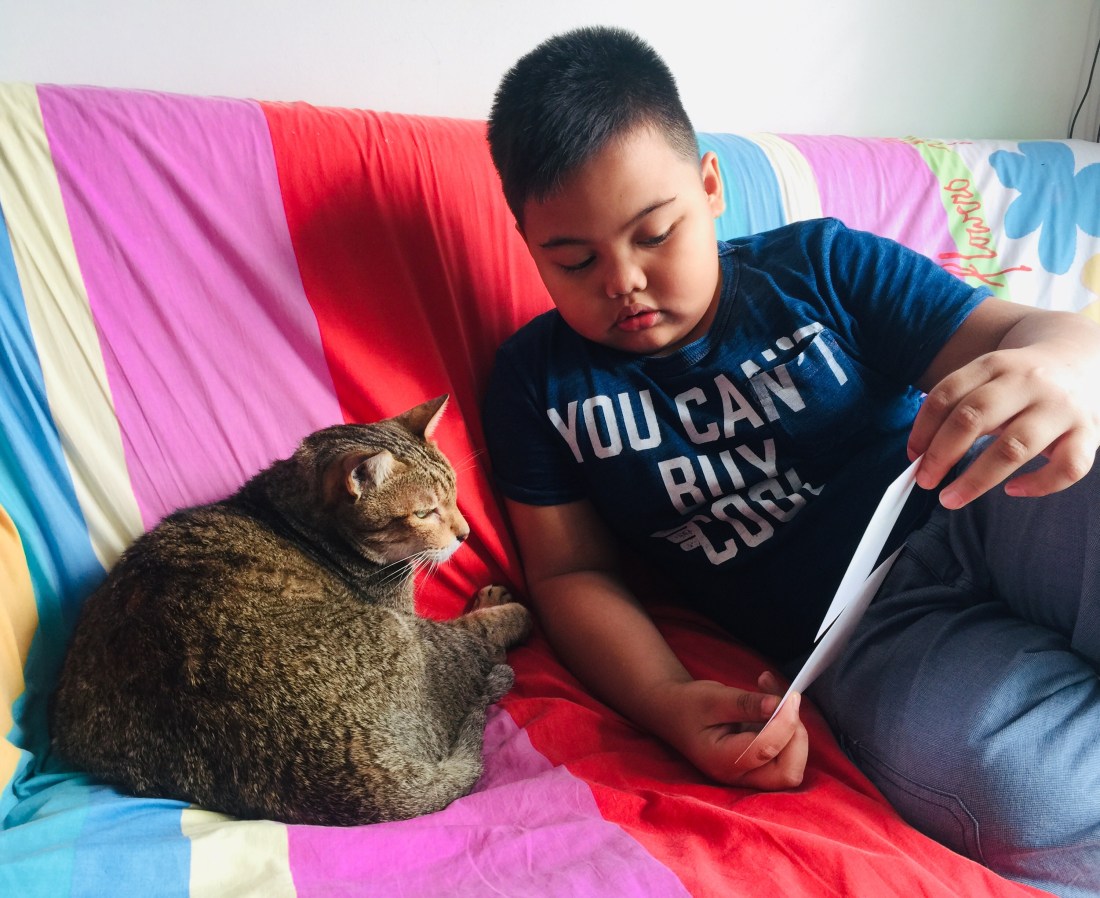
First Tutee shows Ollie pictures of themselves taken when he was in primary 1. He’s in primary 3 this year. 😊
I was in a bit of a rush to return home where First Tutee, now in Primary 3, was dropping by for his first lesson of 2020.
When I got home I realised I had forgotten to check out the bottle of HERO black ink at the cashier’s. It was still sitting on the shelf where I had placed it for safe keeping when I left.
As I couldn’t justify taking a cab back to the store just to pick up a bottle of ink, I decided to let the matter rest.
Yesterday, over lunch at Fortune Centre, my friend, Sharonne, whom I’ve known for 37 years gave me a present.
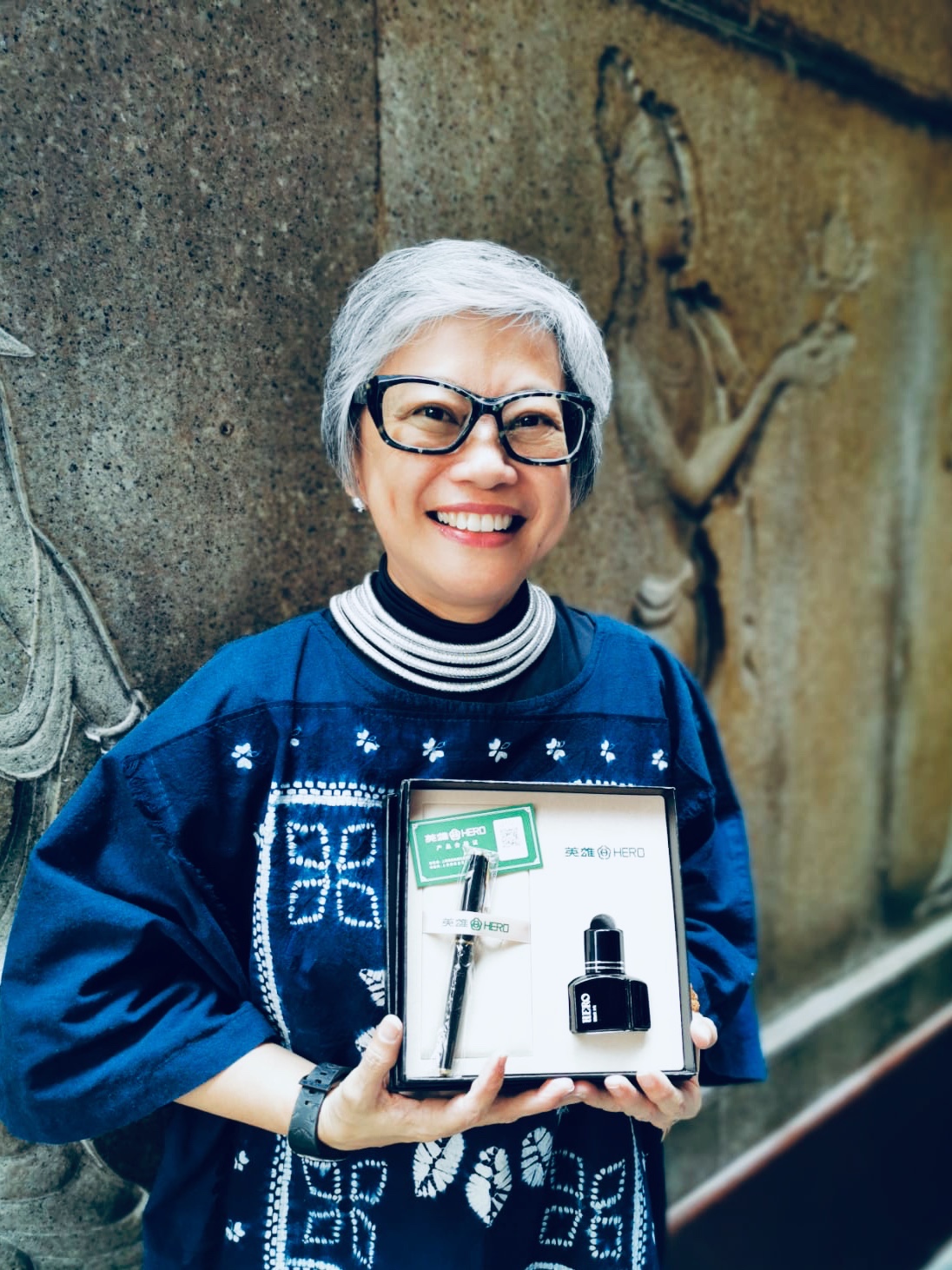
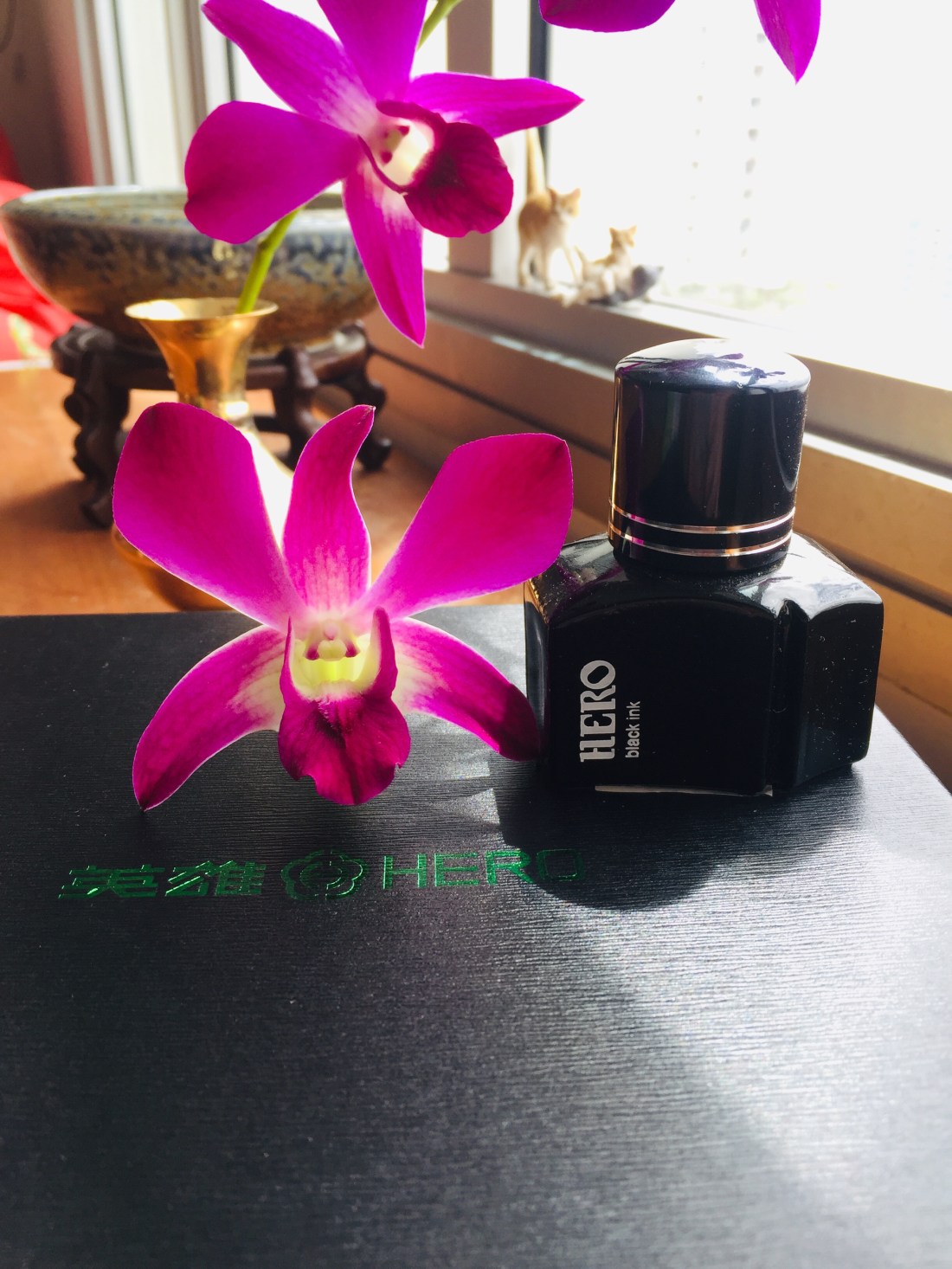
It was a HERO penmanship gift set made up of a fountain pen and a bottle of ink. She had bought it at Sisyphus Book Store in Hangzhou, China, where she spent many happy hours.
And the colour of the ink?
It had to be black of course. 😊
It feels humbling & assuring that the black ink has made its way to me despite my inability to purchase it on my own.
So I wish for my friends and all sentient beings the same assurance and the same ease that have been experienced by me, as they go about heroically creating better lives for themselves & for others.
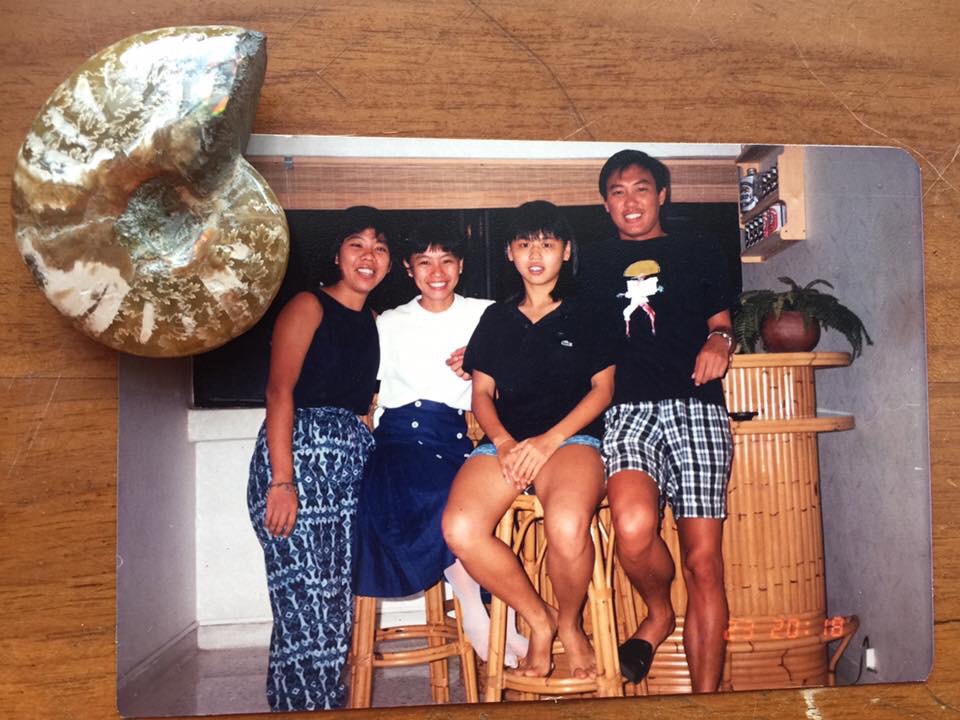
Sharonne and I met in our late teens in the early 80s.
In our early 20s.
Between the two of us we must have eaten hundreds of plates of fried kuay teow at the NUS Arts Canteen during our student days.
When we became teachers, it was with her that I took my first flight on Air Romania to Holland to visit our friend, Mee Geok Liau. That summer while on a day trip to Belgium, we stumbled upon a a little restaurant on a medieval street and celebrated Sharonne’s birthday there. The name of the street was Zandstraat.
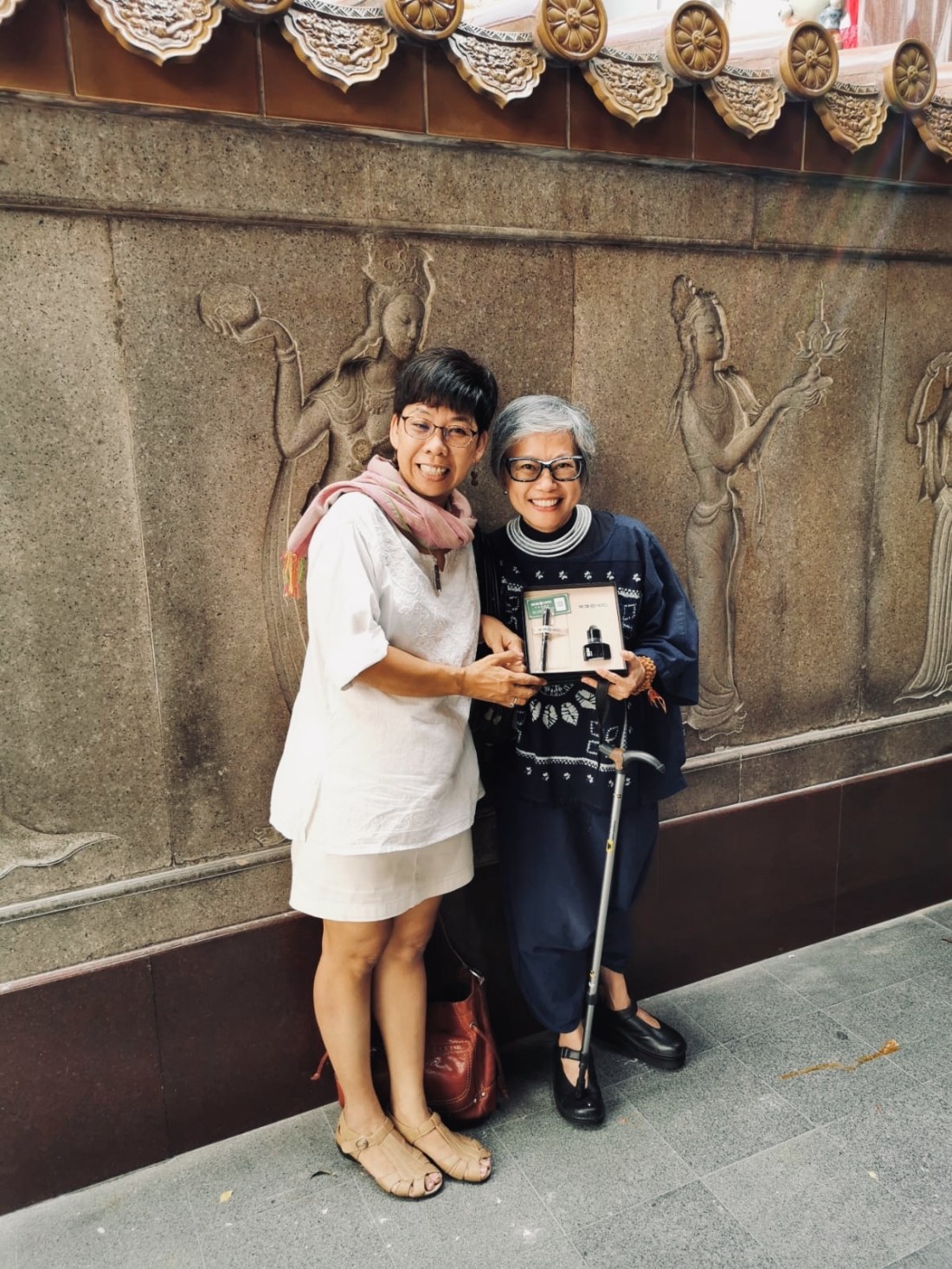
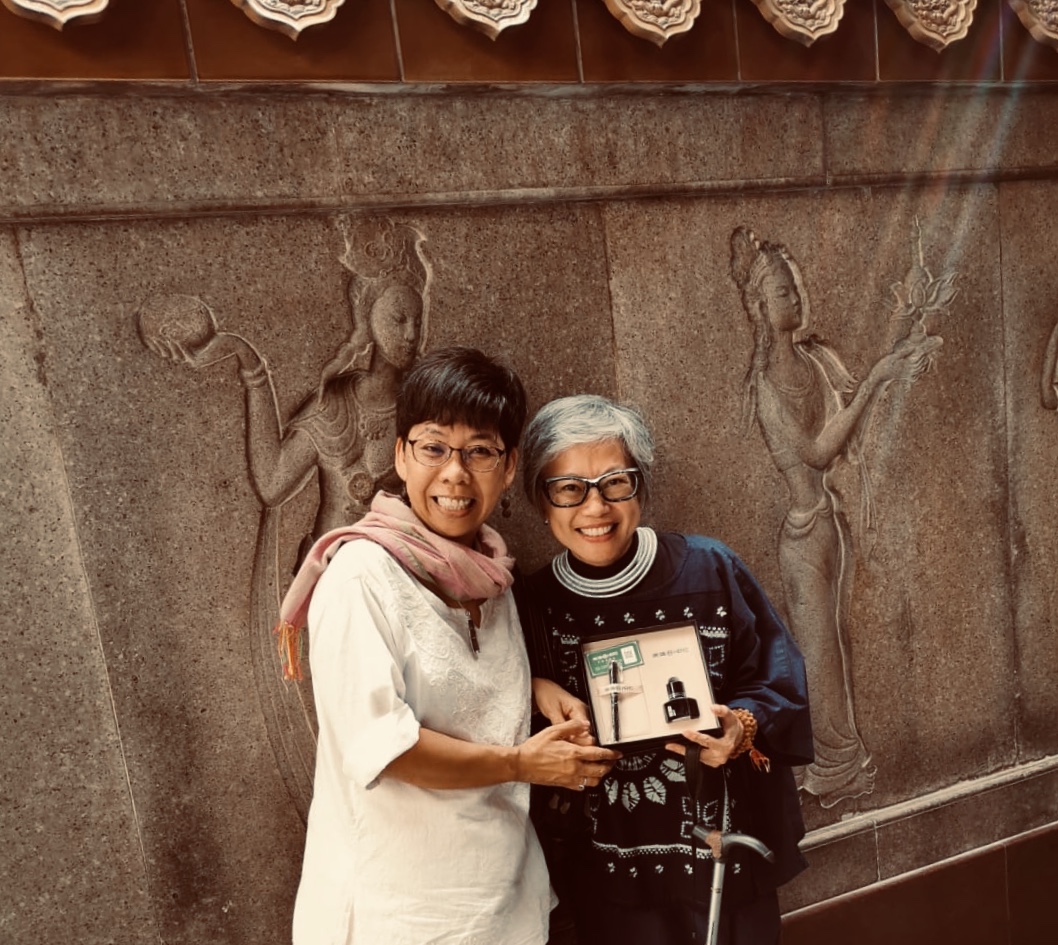
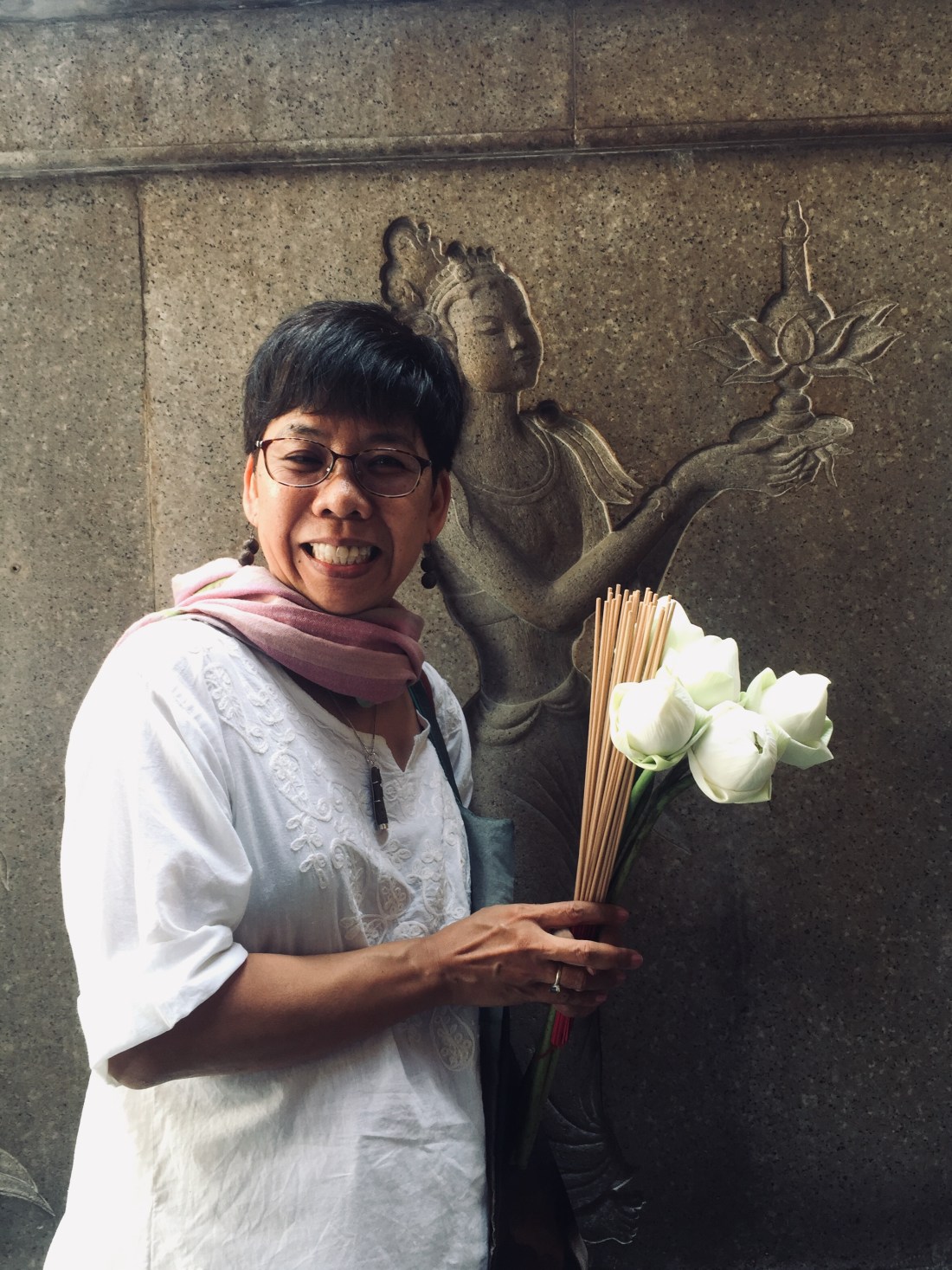
Sharonne got me a Hero fountain pen & a bottle of black ink. We took this pic at Guam Imm temple with the apsaras behind us.
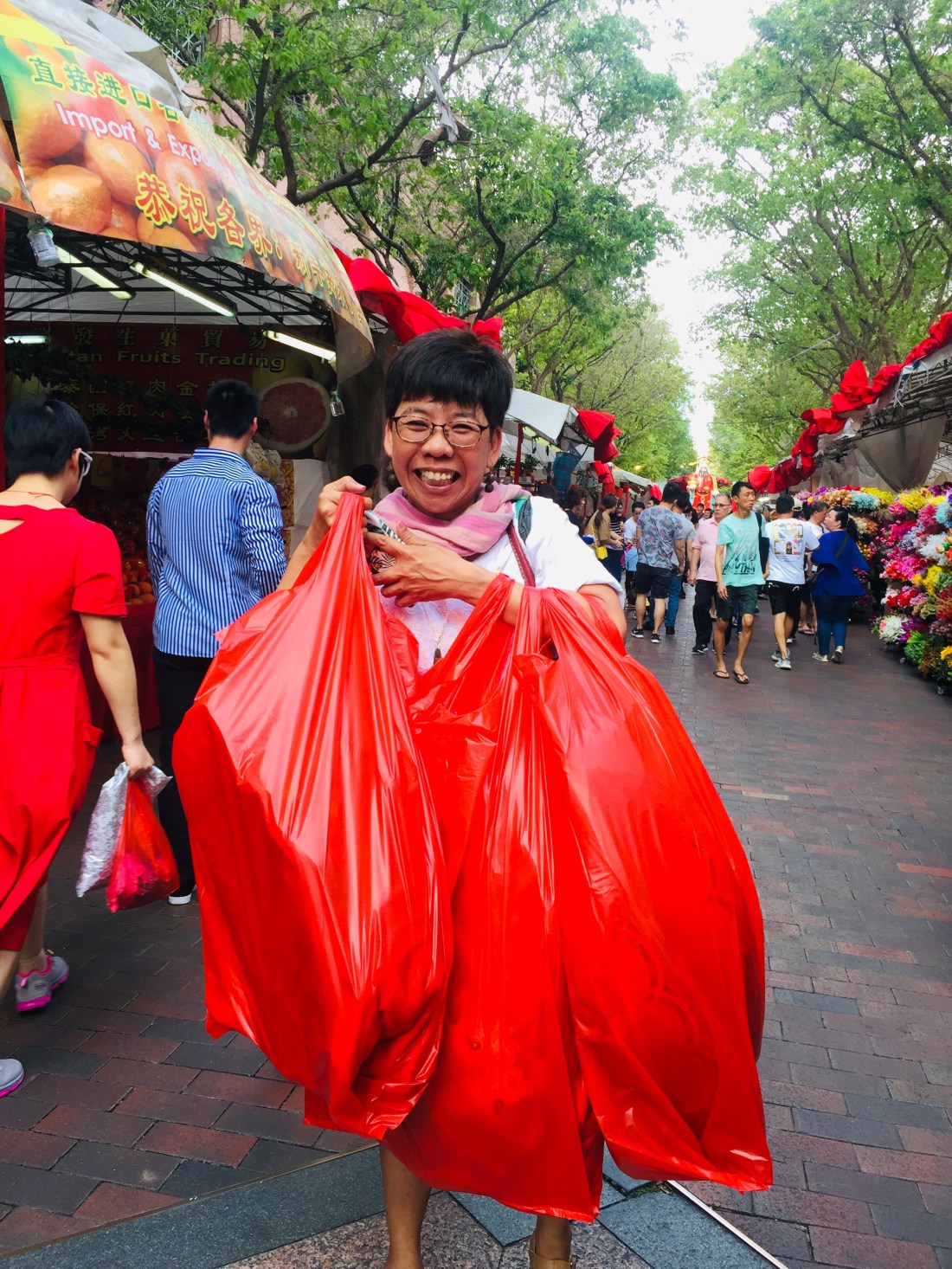
Now in our 50s, having a vegetarian meal at Fortune Centre, making a temple visit and buying loud Chinese New Year decorations evoke the same giddy happiness we felt when we were just girls 37 years ago.
It is wonderful to know that joy remains or may even become more intense with the passing years.
There are several understandings of “OM”. My favourites are “OM” is the first sound of creation and has the ability to neutralise pride,the cause of fear and jealousy.
I spent the 1st day of 2020 in relative silence while practising to write OM in the Tibetan Uchen style for the first time.
“Start writing OM,” has been on my mind the past few years but I never got round to it because I was waiting for the “perfect” timing, “perfect” video and “perfect” calligraphy book to get started.
In Nepal, the book sellers in Thamel & Boudha that I checked with didn’t seem to sell the practise book that will show me the sequence of the strokes that I needed to see before I could write the character. Did such a practise book even exist? I only started to do online searches for it after my failed attempts in Nepal.
And during the search I indulged in almonds. So over the last few days leading to this new year I developed a sore throat.
That was how Silence descended. Seclusion followed quickly as the need to rest my voice caused me to abstain from all social gatherings. Together, they created the space I needed to pursue the long awaited OM.
“Please let me just know how to write OM, everything else will be a bonus,” I thought to myself as I viewed the video of Tashi Mannox writing the mantra of Great Compassion (OM MANI PADME HUM).
I’m a slow learner. I need to see the strokes in slow-mo if possible, run them through my head & be allowed to copy stroke for stroke before I can do it on my own. Many videos were too fast for me.
But Tashi Mannox’s video did it with his calm voice and deliberately unhurried movements.
So that was how I learnt to write my first word on the first day of 2020.
Balinese Hindus celebrate their New Year called Nyepi by going into self imposed silence and seclusion, so that they can retreat, reflect and be renewed.
As I lack the cultural practice nor the lineage to create such a ritual on my own, the Universe has kindly turned a sore throat into an opportunity to start the year with an ancient and sacred word, “OM”.
So I wish for all my friends and all sentient beings the same benevolence that has been bestowed on me to create a positive outcome from a negative situation.
May you be kind. May you be auspicious. May you be full of grace.
Tashi Delek.
The strokes that made up OM had intrigued me for as long as I remember. They resemble a person dancing. While practising OM, memories of my secondary school bio lessons on bones came back. In those days I had a compulsion to study the bone samples from angles that were not required by the syllabus. I started seeing the bones as pillars, trees and balconies and drew them the way I saw them. My very unscientific renderings drove my Bio teacher insane, but I kept at it even when I knew my diagrams would be rejected and I would fail in that component. Perhaps those bone sketches were my early attempts to write OM which I didn’t know exist.
I was all set to leave my flat for a post-christmas gathering at a friend’s place when a clear voice rose in my head and went, “Bring something from Nepal.”
I tried to ignore the voice because I had already wrapped up a present for gift exchange and saw no reason to bring another.
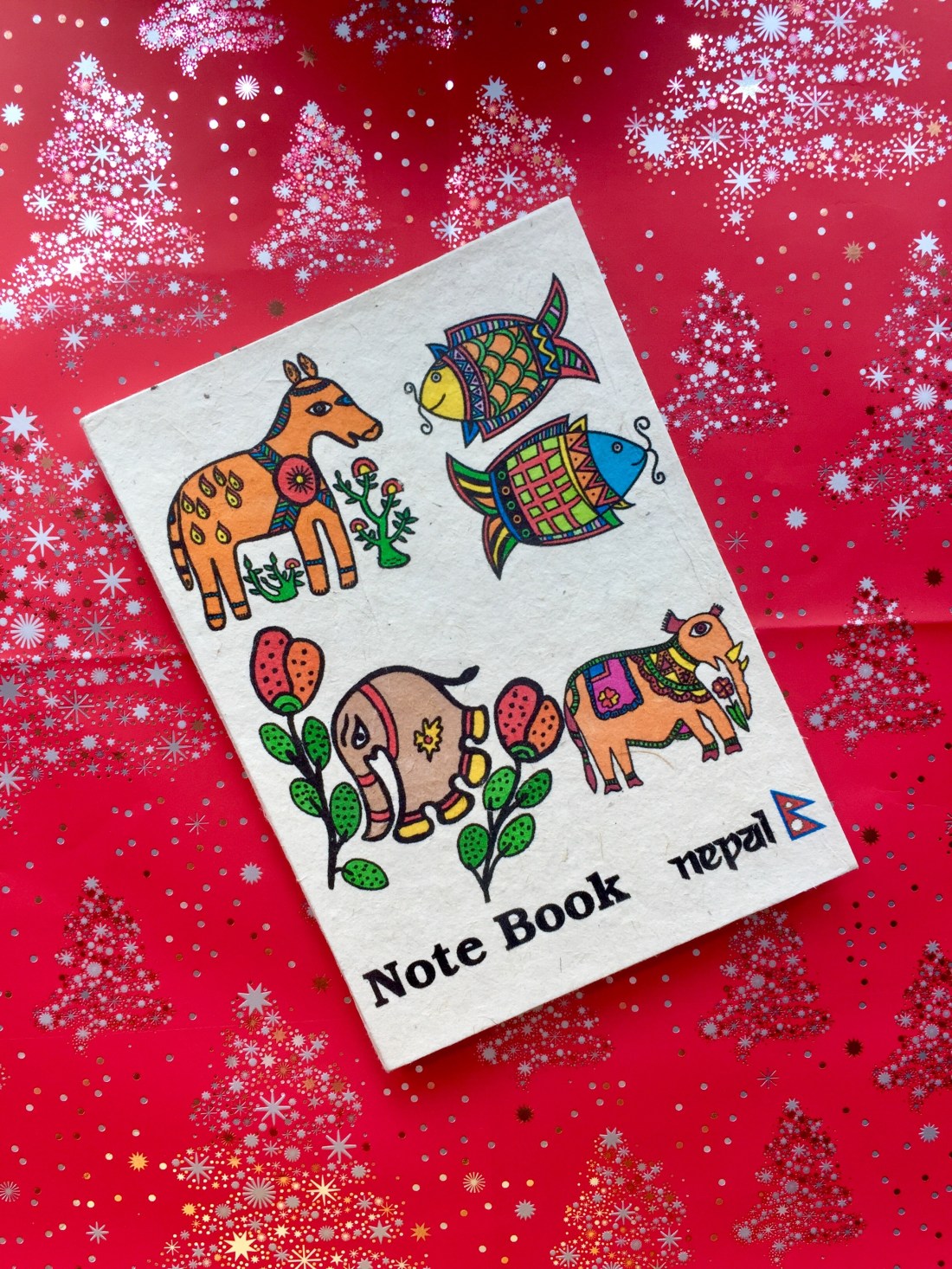
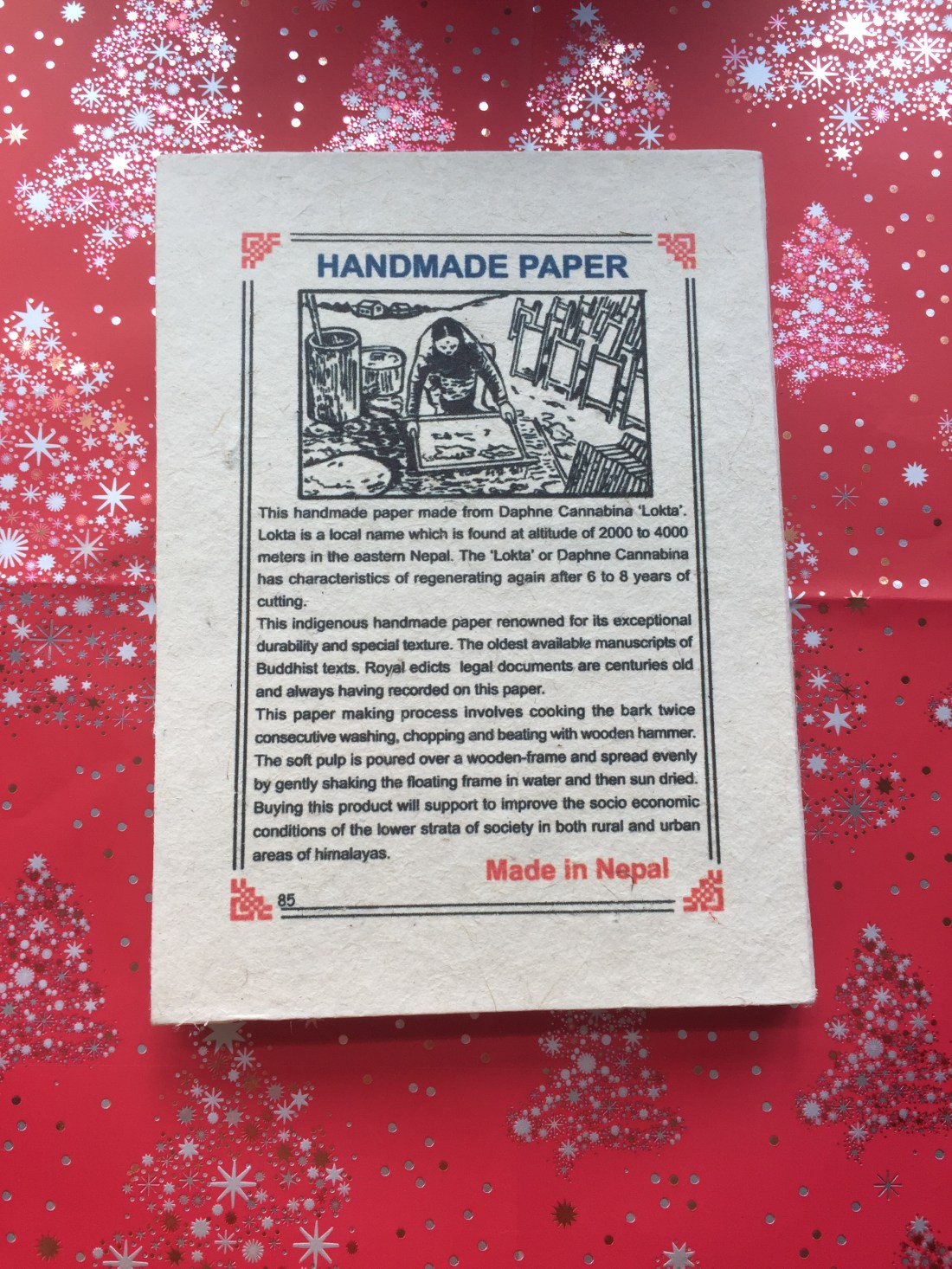
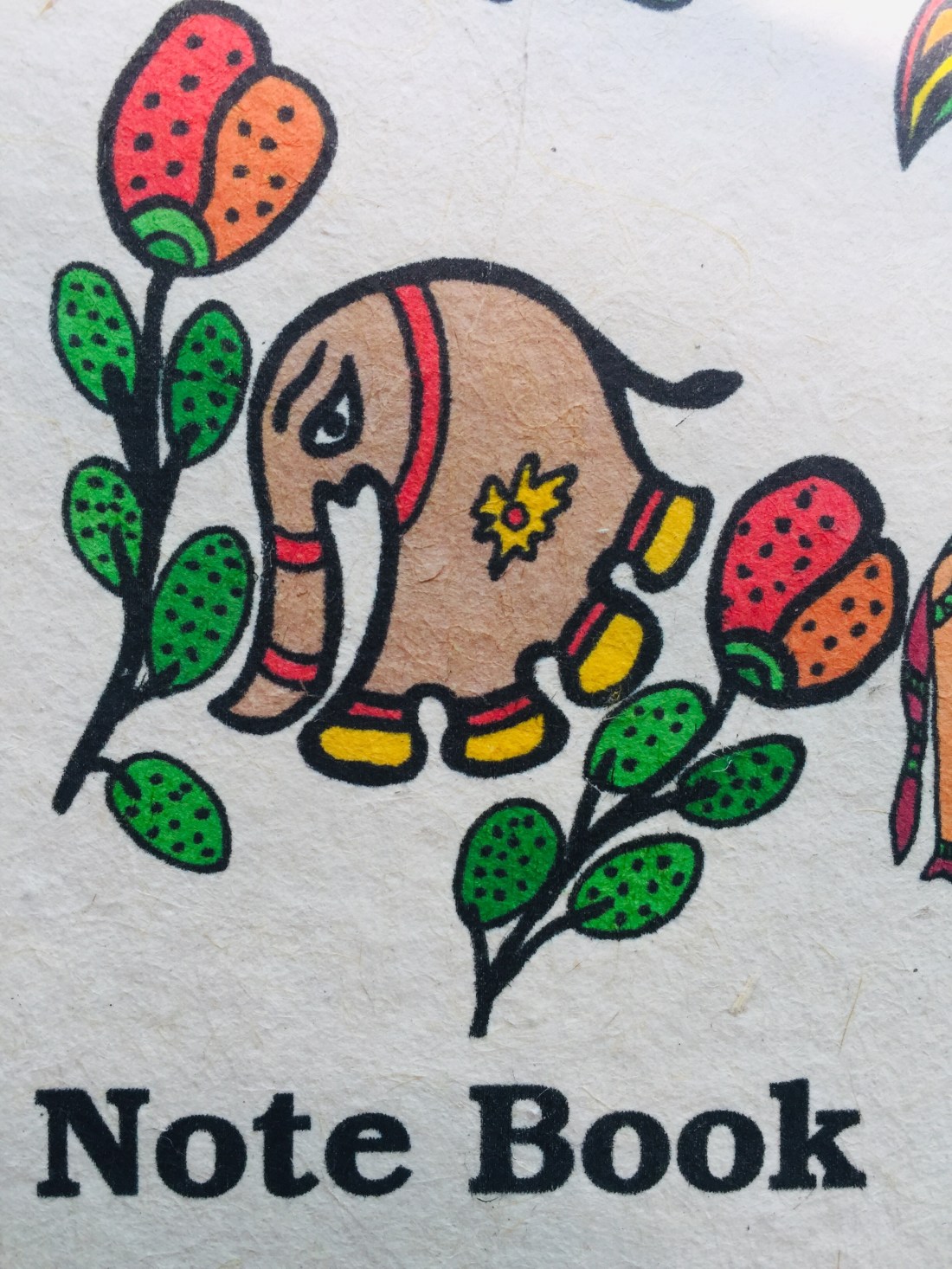
But reluctantly I went back to my room and selected a notebook made of Lokta paper from among the gifts from Nepal to take with me.
I’m fond of buying handmade gifts, compelled by a vague logic to honour the makers and the belief that they will bring blessings to the recipients.
As I didn’t know who I would be meeting at the gathering except “a few close friends and family members,” I wasn’t sure if the Lokta notebook would be appreciated.
When I arrived at her home, my friend had the Nepali greeting, “Namaste,” on her door.
So my first word upon my arrival was a “Namaste!” to the guests who were already inside the flat.
A tall and lanky netball player with gorgeous curly hair came to hug me. She knew me from sports school days.
A quick sweep across the living room confirmed that I was The Oldest person in a meet up of supple youth from the sports and art fraternity.
After the gift exchange and a couple of group shots, a young man came to sit with me and asked if I was a teacher in SJI before. He had been a student there and recognised me the moment he saw me at the door even though I didn’t teach him.
Our conversation drifted to school days and the convergence of circumstances that set him on a path in film & animation.
Young Man laughed at my attempts during teaching days to interest his SJI mates in “Dreams” by Akira Kurosawa when all they mostly cared about was having a lesson in the air-conditioned comfort of the AVA studio!
But years later, one of those boys would become a partner in a law firm and write to say that whenever the sun shines on a rainy day, he would remember the foxes’ wedding in “Dreams,” and think of me.
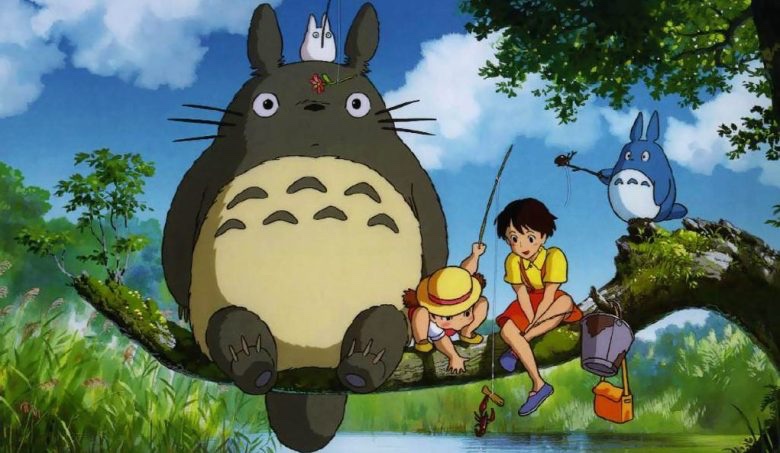
I mused that perhaps Kurosawa’s films were too stark and too abstract for teenage boys. They might have responded better to “Totoro,” or “Spirited Away,” although Hayao Miyazaki’s animations are as profound, if not more, than Kurosawa’s films.
Young Man’s eyes lit up at the mere mention of Hayao Miyazaki, the 70plus year old Japanese animation guru. This creator of fantasies is renown for his meticulous hand drawn details and his ability to convey difficult themes such as death, abandonment and loss through his tales.
Young Man then shared that even though these days lots of animation work has gone digital, he is still very “old school” at heart. He really enjoys drawing every detail by hand and still does so with his projects.
I knew by then for whom I had been told to “bring something from Nepal.”
I showed him the last minute gift that I had brought from home.
He was stunned and told me he didn’t know what to say.
And thus it was in the living room of a flat by the Kallang River in Singapore, that a young animation artist came into contact with handmade paper made from trees growing at 3000m in the Himalayas.
I invited him to use the notebook to incubate his ideas for films and animation so that the many blessings from Nepal on survival, gratitude and beauty will bring him assignments that not only pay the bills but also be of great benefit & service to others too.
Young Man accepted the Himalayan blessings reverently. I was very grateful to have obeyed the prompting to bring a gift even when I thought it wasn’t necessary.
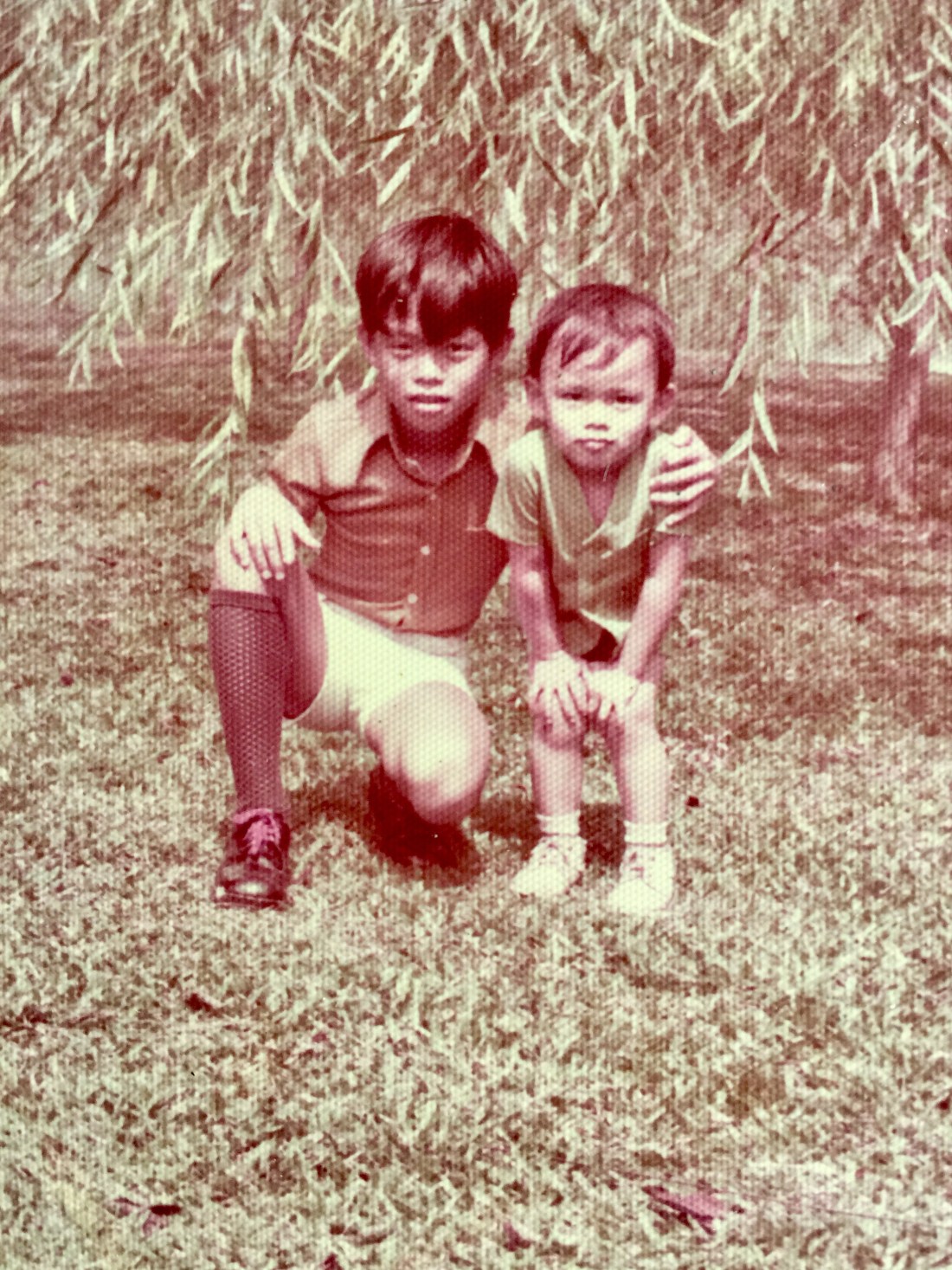
My brothers, Terence & Andrew under the willow branches in the Chinese Gardens during the 70s.
Late afternoon on Christmas Eve, my brother came to help me clean the ceiling fans and windows.
Standing on the ladder, he removed the layers of dust that had accumulated over this year. I stood by to pass him wet wipes and cleaning cloth that had been rinsed.
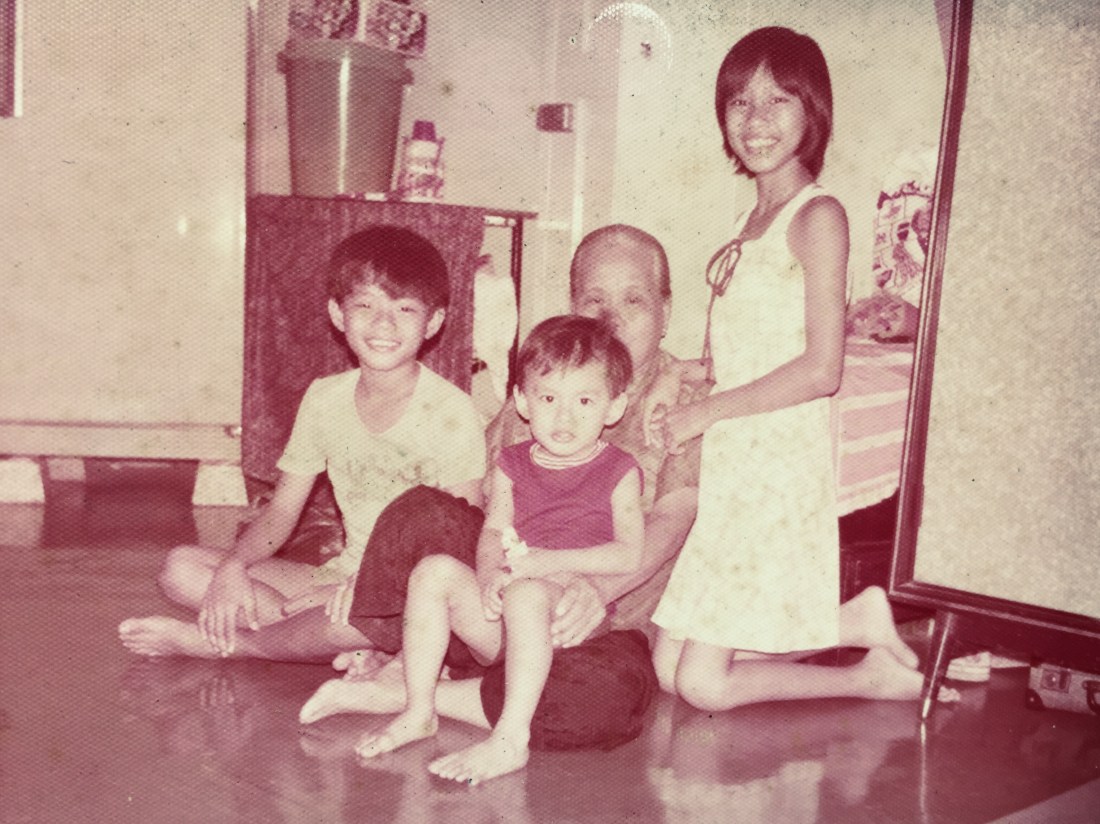
This is the only picture with our Kinmen Grandma taken in the 70s in our first flat at Prince Charles Square.
Bit by bit as the dirt came off we shared thoughts about our childhood, our parents and what we were grateful for and what we could have done better with our own lives and our family.
On a day trip to Batam Island to visit our younger brother, Andrew, where he operated a car workshop.
In between cleaning he stopped for cigarettes and to play with the cats.
Shoya greets Terence in my old flat before 2012.
By dinner time, the blades of the ceiling fans were gleaming and the glass panels of doors and windows in my home were sparkling, with bits of touch ups which I can do easily on my own. (He came mainly to clean the parts that I couldn’t reach.)
After that, we had dinner with our mother at the coffee shop down my block.
Christmas Eve marks the incarnation of God becoming Man. In our attempts to attain godliness through cleanliness, we might have a tendency to treat the less attractive and dirtier aspects of our humanness with disgust, instead of compassion like the way my brother cleared the dust in my home with light-hearted patience on Christmas Eve.
The 3 of us on Batam Island. In our childhood, Terence used to be taunted by his classmates because of my limp. I think siblings of handicapped kids are often overlooked and left on their own to manage their emotions.
Among ethnic Chinese, the Winter Solstice or ” 冬至” (tong zhi) is a time for reflection, thanksgiving and fulfilling one’s spiritual duties.
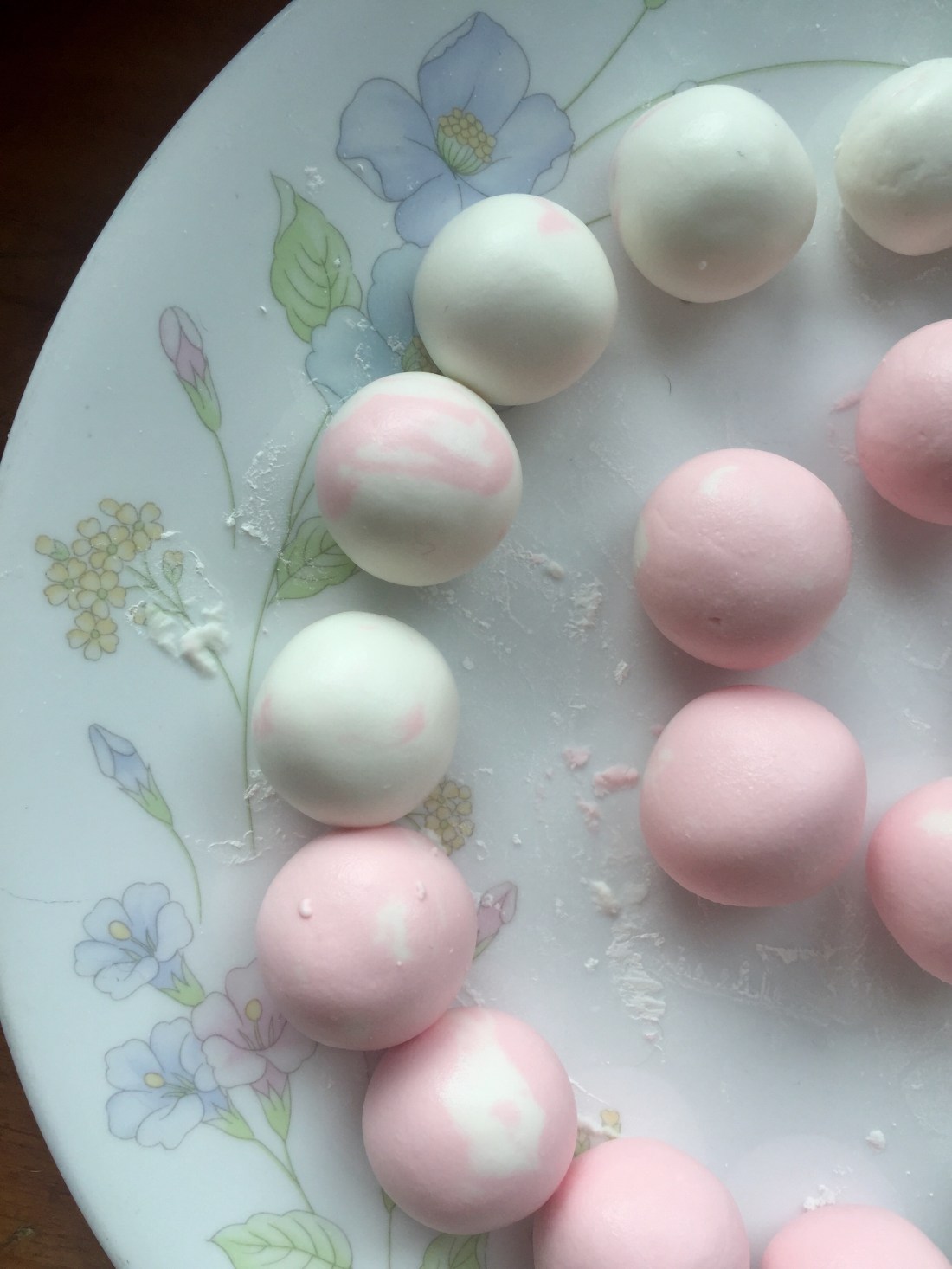
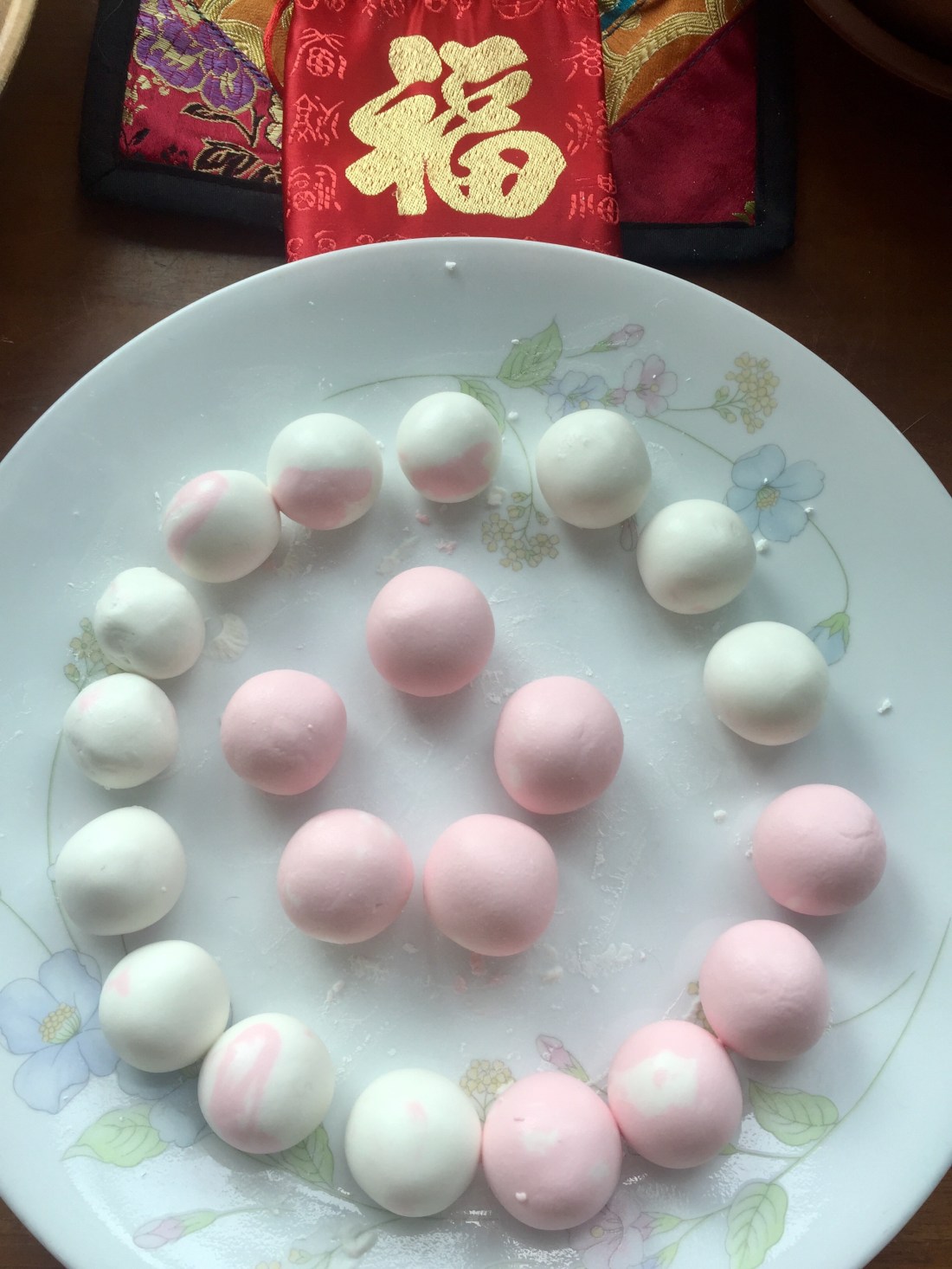
A simple but significant food to mark this season is the glutinous rice flour balls or dumplings. It is called “汤圆”(tang yuan), deriving its name from the spherical shapes that connote concepts of auspiciousness such as roundness, smoothness and completion.
The preparation of this dish enables family members to gather at a table as they bond over flour kneading and the shaping of dough sticks into balls. The carefully shaped balls are then boiled in sweetened water and offered to deities, ancestors and the living.
In my childhood, tension among adult family members caused me to dread the yearly affair of rice ball making.
Stuck in the kitchen I picked up my mom’s mood swings & mean remarks as I quietly rolled the flour into little balls.
When we switched to buying ready made rice balls from the supermarket instead of making them, I was glad but sad at the same time.
So this year, on Solstice morning, well into my 50s, I decided to go back in time and undo the misery of the little girl trapped in the kitchen of my childhood.
I gave thanks for the glutinous rice flour that I bought. As I gently rubbed the dough between my palms and marvelled at the comfort of its powdery smoothness, my heart was lifted.
And there and then, happiness returned!
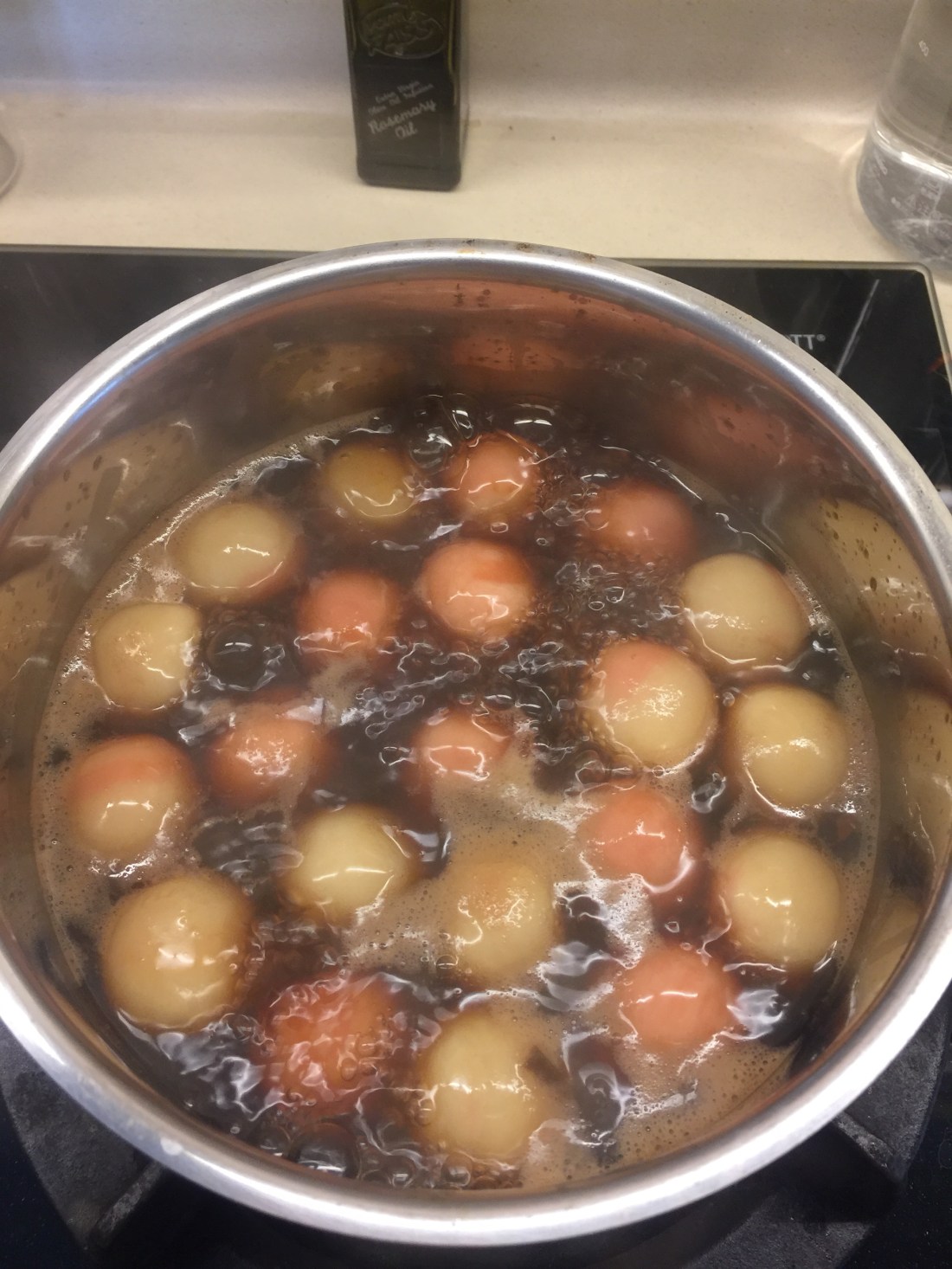
I boiled the rice balls in ginger and brown sugar syrup which my mother bought from Taiwan.
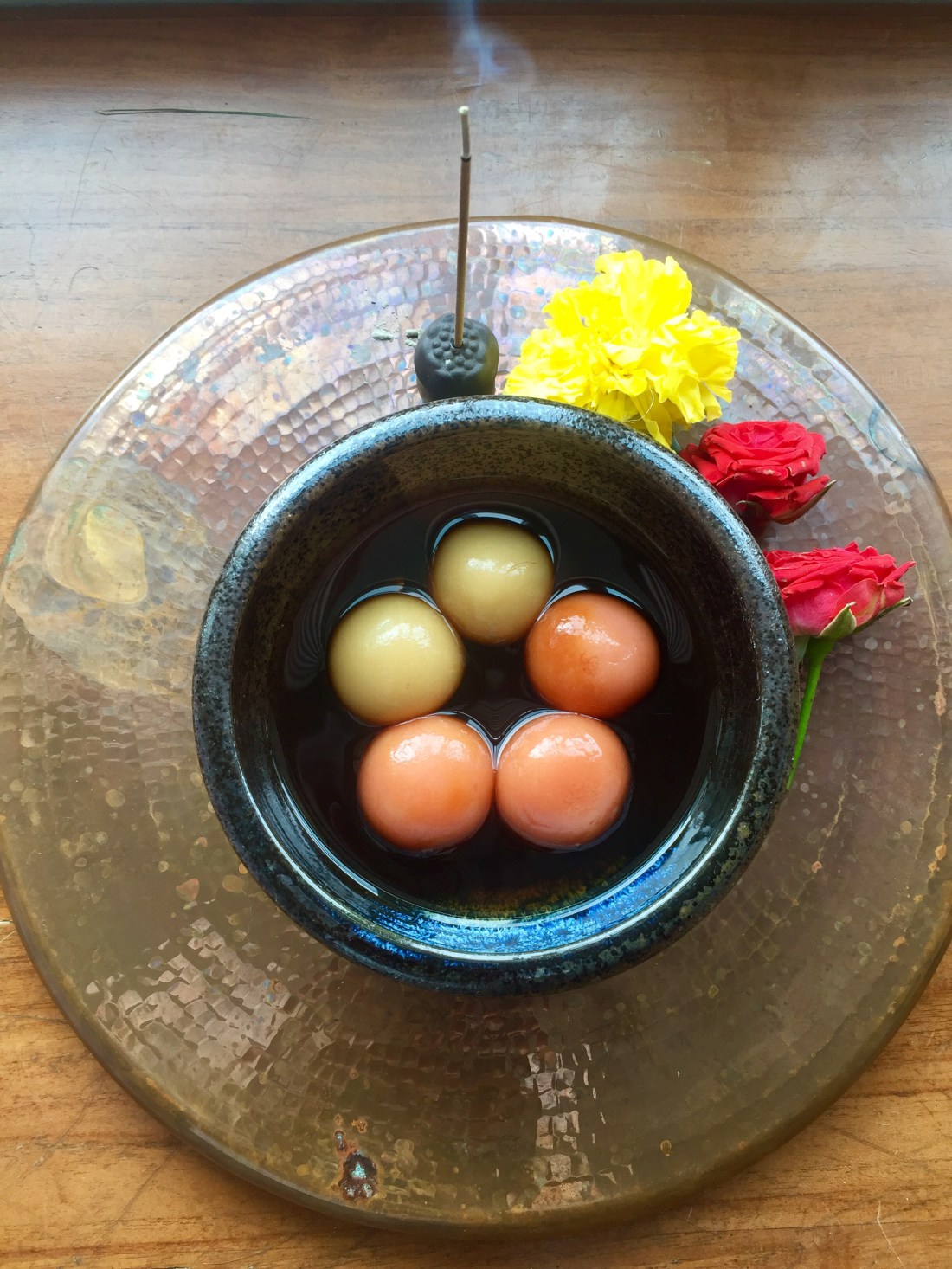
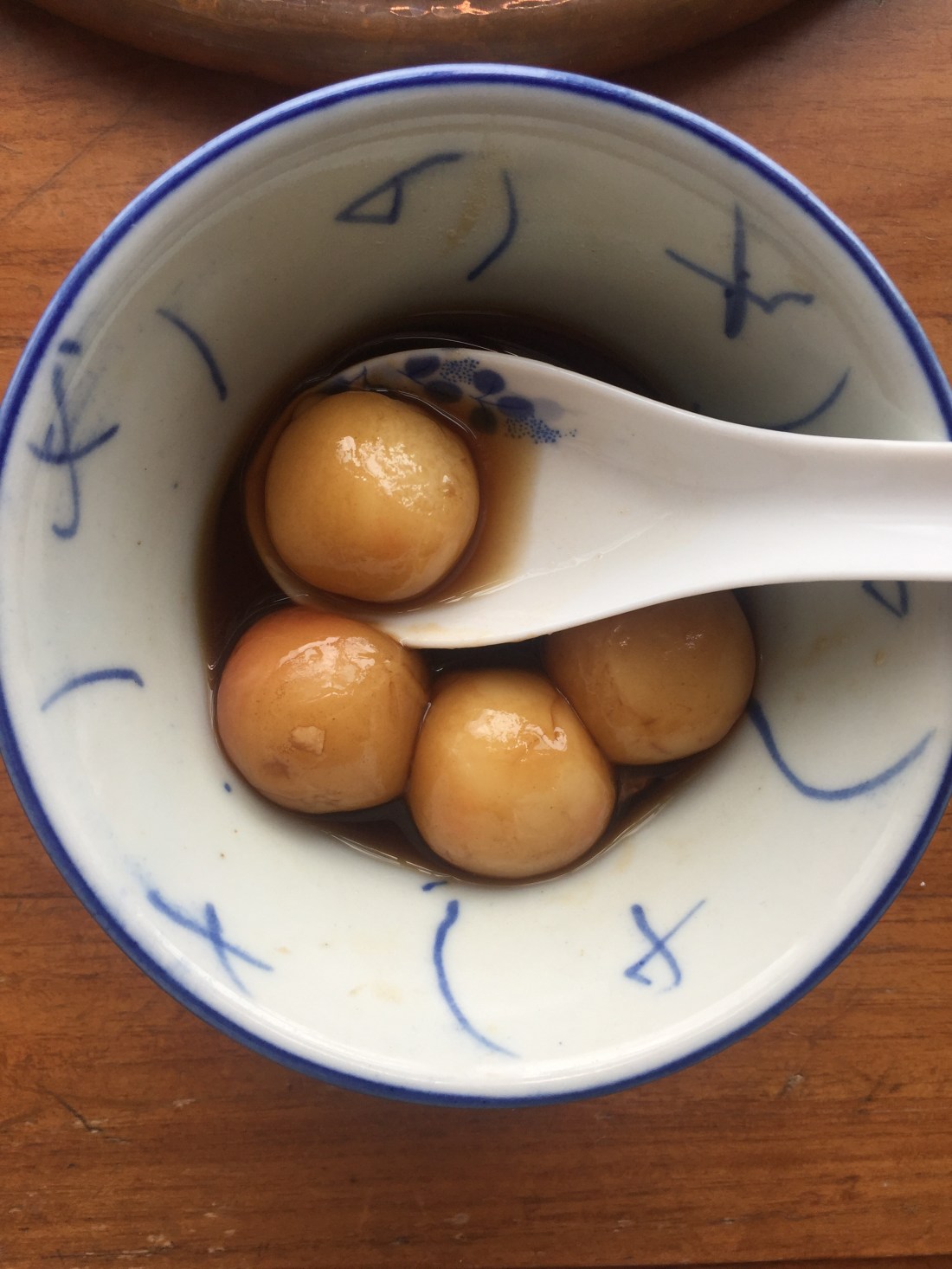
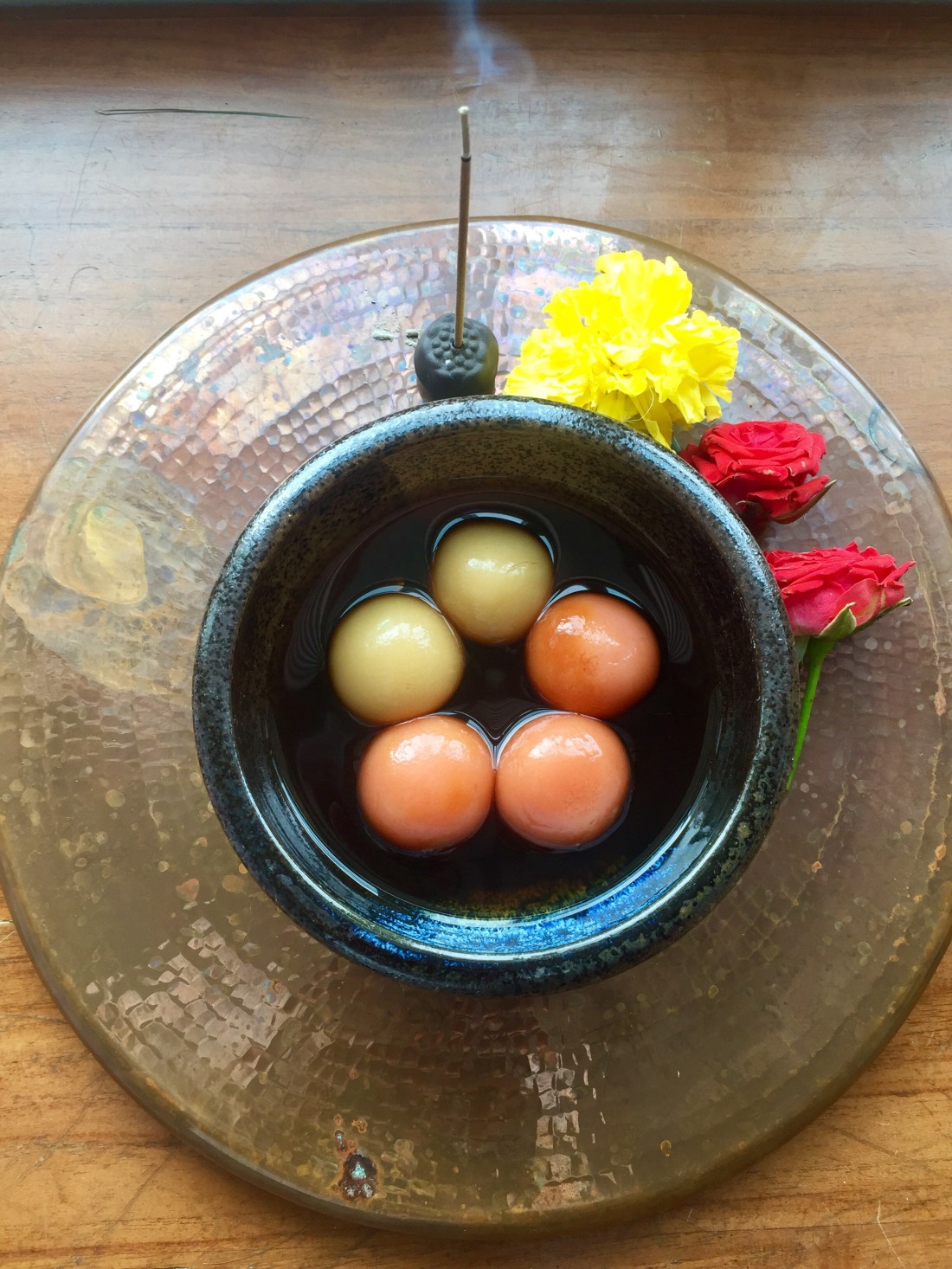
And after offering 5 rice balls to the sky, earth, water, ancestors and all sentient beings, and 9 to Wisdom and Compassion, there were still 7 left for me to enjoy.
And the 7 rice balls tasted just like the ones in my childhood, only this time they are so much smoother! 😊
Rice ball offering to bless sky, earth, water, ancestors and all sentient beings.
May efforts of undoing what has gone wrong in the past be blessed.
Tomorrow is the Winter Solstice. Today is my grandma’s 28th death anniversary.
She was born on Kinmen Island in 1914. This year I visited her birthplace twice and walked the streets in the old city she would have walked in when she was a kid.
28 years after my grandma’s passing I finally understood the beauty of her birthplace and where my fascination with roofs, doors and windows originated. (Picture courtesy of Wang Ling of Local Teahouse 后浦泡茶间)
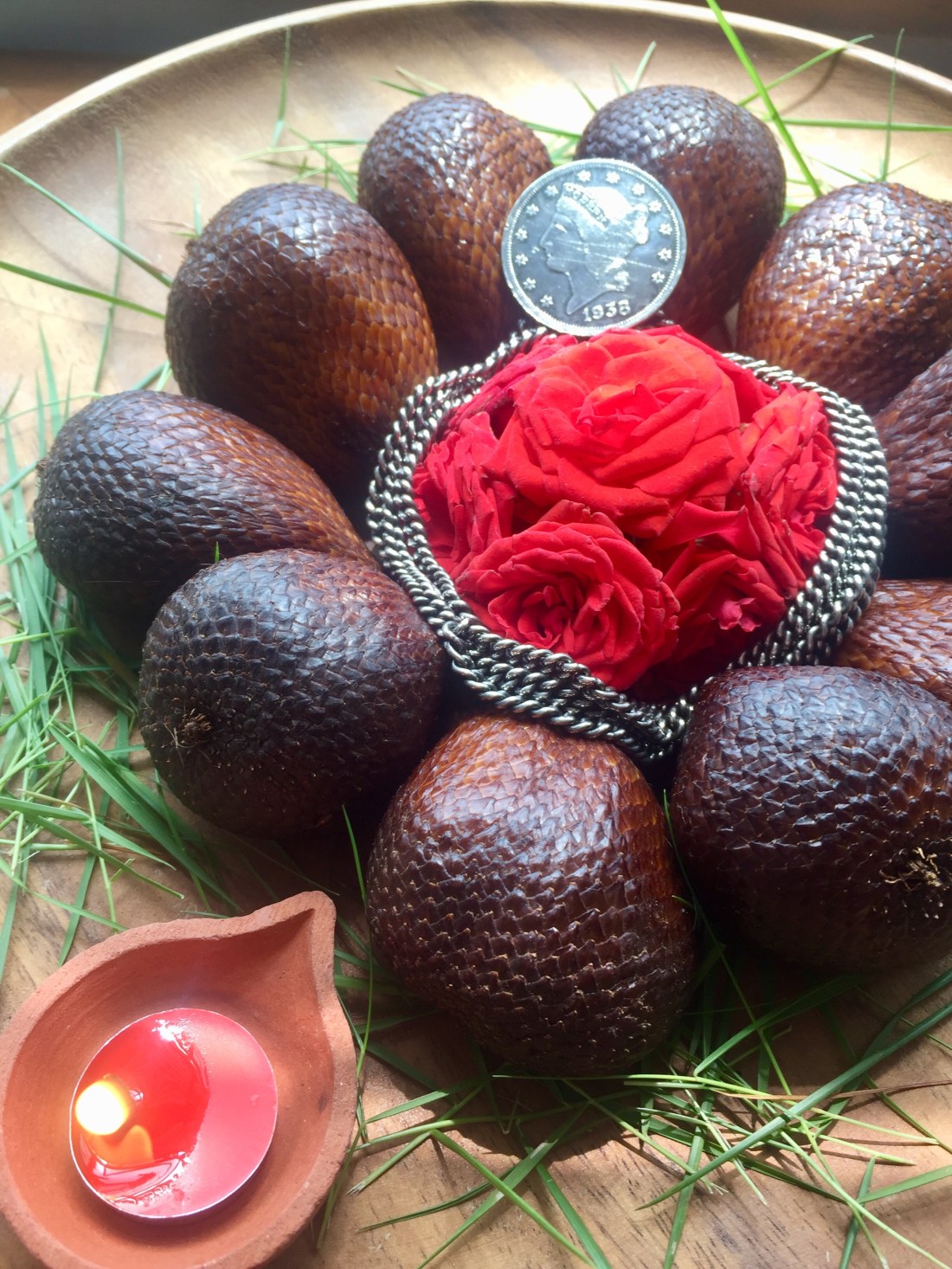
This June as I was wondering what item of importance that belonged to her could I still find to take with me on my trip, a much cherished silver belt that she wore all her life emerged.
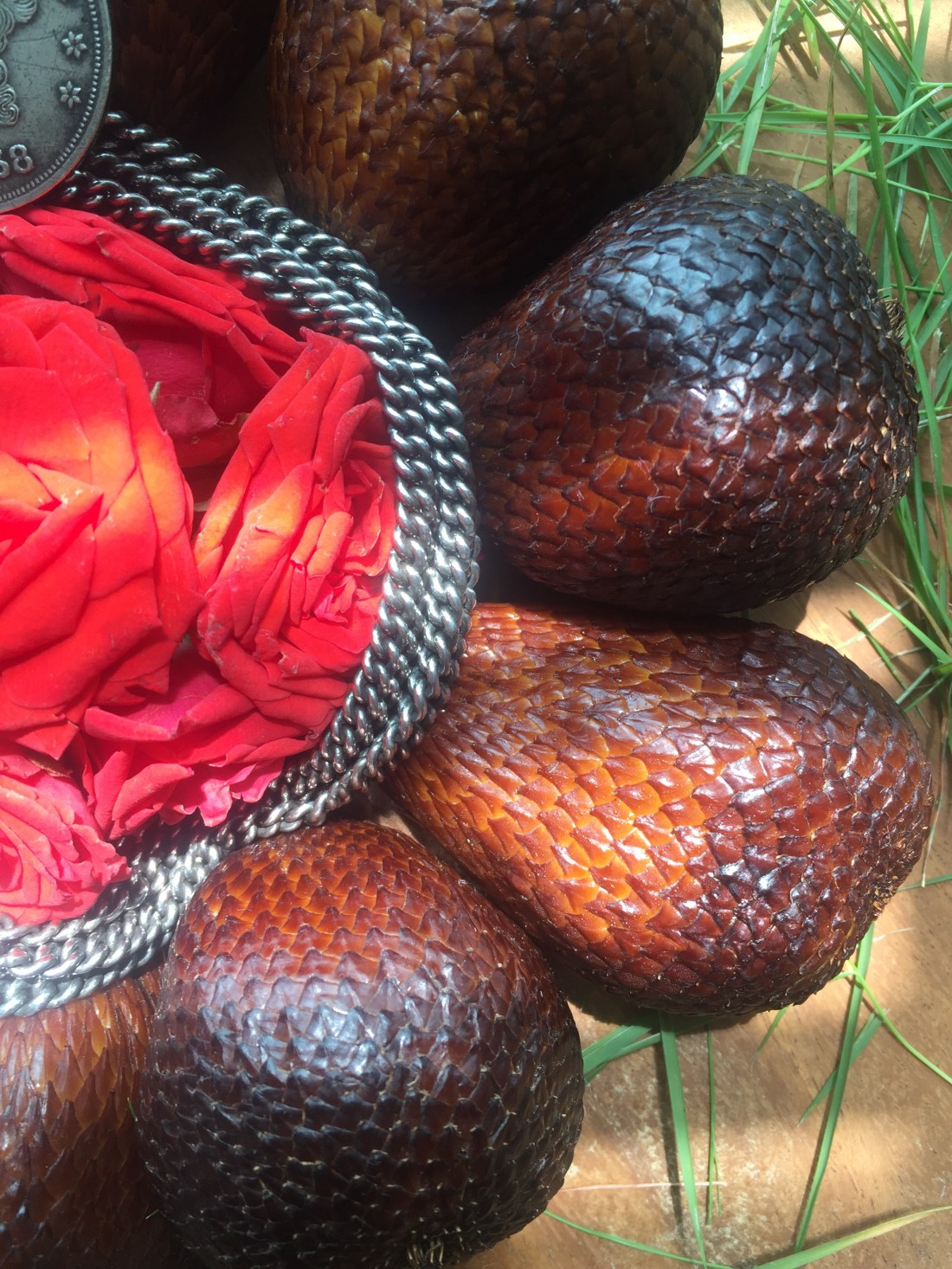
And a few days ago, while buying coffee powder at Sheng Shiong, I came across her favourite fruit known as Salak or Snake Fruit. As far as I can remember the Salak is the only fruit my grandma cared about.
Yesterday a friend invited me to hang out with him at Boon Lay Shopping Centre. We had lunch, foot massage and bought flowers at the Indian grocery shop.
My grandma also loved having flowers in her hair.
So today instead of travelling to the columbarium to stand a few minutes in front of my grandma’s niche, I decided to take my time & quietly dedicate a mandala made up of her favourite things.
And I hope as we find our own ways of acknowledging our forefathers & foremothers, what’s broken can be mended and what’s good can become even better, for our own benefit and the benefit of all sentient beings. ♥️🌈🐾
After I had assembled the mandala, the sun peeped through the storm clouds and sent streams of light on the belt, fruits and flowers, as if to say, the mandala has been accepted. A few minutes after this picture was taken, the sky opened and the rain came.
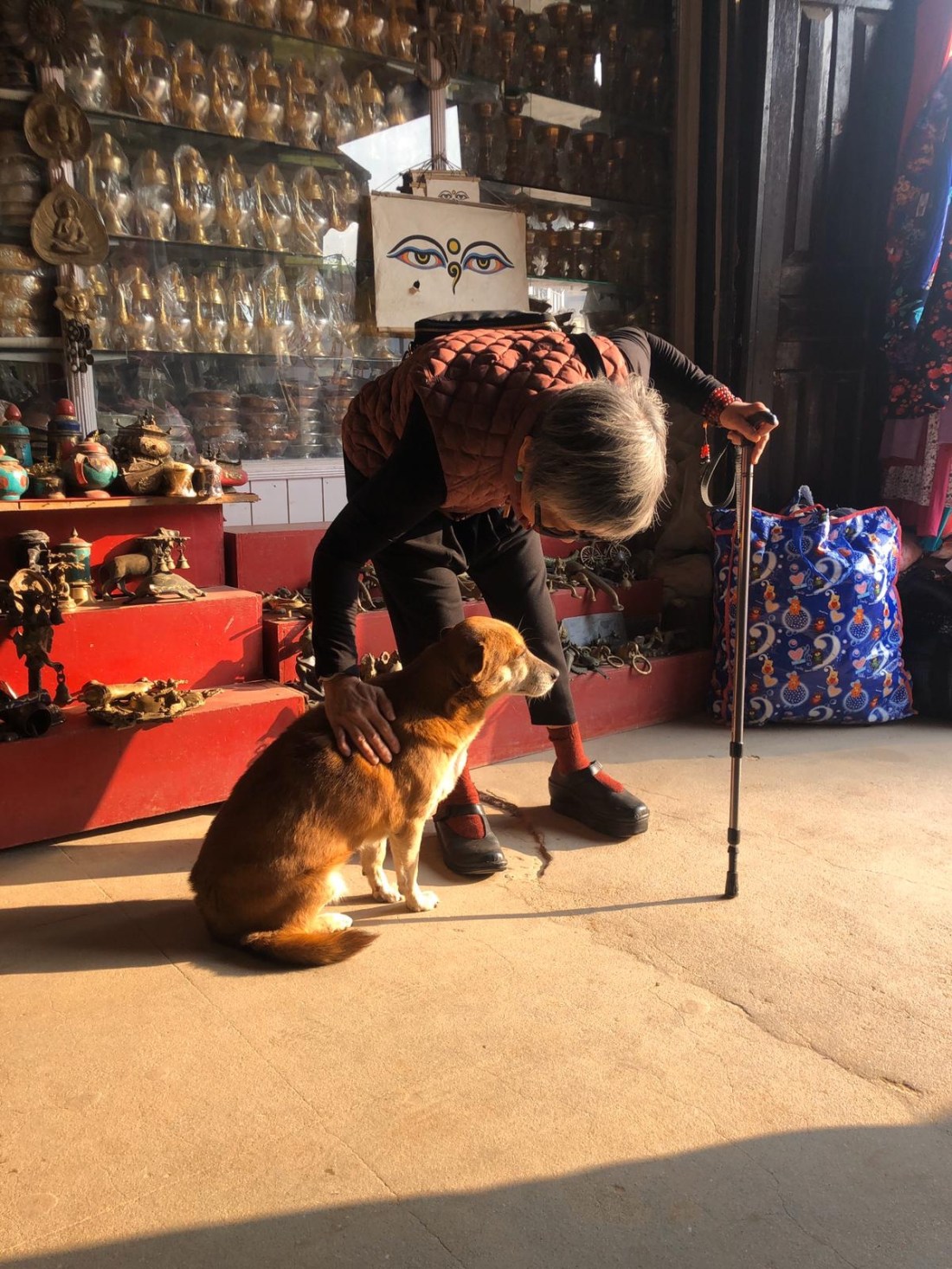
Each visit to Nepal I look for the dogs in the places I stayed the previous year, in the same way I seek the cats that live around the blocks in my housing estate in Singapore.
And when I see the canine children braving the harsh winter wind and dust, sleeping on cold hard floors of alleys, and surviving on the smallest morsels of food and simplest of medicare offered by a small number of kind human beings, my heart fills up with gratitude and courage.
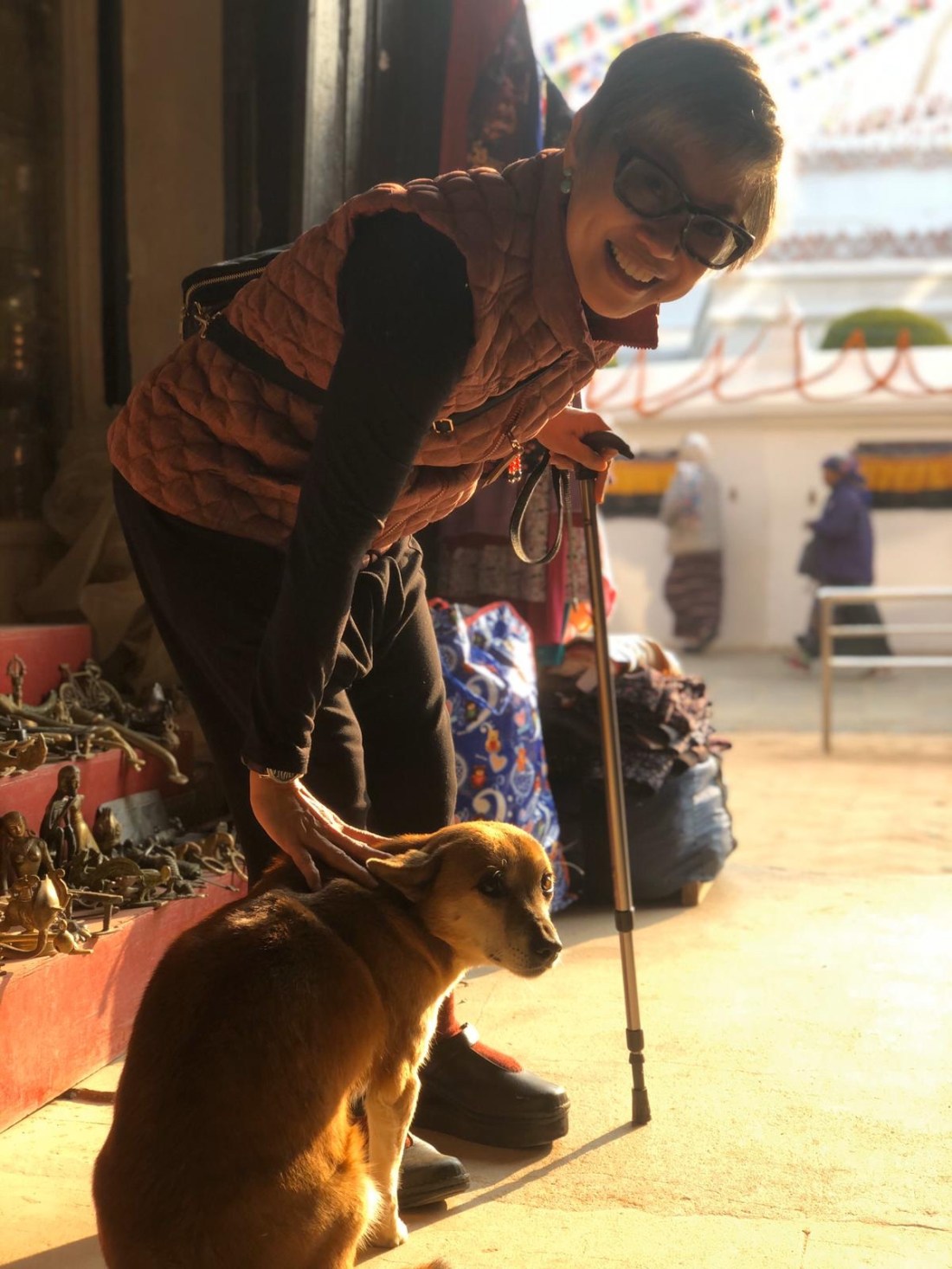
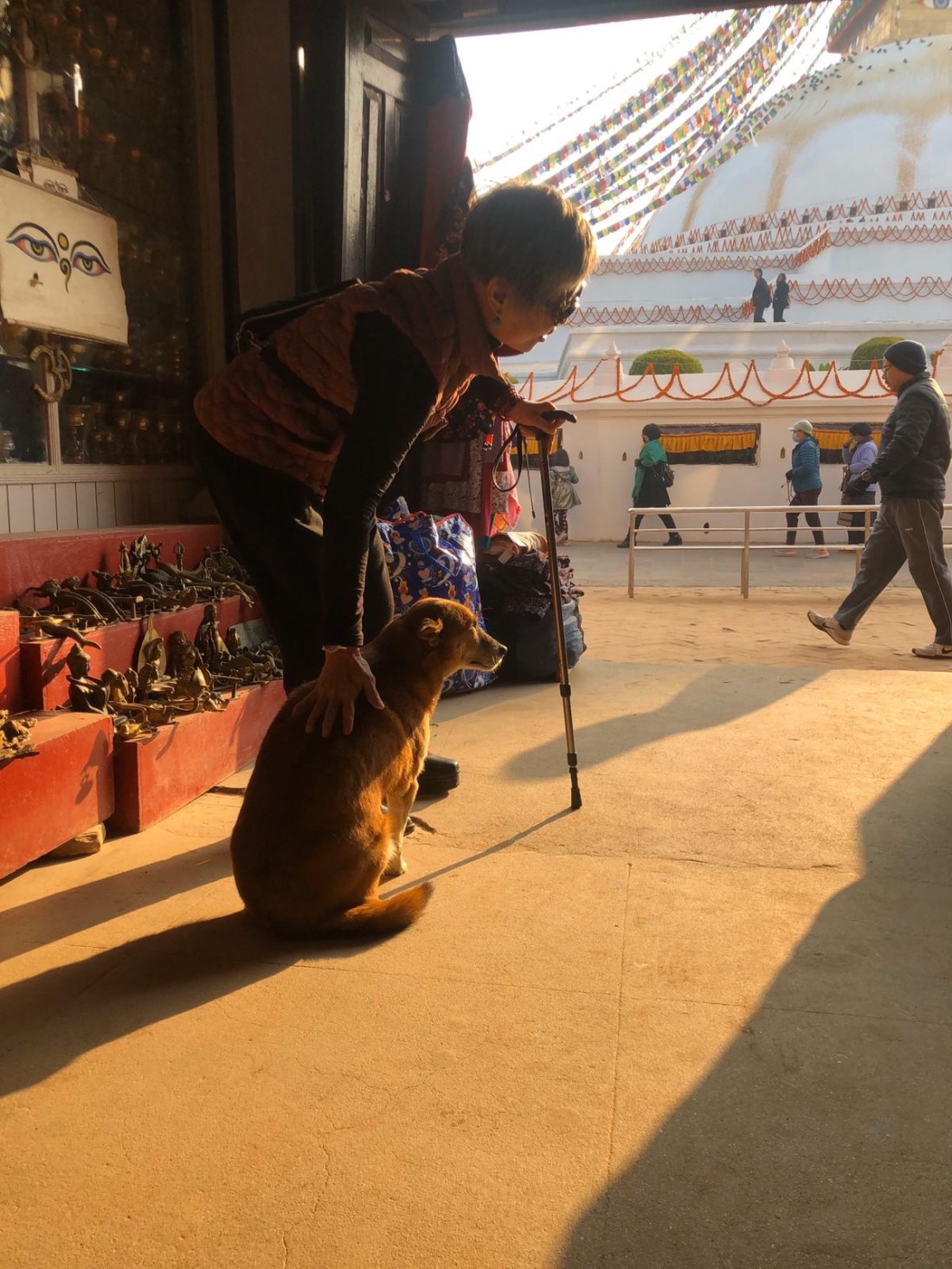
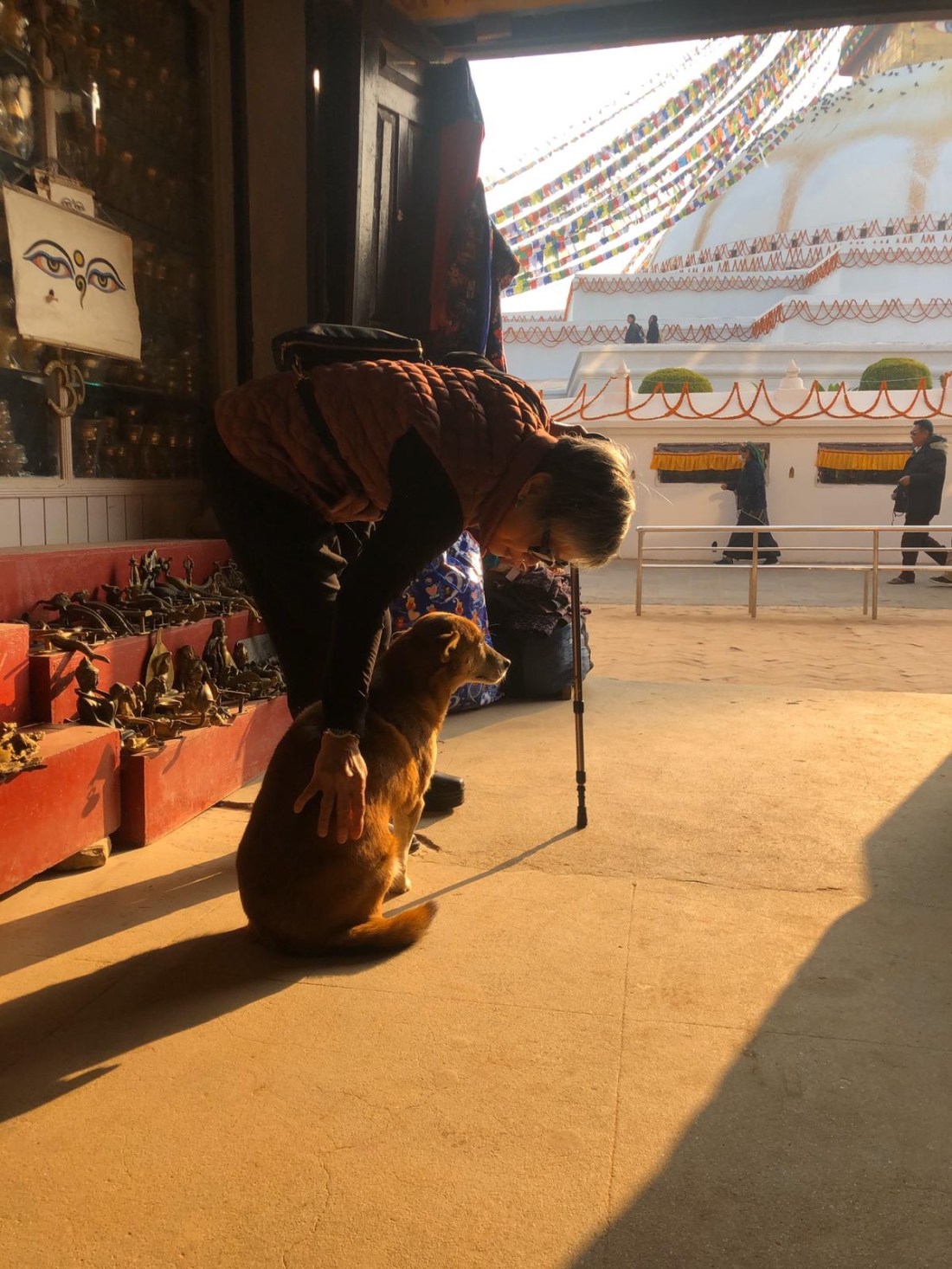
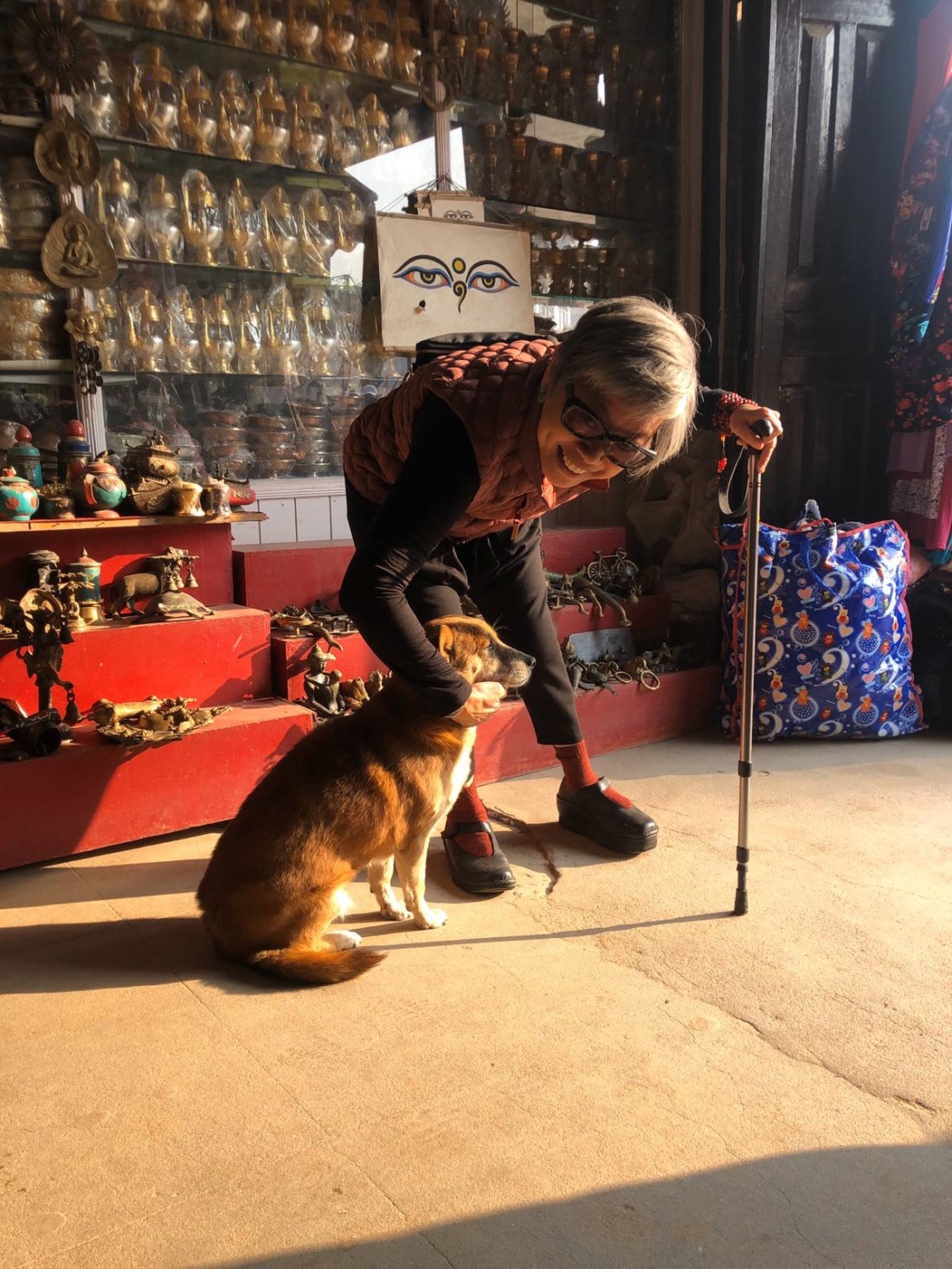
Yesterday morning before I left Boudha Stupa, I hugged a little dog called “Kanchi” meaning “little one,” in Nepali. I stroked her and told her I love her and hope to see her next year.
A cluster of local women vendors looked on as I hugged and spoke to Kanchi. They didn’t speak much English, but when they heard me saying I love you to the timid little girl dog, a chuba-clad Tibetan lady and some of her friends chorused back, “I love you too!”
That was to me the most beautiful wrap up to our stay at Boudha!
May the Compassion and Wisdom from Boudha reach all sentient beings in Nepal & beyond.






 Lisa Ong